
Sourcing
Top 10 Cling Film Manufacturers China 2026

Top 10 Cling Film Manufacturers in China (2026 Guide)
If you are looking for reliable cling film manufacturers or cling film suppliers, China is where most of the world’s supply is actually made — but the market is fragmented. Of the thousands of listings on Alibaba and 1688 that tag themselves “cling film manufacturers” or “cling wrap manufacturers”, the large majority are traders, rewinders or small converters rather than the resin-to-roll factories that supermarket chains and food processors really need. This guide names the real cling film suppliers that matter in 2026 — covering both PVC and PE producers — shows where each fits, and ends with the five evaluation criteria we recommend B2B importers apply before placing an order with any cling wrap supplier.
A note on scope: we have deliberately avoided inventing fake companies. Where the long tail of smaller factories is relevant, we describe the category rather than naming businesses we cannot verify.
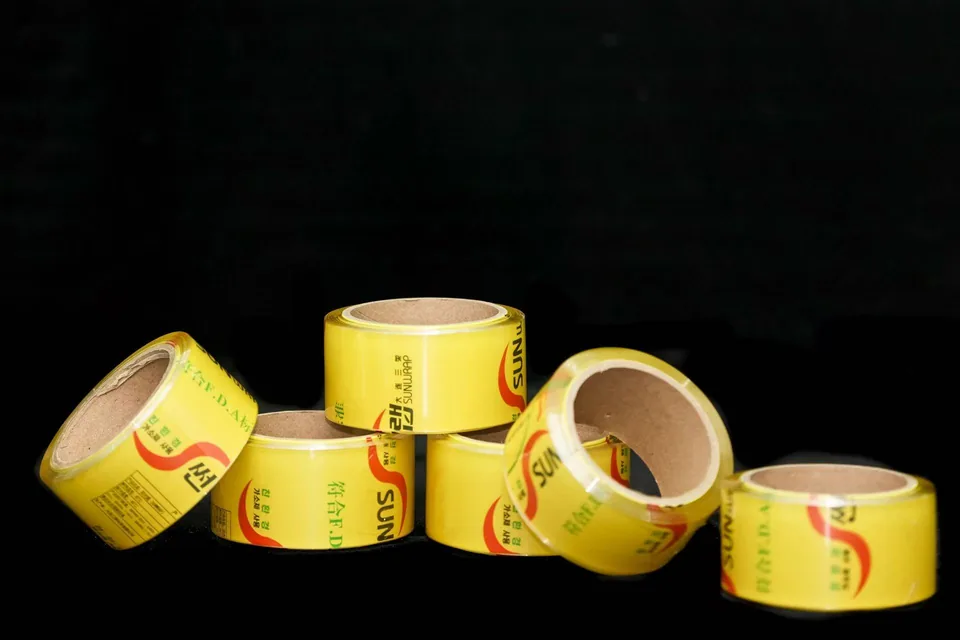
How the Chinese cling film industry is structured
China produced roughly 1.06 million tonnes of cling film in 2023, with domestic demand around 0.92 million tonnes — the remainder is exported. PVC accounts for 60–70% of that volume, which still makes polyvinyl chloride the single largest cling-film resin in the country despite the EU’s PVC phase-out pressure. (For a closer look at how resin becomes finished rolls, see our manufacturing process overview.) The industry has three fairly distinct tiers:
- Tier 1 — International brands with China operations: Berry Global, Klöckner Pentaplast, Reynolds, Mitsubishi Chemical. These players serve multinational QSR and retail accounts, mostly through contract manufacturing. Import prices reflect the brand premium.
- Tier 2 — Chinese branded manufacturers: the group that matters for most B2B importers. Names like SUNWRAP, Miaojie and Nanya sit here. Proper food-grade compliance, consistent thickness control, export-ready documentation, moderate prices.
- Tier 3 — Smaller OEM factories and traders: several thousand listings, heavy price competition, highly variable quality. Fine for some non-food and promotional uses; risky for anything that touches food in a regulated market.
The 2026 list
These are the Chinese PVC cling film manufacturers B2B importers most commonly encounter. Ordering is by industry footprint rather than a numeric ranking — every factory on this list serves a different buyer profile.
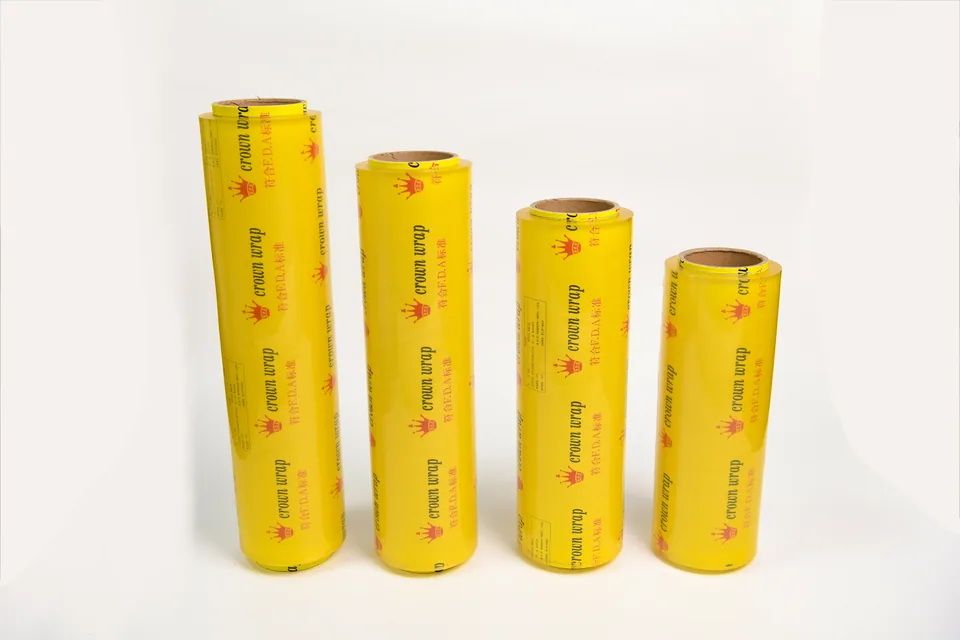
1. SUNWRAP (Ningbo Sanrong New Materials Co., Ltd.)
- Location: Ningbo Qianwan New Area, Cixi, Zhejiang — roughly 40 km from Ningbo-Zhoushan Port.
- Specialty: Food-grade PVC cling film for supermarket fresh-food wrap, HORECA and food-processing lines. Korean-invested (subsidiary of Sanyoung Chemical, Korea), in continuous production since April 2004.
- Target market: Southeast Asia (Philippines, Indonesia, Vietnam), the Middle East (UAE, Saudi Arabia), Egypt, Nigeria, India; supermarket chains, HORECA groups, food processors, private-label brands.
- Notes: Named one of China’s top-ten cling-film brands. FDA-compliant, SGS-tested. Relocated from Dalian to Ningbo Cixi in 2025 with expanded lines including PE cling film, total investment RMB 400 million.
2. Miaojie (妙洁)
- Location: Shanghai-based household-products group.
- Specialty: Consumer-facing cling film, household foil, cleaning products. Dominant on Chinese supermarket shelves.
- Target market: Primarily Chinese domestic retail and e-commerce; limited export focus.
- Notes: The benchmark brand for Chinese household cling film. Strongest in B2C; less oriented toward B2B export sourcing.
3. Nanya Plastic Film (南亚塑膠)
- Location: Group presence across China, with plants in Jiangsu and Guangdong.
- Specialty: Very broad plastic-film portfolio — PVC, PE, PET, multilayer barrier. Large-scale producer with strong process engineering.
- Target market: Industrial, packaging and construction film buyers; some food-film volume.
- Notes: Part of the Formosa Plastics group. Bigger than any pure cling-film specialist on this list, but cling film is one of many product lines rather than the core focus.
4. Kelin / Meijiale category (柯林 / 美佳乐)
- Location: Various, mostly Zhejiang and Jiangsu.
- Specialty: Mid-range branded cling film for Chinese supermarkets and HORECA, with increasing export activity.
- Target market: China domestic retail, Southeast Asia export.
- Notes: A good example of the Tier-2.5 segment — recognisable brand at home, steady mid-market positioning in export.
5. Jiangsu-based PVC film specialists (category)
- Location: Suzhou, Wuxi, Changzhou.
- Specialty: Industrial and food-grade PVC film, often servicing processors rather than retail.
- Target market: Food processors, packaging converters, domestic and export.
- Notes: Several well-run factories in this cluster. Most are better at jumbo rolls than at finished retail SKUs.
6. Shandong PVC film cluster (category)
- Location: Qingdao, Weifang, Linyi.
- Specialty: Large-volume PVC film of varying grades. Strong in industrial PVC, less consistent in food-grade.
- Target market: Industrial, non-food wrapping; export of commodity-grade PVC film.
- Notes: Price-competitive. Buyers should scrutinise food-contact documentation rigorously.
7. Guangdong converters (category)
- Location: Foshan, Dongguan, Shenzhen.
- Specialty: Consumer-pack converters and private-label finishers; many do not extrude their own film but buy jumbo rolls and slit/package them.
- Target market: Retail private label, e-commerce sellers, Southeast Asia.
- Notes: Good for finished retail SKUs with colour-box packaging. For food-contact compliance, insist on knowing who extrudes the base film.
8. Henan Sanhong (河南三虹)
- Location: Henan.
- Specialty: PVC cling film and general plastic packaging film.
- Target market: Domestic and some export.
- Notes: Sometimes confused with Sanrong/SUNWRAP because of the similar transliteration — the two are unrelated businesses.
9. Changsu Film / similar independent PVC extruders (category)
- Location: Scattered, mostly east-coast China.
- Specialty: Medium-scale PVC film extrusion, often serving specific regional accounts or industrial use cases.
- Target market: Mixed.
- Notes: Useful as secondary suppliers once the primary factory is locked in. Due diligence requirements are the same as for the main supplier.
10. The 1688 long tail (4,000+ listings)
- Location: Nationwide.
- Specialty: Every conceivable SKU, price point and quality level.
- Target market: Domestic wholesalers, small e-commerce sellers, promotional buyers.
- Notes: Cheap, fast and risky. For food-contact export, we recommend avoiding this tier unless the buyer has in-house QA capacity to run incoming inspection on every lot.
How to compare these suppliers at a glance
| Dimension | Tier 2 branded factories | Tier 3 OEM factories / 1688 |
|---|---|---|
| Food-contact compliance | FDA, SGS, EU DoC routinely available | Patchy, often request-only |
| Batch-to-batch consistency | Tight thickness tolerance | Highly variable |
| Export documentation | Full set (CO, MSDS, test reports) | Often missing pieces |
| MOQ | 20GP container typical | A few hundred cartons acceptable |
| Price level | Baseline + 5–10% | Baseline |
| Private label / OEM | Yes, with artwork support (private label guide) | Yes, with less design support |
| Typical lead time | 15–25 days | 10–20 days |
| Risk profile | Low | Medium to high |
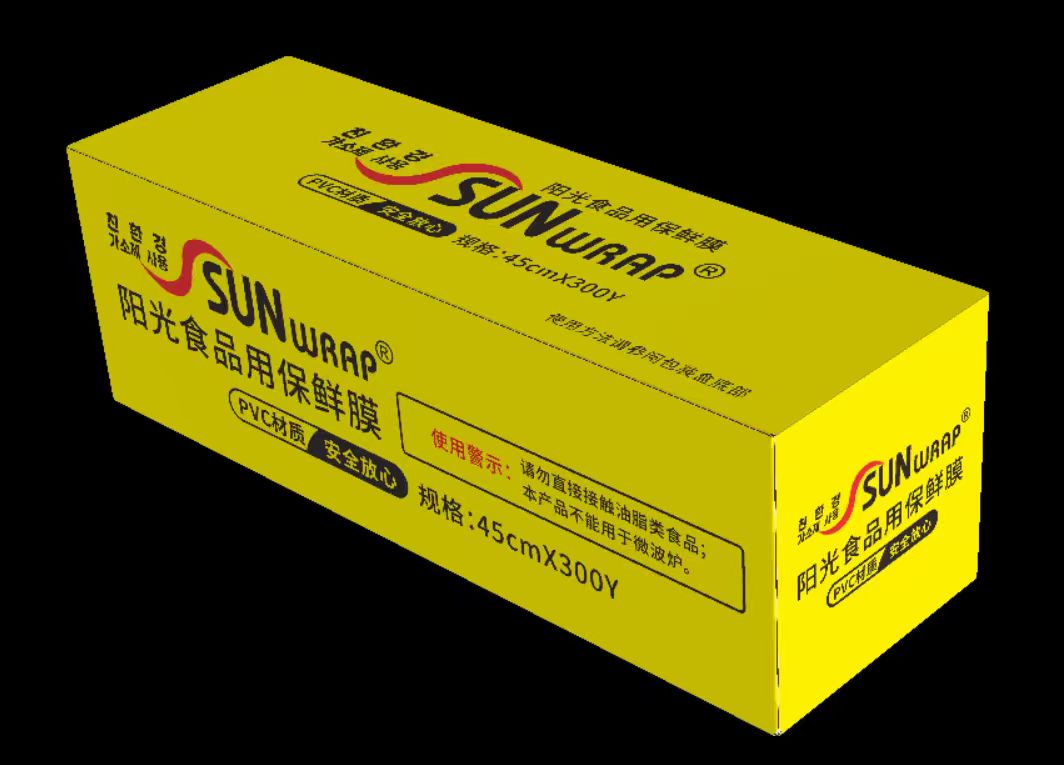
Five criteria B2B buyers should use
After interviewing export managers and auditing documentation from dozens of Chinese cling-film factories, we consistently see the same five criteria separate good suppliers from bad ones.
1. Food-contact compliance — and paperwork to prove it
Ask for: current FDA 21 CFR 177.1950 test report, SGS (or equivalent) heavy-metal and plasticiser-migration report dated within the last 12 months, and — if you are shipping into the EU — a Declaration of Compliance with EU Regulation No 10/2011. A credible factory sends these inside 48 hours. A supplier that needs two weeks to “prepare” the report probably does not run the tests routinely.
2. Factory or trader?
Ask the supplier to send a dated photo of their extrusion line and a short video showing the jumbo roll coming off the winder. Cross-check the business licence (营业执照) against the plant address. Our HS code guide also shows what a genuine factory’s export records should look like. If the photos are generic, the address is a small office in a commercial tower, or the salesperson declines a video call with the factory floor in the background, you are probably talking to a trader. That is not automatically bad, but it changes your QC responsibilities.
3. Batch-to-batch consistency
Request the thickness-tolerance specification (e.g. ±0.5 micron on a nominal 10-micron film) and the factory’s internal QC checklist. A serious factory will also retain production samples per export lot for at least 6–12 months, so that if a customer complaint arises three months later, the exact batch can be pulled and re-tested.
4. Logistics and shipping capability
For export, port proximity matters. Factories near Ningbo-Zhoushan (the world’s number-one port by cargo volume) or Shanghai generally offer lower ocean freight, faster truck turn and more sailings to Southeast Asia, the Middle East and Africa than factories located inland. Ask how long truck-to-port takes and how often they load full containers — a factory that loads two FCL per week has very different reliability than one that loads one every two months.
5. Commercial terms and communication
Look for: FOB quotation as default (with CIF on request); 30% T/T deposit plus 70% against copy of B/L as standard; Alibaba Trade Assurance or L/C available for new buyers; an English-speaking export team that answers enquiries within one working day. Slow replies during the sales phase almost always predict slow replies during the complaint phase.
Conclusion
Most B2B importers do not actually need ten suppliers — they need one primary supplier who can prove food-safety compliance, hold their thickness spec over multiple containers, and ship reliably from a well-connected port, plus one backup. Browse our full cling film products to see what a leading cling film manufacturer offers across PVC, PE and jumbo-roll formats. The list above is a map of where those candidates sit.
SUNWRAP has produced food-grade PVC cling film for 20+ years under Korean investment and was named one of China’s top-ten cling-film brands. If you are sourcing PVC cling film for Southeast Asia, the Middle East, Egypt or Africa, contact our export team — or browse our PVC cling film and cling film jumbo roll product pages for specs, roll sizes and documentation. The follow-up articles most importers read next are our 7-step supplier checklist and the cling film price guide 2026.
Frequently asked questions
How many PVC cling film manufacturers are there in China? Several thousand registered plastic-film producers exist, but the realistic B2B pool for food-grade PVC cling film is 40–60 factories with consistent compliance and export experience. Alibaba and 1688 combined show roughly 4,000 cling-film listings, many of which are traders or rewinders rather than true manufacturers.
Are Chinese PVC cling film manufacturers food-safe? The branded factories in Tier 2 typically are. Any credible supplier should send FDA 21 CFR 177.1950 and SGS migration reports on request. If they cannot, treat that as a red flag.
Should I buy from a brand factory or a smaller OEM factory? For supermarket private label, HORECA and food-processor end-use, buy from a branded factory. Price premium is usually 5–10%, and in exchange you get consistent thickness, stable formulation, and full export paperwork.
What is the typical MOQ? One 20GP container for jumbo rolls, 500–1,000 cartons for finished consumer packs. Trial orders are often negotiable for first-time buyers under Trade Assurance.
Where in China are cling film factories concentrated? Zhejiang (Ningbo, Cixi, Hangzhou), Jiangsu (Suzhou, Wuxi), Guangdong (Foshan, Dongguan), with smaller clusters in Shandong and Hebei. The east-coast clusters dominate food-grade export because they sit next to Ningbo-Zhoushan and Shanghai ports.
Looking for a reliable cling film supplier? SUNWRAP is a Korean-invested manufacturer in Ningbo, China — FDA-compliant, SGS-tested, 20+ years of production. Request a quote →
Need a cling film quote while you're reading?
Our export team responds within 12 hours with FOB Ningbo pricing. No obligation.
Frequently Asked Questions
How many PVC cling film manufacturers are there in China?+
There are several thousand registered plastic film producers in China, but the realistic B2B supplier pool for food-grade PVC cling film is much smaller — perhaps 40–60 factories with consistent food-contact compliance and export experience. On Alibaba and 1688 combined, around 4,000 listings tag themselves as cling film suppliers, but most are traders, rewinders or converters, not resin-to-roll manufacturers.
Are Chinese PVC cling film manufacturers food-safe?+
The established branded factories are. Any credible supplier should produce on request current FDA food-contact test reports, SGS or equivalent third-party heavy-metal and plasticiser-migration reports, and — for EU-bound shipments — a declaration of compliance against EU Regulation No 10/2011. If a factory cannot send these within 48 hours, treat that as a red flag.
Should I buy from a brand factory or a smaller OEM factory?+
For supermarket private label, HORECA and food-processor end-use, buy from a branded factory. The price difference is usually 5–10%, but you gain consistent batch-to-batch thickness, stable formulation, complete paperwork and traceable production samples. For non-food industrial use or one-off retail promotions, a smaller OEM factory can be fine if the buyer is willing to run their own incoming QC.
What is the typical MOQ from a Chinese PVC cling film manufacturer?+
One 20GP container is the standard export MOQ, which equates to roughly 18–22 tonnes of jumbo rolls or 8,000–12,000 cartons of finished consumer packs. Trial orders of 3–5 tonnes or a few hundred cartons are often negotiable for first-time buyers, especially under Alibaba Trade Assurance.
Where in China are the cling film factories concentrated?+
The main clusters are Zhejiang (Ningbo, Cixi, Hangzhou), Jiangsu (Suzhou, Wuxi), Guangdong (Foshan, Dongguan), Shandong and Hebei. Zhejiang and Jiangsu dominate food-grade PVC cling film for export because of proximity to Ningbo-Zhoushan and Shanghai ports and a mature plastics supply chain.
Sourcing cling film and have questions this article didn't answer?
Related articles
Cling Film Price 2026: How Much Does PVC & PE Cling Wrap Cost?
Cling film price guide 2026 — resin costs, factory margins, FOB vs CIF ranges by SKU, and a line-by-line read of a Chinese supplier's quotation, for PVC and PE.
Food Wrap Types: PVC vs PE vs PVDC — Which Is Safest?
PVC clings hardest at $0.80/roll. PE is microwave-safe. PVDC costs 3x more. Side-by-side comparison of all 3 food wrap materials with FDA status, thickness data & bulk pricing. Factory direct →
How to Choose a Food Grade Cling Film Supplier
A 7-step checklist for vetting a food-grade PVC cling film supplier — what to ask, green flags vs red flags, and the paperwork a serious factory sends in 48 hours.