
Logistics
Cling Film HS Code 3920: Import Guide for PVC and PE Film (2026)

Cling Film HS Code 3920: Import Guide for PVC and PE Film (2026)
HS codes look like bureaucratic trivia until a container is sitting at destination with the wrong paperwork. For cling film — both PVC and PE — the key heading is 3920, and the subheadings, documents and trade-agreement preferences below it determine how much duty you pay, how long customs clearance takes, and whether the shipment clears at all. This guide walks importers through the practical essentials: the right HS code, the document pack, origin-certificate process, typical duty ranges by region, and the customs issues we see most often on cling-film shipments from China.
Nothing in this article is a substitute for a licensed customs broker in your destination country. Tariff rates change, subheadings are extended to 8 or 10 digits locally, and specific-market requirements (SONCAP, SASO, BIS, etc.) move independently. Treat this as an orientation map, not a tariff schedule.

The HS system, briefly
The Harmonized System (HS) is a six-digit global commodity code maintained by the World Customs Organization. Most countries extend each HS code to 8 digits (EU), 10 digits (US), or 10 digits (China) for domestic tariffs and statistics. The first six digits are consistent worldwide — which is why quoting a six-digit code is enough to make a conversation with customs authorities productive.
Chapter 39 covers plastics and articles thereof. Heading 3920 covers:
“Other plates, sheets, film, foil and strip, of plastics, non-cellular and not reinforced, laminated, supported or similarly combined with other materials.”
This is the heading that covers cling film.
The right subheading for cling film
PVC cling film: 3920.43
- 3920.43 — of polymers of vinyl chloride, containing by weight not less than 6% of plasticisers.
- Practically every food-grade PVC cling film falls here, because food-grade PVC cling film is flexible precisely because it contains 25–30% plasticiser.
Rigid PVC: 3920.49
- 3920.49 — of polymers of vinyl chloride, other (i.e. with less than 6% plasticiser or unplasticised).
- Not typically used for cling film, but sometimes appears on invoices when suppliers default to it incorrectly.
PE cling film: 3920.10
- 3920.10 — of polymers of ethylene.
- Covers LDPE, LLDPE and HDPE film in this heading. Country-level extensions distinguish thickness and end use. See our PE cling film product page for spec and MSDS details that sit behind this subheading.
Quick reference
| Material | 6-digit HS | Description |
|---|---|---|
| Food-grade PVC cling film (plasticised) | 3920.43 | Vinyl chloride polymers, ≥6% plasticiser |
| Rigid PVC film | 3920.49 | Vinyl chloride polymers, other |
| PE cling film (LDPE/LLDPE) | 3920.10 | Ethylene polymers |
| Polypropylene film | 3920.20 | Propylene polymers (not cling film) |
| PET film | 3920.62 | PET (not cling film) |
If a supplier quotes 3920.20 or 3923 for cling film, double-check. Heading 3923 covers “articles for the conveyance or packing of goods, of plastics” — packaging sacks, boxes and similar — not film on rolls.
The import document pack
For cling film from China, the standard document set required at destination customs is:
- Commercial Invoice — showing value, Incoterm, HS code, and consistent currency.
- Packing List — carton count, gross and net weights, dimensions.
- Bill of Lading (B/L) — ocean freight; or Air Waybill for air freight.
- Certificate of Origin (CO) — from CCPIT or Chinese customs. Preferential CO (e.g. Form E for ASEAN, Form F for Chile, Form M for Malaysia) where a trade agreement applies.
- Product Test Reports — FDA food-contact, SGS heavy-metal and migration reports, or local equivalents.
- Material Safety Data Sheet (MSDS) — naming the specific resin grade.
- Food-Contact Declaration of Compliance — where required by the destination (EU Regulation No 10/2011 DoC for EU, similar declarations for GCC and some African markets).
- Pre-shipment Inspection Certificate — where required: SONCAP (Nigeria), SASO/SABER (Saudi Arabia), COC (various African markets), BIS (India for some products).
- Health Certificate — some markets require one for food-contact plastics.
- Insurance Certificate — for CIF shipments.
Every document should show the same consignee, description, quantity and value. Customs officers routinely cross-check invoice totals against B/L values and packing-list weights; mismatches are the most common reason for shipments to be held.
Certificate of Origin — the CCPIT process
Chinese exporters can issue Certificates of Origin through two channels:
- CCPIT (China Council for the Promotion of International Trade) — issues general COs and most preferential COs, via local commercial sub-councils across China.
- China Customs / GACC — issues COs for certain programs, particularly Form E (ACFTA / ASEAN) via customs-linked platforms.
Practical workflow for a China → destination shipment:
- Supplier prepares commercial invoice, packing list and export declaration.
- Supplier applies for the CO through CCPIT or customs, attaching the invoice, packing list and relevant manufacturer’s declaration.
- CO is issued in 1–3 working days for routine cases.
- Original CO is couriered to the importer, with a scanned copy sent by email for advance customs filing.
Common CO forms for cling film:
| Form | Trade agreement | Typical destinations |
|---|---|---|
| CO General | — | Any market without a preferential agreement |
| Form E | ACFTA | ASEAN (Vietnam, Thailand, Indonesia, Philippines, Malaysia, etc.) |
| Form F | China-Chile FTA | Chile |
| Form M | China-Malaysia / ASEAN+ | Malaysia |
| Form RCEP | RCEP | RCEP members (Japan, Korea, ASEAN, ANZ) |
| GSTP | Global System of Trade Preferences | Select developing-country routes |
Preferential CO usually saves several percentage points of duty — well worth the extra few days of paperwork.
Typical duty ranges by region
The following are orientation ranges only. Always confirm the current duty rate on the full 8- or 10-digit tariff line with a licensed customs broker in the destination country before quoting landed cost.
Asia-Pacific
- ASEAN (Vietnam, Thailand, Indonesia, Philippines, Malaysia): Under ACFTA / RCEP with a valid Form E or RCEP CO, 3920.43 and 3920.10 frequently attract 0% or low single-digit duty. Without the preferential CO, MFN rates apply, typically in the 5–15% range.
- India: MFN duties on 3920 lines sit in the 10–15% range, plus IGST and cess. BIS certification may apply depending on the specific end use.
- Japan, Korea, Australia, New Zealand: Generally low duty rates under RCEP or bilateral FTAs.
Middle East
- GCC (UAE, Saudi Arabia, Qatar, Kuwait, Bahrain, Oman): Common external tariff is typically 5% for most 3920 lines. Saudi Arabia requires SASO / SABER conformity; UAE may require ESMA-registered products for certain categories.
Africa
- North Africa (Egypt, Morocco, Algeria, Tunisia): Duty rates vary; Egypt has historically applied duties in the low-to-mid teens percent range on plastic film, plus VAT. Local import licences and pre-shipment inspection may apply.
- West and East Africa (Nigeria, Ghana, Kenya, Ethiopia): Duty rates commonly sit in the 10–25% range depending on the line and country. SONCAP (Nigeria), COC (Kenya, Ethiopia) pre-shipment inspections are frequently required.
- Southern Africa (South Africa, SADC): Duties vary by the specific tariff line; see SARS for current rates.
Europe
- EU: MFN duty on 3920.43 and 3920.10 is typically a low single-digit percentage plus VAT at destination. Food-contact compliance (EU Regulation No 10/2011) and REACH obligations apply.
- UK: Similar structure post-Brexit; check the UK Global Tariff.
Americas
- United States: HS 3920.43 and 3920.10 carry low-single-digit duty rates under normal MFN. Section 301 tariffs on Chinese-origin plastic goods have affected some lines historically — confirm the current position with a US customs broker.
- Mexico, Brazil, Argentina: Duty structures vary; Brazil in particular can apply higher IPI and ICMS on top of import duty.
Practical tips to avoid customs problems
1. Keep HS code, description and value consistent across documents
Invoice, packing list, B/L and CO must agree. The single most common reason for cling-film shipments to be held is a mismatch — often a careless copy-paste from an older template.
2. Don’t under-declare the invoice value
Some importers ask suppliers to lower the declared value to save duty. Destination customs authorities increasingly cross-reference declared values against reference prices for commodity plastics. Under-declaration that triggers an investigation costs far more than the duty saved — fines, demurrage, reputational risk at customs. Reputable Chinese suppliers decline this request politely.
3. Keep CIF vs FOB values consistent
If the invoice is CIF, the CIF value should logically exceed the FOB value by a plausible freight+insurance figure. An invoice that shows FOB value on a CIF-term shipment (or vice versa) flags the file for inspection.
4. Put the full test-report pack in the file
Even in markets that do not strictly require third-party reports at the border, having them in the file speeds up clearance when a random inspection lands on your container.
5. Use the correct preferential CO where a trade agreement applies
Form E, RCEP CO or the applicable preferential certificate is often worth several points of duty. Build it into your standard document pack.
6. Name the polymer correctly on the invoice
For 3920.43, the description should say something like “PVC cling film, plasticised, food-grade, of polymers of vinyl chloride containing ≥6% plasticiser by weight”. Vague descriptions (“plastic film for food”) slow clearance.
A note on market-specific certification
| Market | Extra document / certification |
|---|---|
| Nigeria | SONCAP (Product Certificate + Certificate of Conformity) |
| Saudi Arabia | SABER platform registration, SASO conformity |
| Kenya, Ethiopia, Tanzania, Uganda | PVoC / COC (pre-shipment inspection) |
| Egypt | GOEIC registration for the exporter, import licence |
| India | BIS CRS where applicable, FSSAI for some food-contact items |
| EU | EU Regulation No 10/2011 DoC, REACH compliance |
| Iraq | COC / quality conformity certificate |
| Algeria | Algerian certification scheme |
Chinese manufacturers with export experience can usually support these workflows — the key is to flag the destination country early so that the relevant certifications are lined up before production, not after the container ships.
Conclusion
HS code 3920 is one of the better-behaved parts of the Harmonized System for plastics: PVC cling film is 3920.43, PE cling film is 3920.10, and the document pack is largely standardised. The work for importers is less about decoding the tariff and more about keeping documents consistent, securing the right preferential CO, and pre-clearing market-specific certifications.
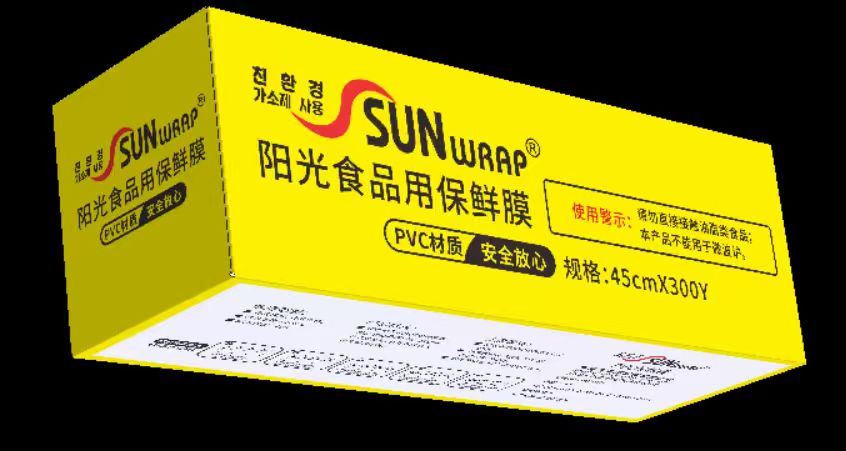
SUNWRAP has exported PVC cling film under HS 3920.43 for 20+ years from our plants in Dalian (pre-2025) and Ningbo Cixi (post-2025), and we regularly prepare FDA, SGS, Form E, RCEP and destination-specific documentation for importers across the Philippines, Vietnam, Indonesia, UAE, Egypt, Nigeria and India. If you need an experienced exporter who can work with your forwarder and send a complete document pack with every shipment, contact our export team.
Frequently asked questions
What is the HS code for PVC cling film? 3920.43 — plasticised PVC film, ≥6% plasticiser by weight. Rigid PVC without plasticiser falls under 3920.49.
What is the HS code for PE cling film? 3920.10 — film of polymers of ethylene.
Do I need a certificate of origin? Yes, in most cases. Use a preferential CO (Form E, RCEP CO, etc.) where a trade agreement applies.
What documents do I need? Commercial invoice, packing list, B/L, CO, FDA/SGS test reports, MSDS, food-contact DoC where required, and market-specific certifications (SONCAP, SASO, BIS).
What duty rate applies? Varies by country: often 0% under ACFTA/RCEP in ASEAN, ~5% GCC, 10–25% across much of Africa, low single digits EU/US MFN. Confirm with a licensed broker.
What are common customs problems? Under-declared values, mismatched HS codes across documents, missing test reports, CIF/FOB inconsistencies, and missing market-specific certifications.
Need HS codes and compliance paperwork handled before your shipment clears? A reliable cling film manufacturer like SUNWRAP includes the correct HS classification, test reports and certificates of origin with every export order — request a quote to see the full documentation package.
Need a cling film quote while you're reading?
Our export team responds within 12 hours with FOB Ningbo pricing. No obligation.
Frequently Asked Questions
What is the HS code for PVC cling film?+
PVC cling film falls under HS chapter 39 (plastics). The typical subheading is 3920.43 — plates, sheets, film, foil and strip of non-cellular plastic, of polymers of vinyl chloride, containing by weight not less than 6% of plasticisers. Rigid PVC film without plasticiser falls under 3920.49. Always confirm the full 8- or 10-digit tariff code with your destination customs broker.
What is the HS code for PE cling film?+
PE cling film falls under HS 3920.10 — plates, sheets, film, foil and strip of non-cellular plastic of polymers of ethylene. The broader 6-digit code is 3920.10; most countries extend this to 8 or 10 digits for domestic tariff and statistics.
Do I need a certificate of origin to import cling film from China?+
Yes, in most cases. A Certificate of Origin (CO) is required to claim preferential tariffs under trade agreements (for example, ACFTA for ASEAN countries) and to satisfy general customs documentation rules in many markets. Chinese exporters obtain the CO from the China Council for the Promotion of International Trade (CCPIT) or from Chinese customs, depending on the type of certificate.
What documents does an importer need for cling film from China?+
Standard document set: commercial invoice, packing list, bill of lading (or air waybill), certificate of origin, product test reports (FDA, SGS or local equivalent), material safety data sheet, and — where the destination requires it — a health certificate or food-contact compliance declaration. Specific markets may also require pre-shipment inspection (e.g. SONCAP for Nigeria, SASO for Saudi Arabia) and ingredient disclosure.
What duty rate applies to cling film under HS 3920?+
Duty rates vary by country and by trade agreement. As a general orientation: ASEAN countries importing from China under the China-ASEAN FTA often see 0% or low single-digit rates for 3920.43; the GCC common tariff is typically 5%; many African countries apply rates in the 10–25% range; EU MFN rates sit in the low single digits but are moving targets. Always confirm the current rate with a licensed customs broker in the destination country before quoting landed cost.
What are the most common customs problems with cling film imports?+
Under-declaration of value (often flagged by destination customs cross-checking against reference prices), mismatched HS codes between the invoice and the bill of lading, missing or expired food-contact test reports, incorrect CIF/FOB value consistency between documents, and missing country-specific certifications (SONCAP, SASO, BIS etc.).
Sourcing cling film and have questions this article didn't answer?
Related articles
Cling Film Price 2026: How Much Does PVC & PE Cling Wrap Cost?
Cling film price guide 2026 — resin costs, factory margins, FOB vs CIF ranges by SKU, and a line-by-line read of a Chinese supplier's quotation, for PVC and PE.
How to Choose a Food Grade Cling Film Supplier
A 7-step checklist for vetting a food-grade PVC cling film supplier — what to ask, green flags vs red flags, and the paperwork a serious factory sends in 48 hours.
Top 10 Cling Film Manufacturers China 2026
China's 10 largest cling film manufacturers ranked by production capacity, export volume and food-safety certifications (FDA/EU/BRC). Includes factory profiles (PVC & PE), tier map, pricing ranges and the 5 criteria wholesale buyers use to shortlist cling film suppliers.