
Sourcing
How to Choose a Food Grade Cling Film Supplier

How to Choose a Food-Grade PVC Cling Film Supplier: 7-Step Checklist
Picking the wrong food-grade PVC cling film supplier is a slow-motion expensive mistake. The film arrives, looks fine, wraps meat on the supermarket line for a month — and then a batch comes in slightly off-spec, the tray-wrappers start jamming, migration test results get queried by a retailer, and suddenly a container and a half of stock is in limbo. This checklist is the workflow we recommend to B2B importers who are onboarding a new PVC cling film supplier in China, in the order you should run it. Seven steps, each with a clear “green flag / red flag” test.
Why food-grade PVC cling film is unusually sensitive to supplier choice
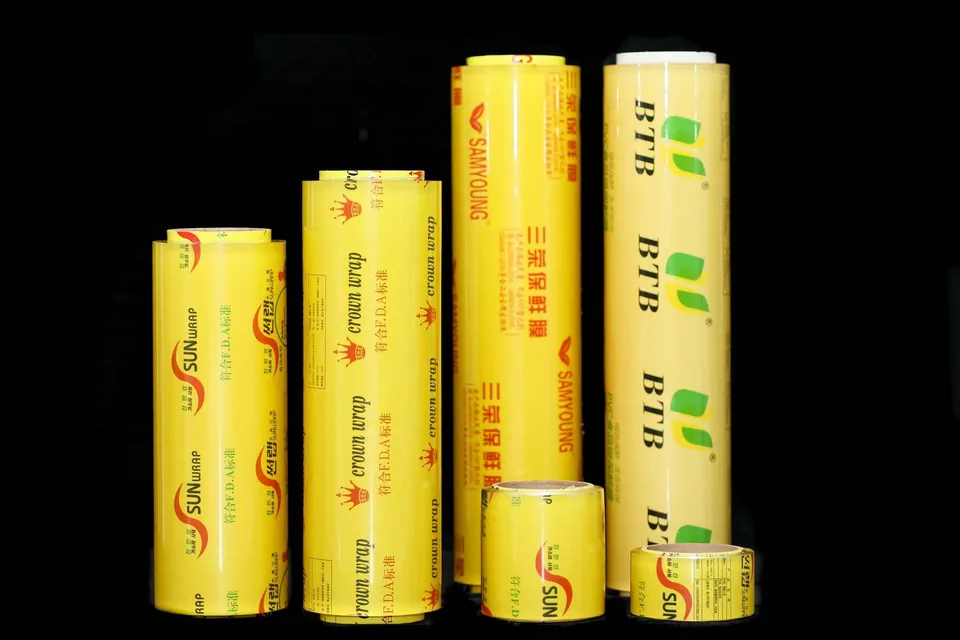
PVC cling film is cheap per roll, but three things make supplier quality matter more than the sticker price suggests. First, it is in direct contact with food, which pulls heavy-metal and plasticiser-migration regulation into scope. Second, end-users like supermarkets and food processors run it on automatic equipment where thickness inconsistency causes immediate machine problems. Third, the product sits in the retailer’s own-brand line of sight, so any recall exposes not just the importer but also their customer. Good suppliers internalise all three pressures; bad ones treat PVC cling film as a commodity. Our own PVC cling film product page and food-grade cling film page set out what the documentation and specification look like in practice.
Step 1. Verify food-contact certification
This is the non-negotiable step. A genuine food-grade PVC cling film supplier can send, within 48 hours of request:
- An FDA 21 CFR 177.1950 compliance test report (the regulation covering PVC resin formulations for food contact).
- An SGS or equivalent third-party test report covering heavy metals (lead, cadmium, mercury, chromium VI), overall migration and specific migration of plasticisers — dated within the last 12 months.
- For EU-bound shipments, a Declaration of Compliance with EU Regulation (EU) No 10/2011 on plastic materials intended to come into contact with food. Note that EU buyers should separately confirm whether PVC is acceptable for the specific application — see our PVC vs PE cling film comparison for the regulatory landscape.
- Ideally: ISO 9001 (quality management) and ISO 22000 (food-safety management).
Green flag: all of the above sent as PDFs within 24–48 hours, with the laboratory name, report number and issue date visible. The supplier volunteers additional supporting documents.
Red flag: the supplier asks for two weeks to “prepare” the report, sends expired or partial reports, sends reports in a different company’s name with no clear corporate link, or refuses to share because of “confidentiality”.
Step 2. Request material-safety data and third-party test reports for your specific SKU
Generic compliance is not the same as your-SKU compliance. PVC formulations can differ by plasticiser blend (DOA, DEHA, polymeric plasticisers, etc.), and the formulation in the supplier’s brochure may not match the roll you are quoted. Ask for:
- MSDS / SDS naming the specific grade you are buying.
- Migration test report on the actual production formulation, not a generic resin test.
- Spec sheet listing thickness, width, length, transparency, cling force and temperature range.
- Production sample retention policy — a serious factory keeps retained samples per export lot for at least 6–12 months.
Green flag: the spec sheet matches the quotation exactly, the MSDS lists the same grade code as the invoice, retained-sample policy is documented.
Red flag: spec sheets are vague (“food grade PVC”), the grade code on the MSDS differs from the quote, or there is no retained-sample policy at all.
Step 3. Confirm factory vs trader
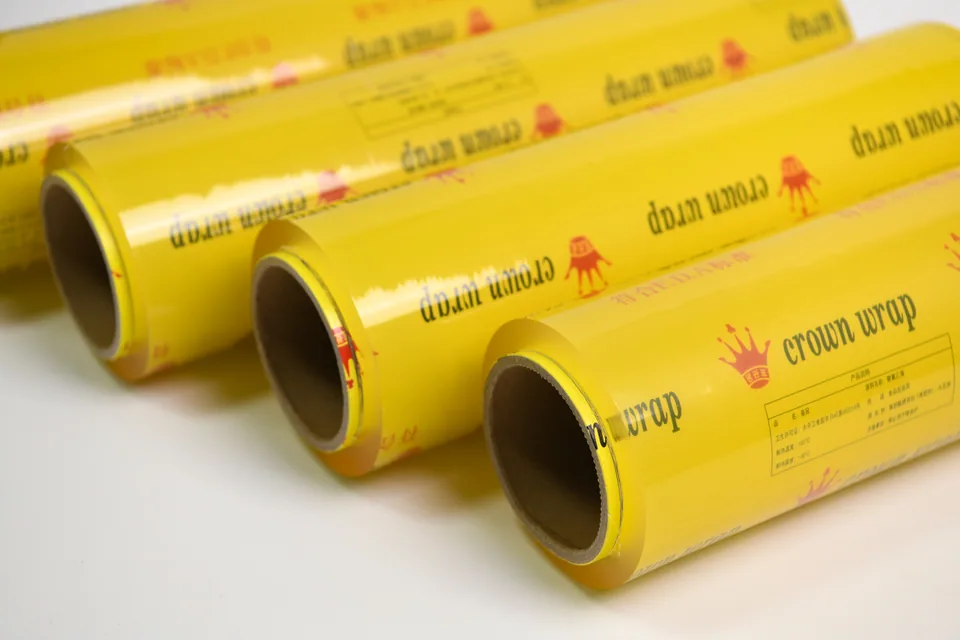
Traders are not inherently bad — many Chinese export transactions are handled by trading companies representing real factories — but you need to know which one you are dealing with, because it changes your QC responsibility.
Tests for real-factory status:
- Business licence (营业执照) with manufacturing scope that explicitly includes plastic film production (塑料薄膜生产).
- Dated photo of the extrusion line with today’s newspaper or a printed date sheet visible in frame.
- Short live video call showing the factory floor, winder, packaging station and warehouse.
- Production-line capacity figure (e.g. “two casting lines, total 200 tonnes/month”) that matches what is visible on the video.
- Registered address in an industrial park rather than an office tower.
Green flag: business licence address matches the plant video, the salesperson can casually walk you through the line on camera, monthly capacity and production schedule are stated without hedging.
Red flag: the supplier forwards other factories’ photos as “our line”, the business licence address is a residential building or CBD office, video calls are always “not convenient this week”.
Step 4. Evaluate consistency — thickness, cling, batch-to-batch variation
Food-grade PVC cling film is used on automatic tray-wrappers and in-line processor equipment. Thickness inconsistency is the single biggest cause of downstream machine jams and customer complaints. Ask for:
- Stated thickness tolerance (e.g. ±0.5 micron on 10-micron film).
- In-line thickness-gauge photos from the production line.
- Internal QC checklist covering thickness, transparency, cling force, odour, visual defects.
- Sample roll before you commit to a container. Measure thickness at 10 points across the width and along 20 metres of length. Variation within ±1.0 micron on a 10-micron film is acceptable; wider than that, walk away.
Green flag: factory volunteers thickness-profile data, has an online thickness gauge, retains samples per lot, offers a 1–2 roll free sample plus expedited courier.
Red flag: spec sheet lists no tolerance at all, “quality is good, don’t worry”, samples arrive 3 weeks late with no tracking number.
Step 5. Check shipping and logistics capability
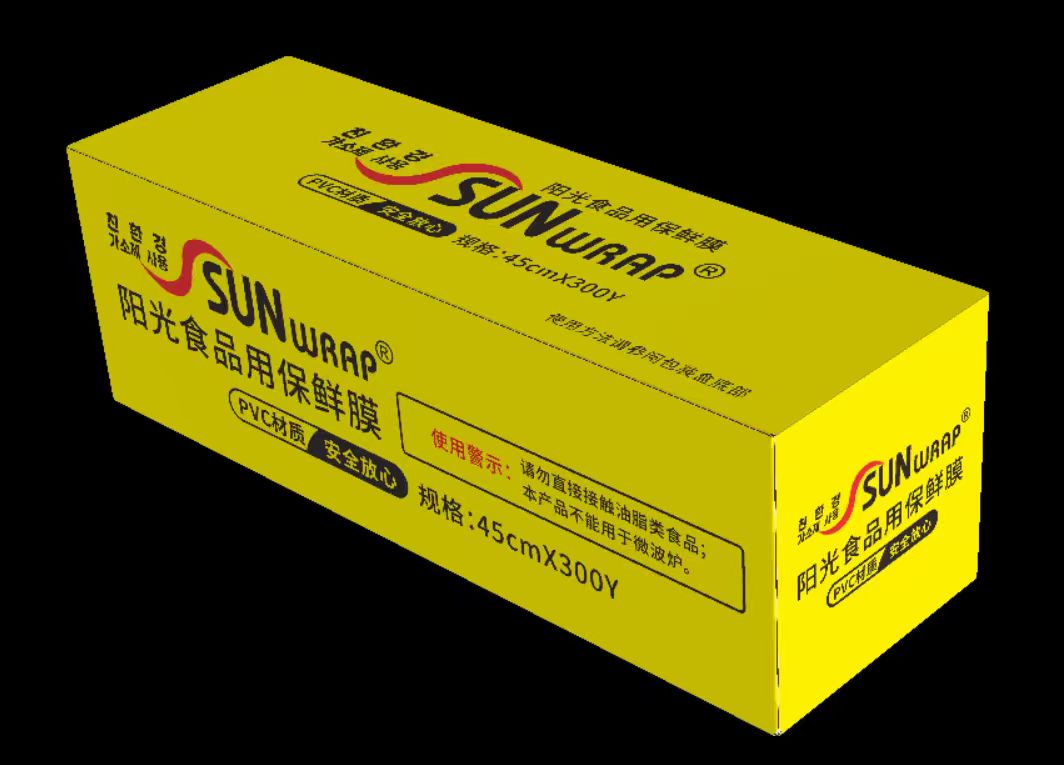
A factory that cannot reliably get containers onto ships will cost you more in missed retail promotions than its per-roll price saves. Questions to ask:
- Distance from the factory to the export port (Ningbo-Zhoushan, Shanghai, Qingdao).
- Typical truck-to-port lead time.
- Number of FCL loadings per month (a proxy for export experience).
- Standard Incoterms on offer — FOB should be routine, CIF/CFR available on request.
- HS code used on the commercial invoice (3920.43 for PVC cling film with ≥6% plasticiser; 3920.49 for other PVC plates/sheets/film) — see our HS code 3920 cling film import guide.
Green flag: factory sits within 100 km of a major export port, loads multiple FCL per week, quotes FOB and CIF without hesitation, correct HS codes on the invoice.
Red flag: factory is deep inland, port trucking takes 2+ days, “we only quote EXW”, vague or wrong HS code.
Step 6. Payment and trade terms
The standard terms for Chinese PVC cling film export are well established. Deviations should trigger questions.
| Term type | Market standard | Watch out for |
|---|---|---|
| Deposit | 30% T/T on order | 100% upfront on first order |
| Balance | 70% against copy of B/L | 100% before production |
| L/C | At sight, for orders > USD 30,000 | Supplier who refuses L/C |
| Trade Assurance | Standard on Alibaba for first orders | Supplier who actively discourages it |
| Open account (O/A) | Only for trusted, repeat customers | Offered freely by strangers |
| Incoterms | FOB Ningbo / Shanghai default | EXW-only with no port support |
Green flag: 30/70 T/T as default, Trade Assurance supported, L/C welcomed for large orders, FOB quotation includes all port-side fees.
Red flag: “our price is only valid for 100% T/T in advance”, no willingness to discuss L/C, FOB quote silently excludes THC or documentation fees.
Step 7. MOQ and lead time
PVC cling film is produced in continuous extrusion runs, so very small orders are genuinely uneconomic for factories. That said, standard market practice is reasonable:
- MOQ for jumbo rolls: one 20GP container, typically 18–22 tonnes.
- MOQ for finished consumer packs: 500–1,000 cartons, sometimes lower for Trade Assurance trial orders.
- Production lead time: 15–25 days for standard SKUs after receipt of deposit; 25–35 days if custom printing is involved.
- Sample lead time: 3–7 working days for standard spec; 10–14 days for custom.
- Total time from first enquiry to goods in warehouse: 6–10 weeks for a new supplier, 4–6 weeks for a repeat.
Green flag: supplier proposes a trial order below full-container MOQ to earn trust, quotes a realistic lead time and sticks to it, sends production-progress photos without being asked.
Red flag: unrealistically short lead time (“5 days, no problem”), MOQ doubles after the quotation is accepted, production silence for two weeks after the deposit.
Summary checklist
Use this table as a quick reference when scoring a supplier.
| Step | What to ask for | Green flag | Red flag |
|---|---|---|---|
| 1. Food-contact cert | FDA, SGS, ISO, EU DoC | Sent in 24–48h | ”Takes two weeks” |
| 2. SKU-specific docs | MSDS, spec sheet, migration test | Grade codes match | Grades don’t match |
| 3. Factory vs trader | Licence, video, address | All consistent | Photos don’t match address |
| 4. Consistency | Thickness tolerance, samples | ±0.5 μm on 10 μm | No tolerance stated |
| 5. Logistics | Port distance, HS code | <100 km, 3920.43 | Inland, vague HS |
| 6. Payment | 30/70 T/T, L/C, Trade Assurance | Standard terms | 100% upfront on first order |
| 7. MOQ and lead time | 1×20GP, 15–25 days | Trial order negotiable | MOQ changes post-quote |
Conclusion
A good food-grade PVC cling film supplier passes all seven steps without friction — not because they are extraordinary, but because reliable export operations make these answers routine. When you feel yourself making excuses for a supplier (“they’re slow on documents but the price is great”), that is usually the moment to stop and run the checklist in full. For a broader view of who the credible cling film manufacturers are, see our top 10 PVC cling film manufacturers in China ranking, and for landed-cost benchmarks to cross-check quotations, read the 2026 cling film price guide.
SUNWRAP has produced food-grade PVC cling film for 20+ years under Korean investment, and we operate inside this checklist every working day — FDA-compliant, SGS-tested, inside a food-grade cleanroom 40 km from Ningbo-Zhoushan Port. If you are sourcing for the Philippines, UAE, Egypt, Nigeria or India, contact our export team and we will send the full documentation pack inside one working day.
Frequently asked questions
What certifications should a food-grade PVC cling film supplier have? FDA 21 CFR 177.1950, SGS heavy-metal and migration tests, EU Regulation No 10/2011 DoC for EU-bound shipments, and ideally ISO 9001 and ISO 22000.
How do I know whether a supplier is a real factory or just a trader? Dated extrusion-line photos, a live video of the winder, business-licence address matching the plant, and a manufacturing-scope entry on the licence.
What is a reasonable MOQ? One 20GP container for jumbo rolls; 500–1,000 cartons for finished consumer packs; smaller trial orders under Trade Assurance.
What payment terms are normal? 30% T/T deposit, 70% against copy of B/L. L/C at sight for orders above USD 30,000. Trade Assurance for first orders.
What thickness tolerance should I expect? ±0.5 micron on a nominal 10-micron film, lot to lot.
How long does onboarding take? 6–10 weeks from first enquiry to goods in your warehouse for a new supplier.
Looking for a reliable cling film supplier? SUNWRAP is a Korean-invested manufacturer in Ningbo, China — FDA-compliant, SGS-tested, 20+ years of production. Request a quote →
Need a cling film quote while you're reading?
Our export team responds within 12 hours with FOB Ningbo pricing. No obligation.
Frequently Asked Questions
What certifications should a food-grade PVC cling film supplier have?+
At minimum: FDA 21 CFR 177.1950 compliance for food-contact PVC, an SGS or equivalent third-party test report on heavy metals and plasticiser migration, and — if shipping to the EU — a Declaration of Compliance against EU Regulation No 10/2011. Factories that serve HORECA and processors also commonly hold ISO 9001 and ISO 22000.
How do I know whether a supplier is a real factory or just a trader?+
Ask for a dated photo of the extrusion line, a short live video of the jumbo roll coming off the winder, and the business licence (营业执照). Cross-check the licensed address — if it matches a small office in a commercial tower rather than an industrial park, you are probably talking to a trader. Alibaba's Verified Supplier and factory-audit reports also help but are not by themselves proof.
What is a reasonable MOQ from a food-grade PVC cling film factory?+
Standard export MOQ is one 20GP container (about 18–22 tonnes of jumbo rolls, or 8,000–12,000 cartons of finished consumer packs). Trial orders of 3–5 tonnes or a few hundred cartons are often negotiable, especially for first-time buyers using Alibaba Trade Assurance.
What payment terms are normal for PVC cling film imports from China?+
The market standard is 30% T/T deposit plus 70% against copy of B/L. L/C at sight is common for orders above USD 30,000. Trade Assurance is the simplest option for first orders. Avoid suppliers who insist on 100% upfront for no clear reason, and be cautious of any supplier who proposes open-account on a first deal.
What thickness tolerance should I expect from a serious supplier?+
On a nominal 10-micron PVC cling film, a serious factory holds ±0.5 micron or tighter, lot to lot. Variation wider than ±1.0 micron tends to cause jams and breakage on automatic supermarket tray-wrappers and on processor in-line machines.
How long does it take to onboard a new Chinese cling film supplier?+
Realistic timeline: 1 week to exchange documents and specs, 1–2 weeks for samples to arrive and be tested, 2–4 weeks to produce the first order, and 1–4 weeks ocean transit. From first enquiry to goods in your warehouse, expect 6–10 weeks for the first shipment.
Sourcing cling film and have questions this article didn't answer?
Related articles
Cling Film Price 2026: How Much Does PVC & PE Cling Wrap Cost?
Cling film price guide 2026 — resin costs, factory margins, FOB vs CIF ranges by SKU, and a line-by-line read of a Chinese supplier's quotation, for PVC and PE.
PVC Cling Film vs PE Cling Film: Which Should You Import in 2026?
PVC vs PE cling film — performance, food safety, regulation and cost, side by side, plus a market-by-market recommendation for 2026 B2B importers sourcing from China.
Top 10 Cling Film Manufacturers China 2026
China's 10 largest cling film manufacturers ranked by production capacity, export volume and food-safety certifications (FDA/EU/BRC). Includes factory profiles (PVC & PE), tier map, pricing ranges and the 5 criteria wholesale buyers use to shortlist cling film suppliers.