
Buyer's Guide
Best Plastic Wrap Brands 2026: Glad vs Saran vs Stretch-Tite
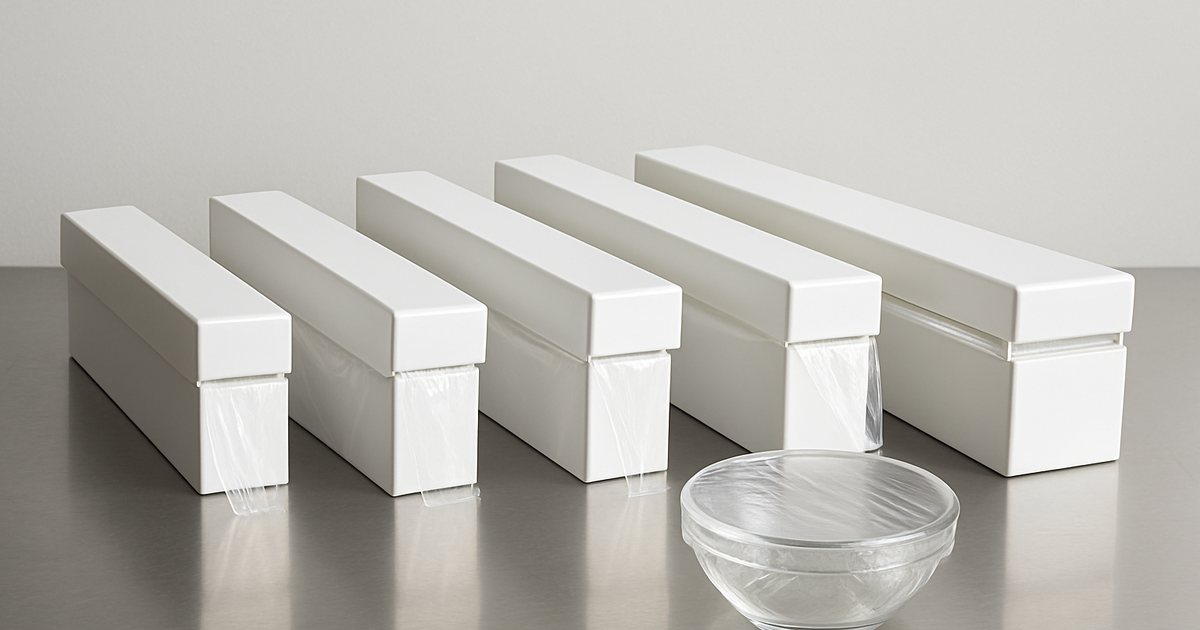
Best Plastic Wrap Brands 2026: Glad vs Saran vs Reynolds vs Stretch-Tite vs Kirkland
Last Updated: 2026-10-12
Quick answer: If you want the strongest cling, buy a PVC wrap: Stretch-Tite, Kirkland Signature Stretch-Tite, or a foodservice roll such as Reynolds Film. If you want the cheapest wrap per square foot, buy a warehouse-club or foodservice roll, at about $0.005–$0.01/sq ft against $0.02–$0.05 for supermarket boxes. Glad Cling Wrap and current US Saran are polyethylene (PE). They are fine on glass and ceramic, but both are weaker on plastic containers. Glad Cling Wrap was also the thinnest film in independent testing.
We are a cling film manufacturer, not a reviewer. SUNWRAP has run PVC cling film lines in China continuously since 2004 and added a PE line in 2025. This guide compares the brands by what we can actually measure: the polymer, the thickness and the cost per square foot. Once you know those three numbers, the brand name tells you very little more.
Key takeaways
- The polymer decides cling, not the brand. PVC is self-tacky through its whole thickness. PE relies on a tackifier additive, which is why both Saran products failed to hold on a plastic bowl in America’s Test Kitchen’s test.
- Thickness under ~0.5 mil (12.7 µm) tears easily. Glad Cling Wrap measured 0.3 mil (7.6 µm). The test winner measured 0.68 mil (17.3 µm).
- Film is under 10% of the shelf price. A 10 µm PVC sheet costs the factory about $0.002 per sq ft. Most of the $0.02–$0.05 you pay is box, cutter, freight and retail margin, so compare price per square foot, never price per box.
What’s Actually Inside Each Brand’s Roll?
Every household plastic wrap sold in North America is one of three polymers:
- PVC (polyvinyl chloride, softened with a plasticizer).
- PE (low-density or linear low-density polyethylene with a tackifier).
- PVDC (polyvinylidene chloride, the original Saran).
The polymer explains about 80% of what you feel at the counter. For the full chemistry, see our cling wrap vs Saran wrap vs plastic wrap explainer.
| Brand / product | Polymer | Maker | Notes |
|---|---|---|---|
| Stretch-Tite Premium | PVC | Polyvinyl Films, Inc. (Sutton, MA, USA) | Labelled phthalate-free and BPA-free |
| Kirkland Signature Stretch-Tite (Costco) | PVC | Same maker as Stretch-Tite | Large club roll, lowest consumer cost per sq ft |
| Freeze-Tite | PVC | Polyvinyl Films, Inc. | Thicker freezer grade |
| Reynolds foodservice film (12–18 in × 2,000 ft) | PVC | Pactiv Evergreen | Distributor listings: PVC, rated 0 °F to 150 °F |
| Reynolds retail Quick Cut | Reported as PE | Reynolds Consumer Products | Not confirmed by the maker, so check the box |
| Glad Cling Wrap | PE | Clorox (Glad) | Thinnest film in ATK testing |
| Glad Press’n Seal | PE + pressure-sensitive adhesive | Clorox (Glad) | Seals by adhesion, not cling |
| Saran Premium / Cling Plus (US) | PE | SC Johnson | PVDC until about 2004 |
| Saran Wrap (Japan) | PVDC | Asahi Kasei | Still the original polymer, at a premium price |
Two things stand out. First, the three best-known PVC consumer wraps in the US (Stretch-Tite, Kirkland Stretch-Tite and Freeze-Tite) all trace back to one Massachusetts film maker, and the other big retail brands are PE. Second, “Saran” no longer means one material. The US and Japanese products share a name and nothing else. If an old recipe or a grandparent swears Saran was the clingiest wrap ever made, they are remembering PVDC.
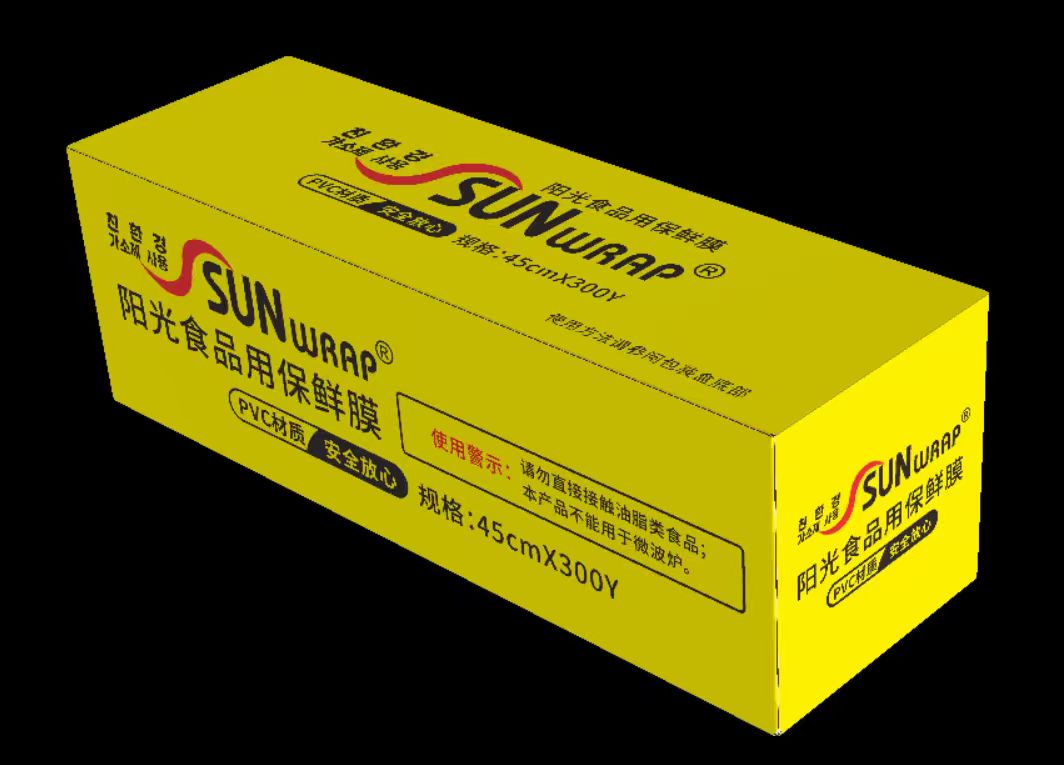 PVC cling film in a 45 cm retail box. PVC is the polymer behind Stretch-Tite, Kirkland and most foodservice film.
Thickness: The ATK Test Data, Converted to Units That Make Sense
America’s Test Kitchen’s plastic wrap review is still the most cited head-to-head test. It covered 8 products and measured thickness through an independent lab. The review prints thickness as “0.68 mm” and similar values. That unit cannot be right. A 0.68 mm film would be as thick as a credit card. The figures only make physical sense as mils (thousandths of an inch), which is how US film is normally specified. Converted to microns (1 mil = 25.4 µm):
| Product (ATK test) | Width | Thickness (mil) | Thickness (µm) | ATK verdict |
|---|---|---|---|---|
| Freeze-Tite Clear High Cling | 15 in | 0.68 | 17.3 | Winner |
| Saran Premium | 11.5 in | 0.57 | 14.5 | Not recommended (no cling on plastic bowl) |
| Glad Freezer Wrap | 12 in | 0.55 | 14.0 | Recommended with reservations |
| Stretch-Tite Premium | 11.6 in | 0.44 | 11.2 | Best Buy |
| Saran Cling Plus | 11.75 in | 0.42 | 10.7 | Not recommended |
| Reynolds Foodservice Film | 18 in | 0.36 | 9.1 | Recommended with reservations (tears) |
| Glad Cling Wrap | 11.6 in | 0.30 | 7.6 | Recommended with reservations (tore after 6 reseals) |
| Glad Press’n Seal | 11.8 in | n/a | n/a | Not recommended (residue) |
Source: America’s Test Kitchen plastic wrap review (2018). Micron conversion and unit correction are ours.
Read the table with the polymer column from the section above, and two patterns appear:
- Thickness predicts tearing, and polymer predicts cling. Saran Premium is the third-thickest film in the test, yet it lost on cling because it is PE. Reynolds foodservice film is thin, yet it was rated “very clingy” because it is PVC.
- Stretch-Tite at 11.2 µm sits exactly where commercial buyers specify. Supermarket delis and restaurants typically run 10–12 µm PVC, which balances tear resistance against cost. Our PVC cling film thickness guide explains why 8 µm suits light home use and 12–15 µm suits butcher counters.
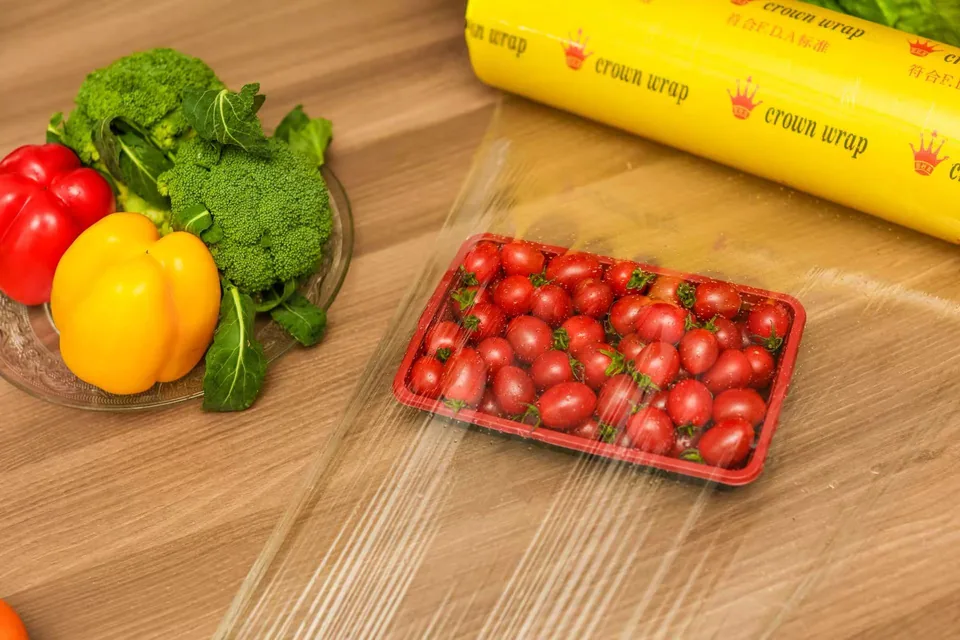 Commercial PVC film is specified in microns. Home-use rolls are usually 8–11 µm, and foodservice and freezer grades 11–17 µm.
Cling Test: Why PE Wraps Fail on Plastic Containers
In the ATK test, every wrap clung to glass, metal and ceramic. The difference showed up on plastic bowls, where both Saran products would not stick.
The physics is simple. Cling is a short-range attraction between two smooth, clean surfaces. It is strongest when one of them is soft enough to flow into microscopic gaps.
- PVC film carries 20–30% plasticizer, which makes the whole sheet soft and conformable. It wets almost any smooth surface, including polypropylene food containers.
- PE film is a harder, low-surface-energy polymer. Its cling comes from a tackifier (commonly polyisobutylene) blended in and slowly migrating to the surface. That works on high-energy surfaces such as glass and steel. It works poorly on polypropylene, which is itself a low-energy polyolefin.
We measure this in the factory as cling force (peel cling, ASTM D5458 method). Our stickiest cling film tack test shows 12–14 µm PVC food film at 25–35 N/m, against 8–15 N/m for a tackified PE film of the same thickness. That is roughly 2–3× the grip.
Home version of the test: stretch a sheet over an empty polypropylene takeout container, turn it upside down and tap it. PVC holds. Most PE wraps pop off within a few seconds.
Stocking a store brand or foodservice line? We make 8–15 µm food-grade PVC and PE cling film in retail and cutter-box formats. See our PVC cling film specifications → or request a quote.
Cost Per Square Foot: The Only Fair Price Comparison
Box sizes run from 100 sq ft (Saran Premium, Press’n Seal) to 3,000 sq ft (foodservice). The price per box is therefore meaningless. The table below uses typical US shelf prices reported in recent third-party comparisons. Prices move, so recalculate with the number on your receipt.
| Product type | Typical box | Typical price | Cost per sq ft |
|---|---|---|---|
| Foodservice PVC film, 12 in × 2,000 ft or 18 in × 2,000 ft | 2,000–3,000 sq ft | $20–$40 | $0.007–$0.013 |
| Warehouse club PVC (Kirkland Stretch-Tite) | 2 large rolls | about $16–$20 | ≈ $0.005–$0.01 |
| Store brand PE (e.g. Walmart Great Value) | 200 sq ft | about $3 | ≈ $0.015 |
| Stretch-Tite Premium (PVC) | 250 sq ft | about $5 | ≈ $0.02 |
| Reynolds Quick Cut | 225 sq ft | about $4.50 | ≈ $0.02 |
| Saran Premium (PE) | 100 sq ft | about $4.30 | ≈ $0.043 |
| Glad Press’n Seal | 100 sq ft | about $5 | ≈ $0.05 |
| Asahi Kasei Saran Wrap (PVDC, Japan import), 30 cm × 50 m | ≈ 161 sq ft | about $12 | ≈ $0.07+ |
One correction to a widely shared comparison: a 30 cm × 50 m roll is 15 m², or about 161 sq ft, not 54 sq ft. Imported PVDC is expensive, but about 3× the price per square foot of mainstream US wrap, not 10×.
What the factory cost really is
Here is the number reviewers never publish. Food-grade PVC cling film leaves Chinese factories at roughly USD 1,100–1,700 per tonne (see our cling film price guide).
A 10 µm PVC film at a density of about 1.25 g/cm³ weighs 12.5 g/m², or about 1.16 g per sq ft. At $1.40/kg, the film in one square foot costs the factory roughly $0.0016.
So on a $0.02/sq ft supermarket box, the film is under 10% of what you pay. The rest is the paperboard box, the cutter, converting, freight, brand marketing and retail margin. That is why:
- Bulk rolls are 2–4× cheaper per square foot. One box and one cutter are spread over 10× more film.
- Thin PE film is not the bargain it looks. Going from 11 µm to 7.6 µm saves the brand a fraction of a cent per square foot, while you lose tear resistance.
- Private label is where the margin is. A distributor buying finished retail boxes direct from a factory pays a fraction of the branded shelf price for the same 11–12 µm PVC spec.
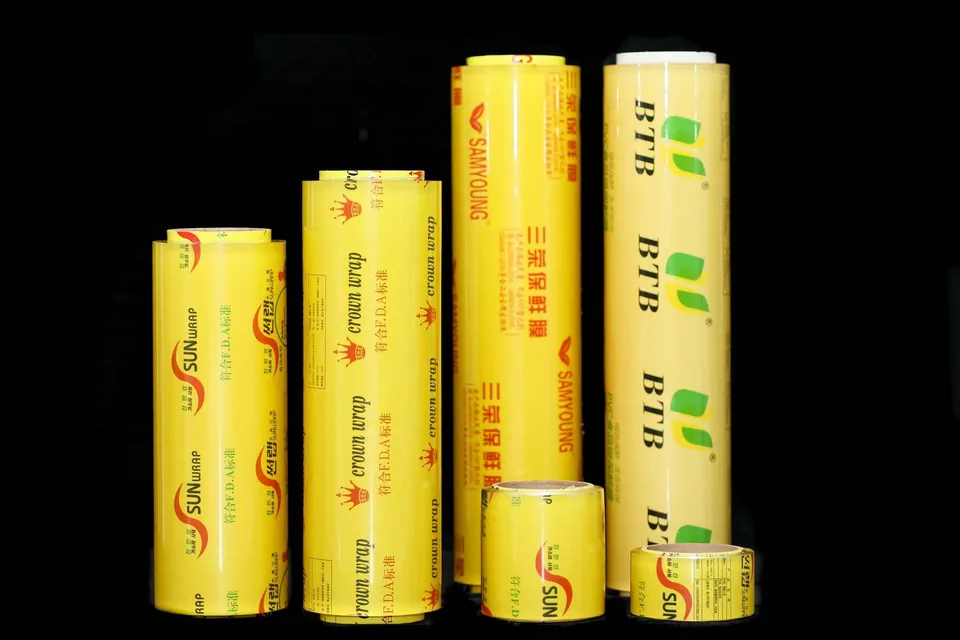 Finished rolls at the factory. Film is the smallest part of a branded box’s shelf price.
How Long Does a Roll Last, and Is the Big Roll Worth It?
This is the “does it justify the cost” question, worked out with numbers.
A 12-inch-wide, 200 sq ft roll is 200 ft long. At an average sheet length of 14 inches, that is about 170 sheets.
| Household use | Sheets per week | 200 sq ft roll lasts | 1,000 sq ft club roll lasts |
|---|---|---|---|
| Light (leftovers only) | 3 | ≈ 13 months | ≈ 5 years ⚠️ |
| Typical | 6 | ≈ 6.5 months | ≈ 2.7 years |
| Heavy (meal prep, baking) | 15 | ≈ 11 weeks | ≈ 1 year |
The ⚠️ matters. PVC cling film keeps full cling for about 24–36 months at room temperature. After that, the plasticizer migrates and the film gets brittle or greasy (details in our cling film shelf life guide).
A light-use household that buys a giant club roll may throw the last third away. The big roll is worth it if you will finish it within about 2–3 years. Otherwise, the 250 sq ft Stretch-Tite box is the better value.
Best Plastic Wrap by Use Case
| If you mainly… | Best choice | Why |
|---|---|---|
| Cover plastic meal-prep containers | PVC (Stretch-Tite, Kirkland) | PE slides off polypropylene |
| Freeze meat for months | Thicker film, 14–17 µm (Freeze-Tite, Glad Freezer) | Thickness resists punctures from bone and ice. In ATK’s test, all wraps prevented freezer burn for 2 months |
| Reheat in the microwave | PE, not touching food | PE has no plasticizer to migrate into hot, fatty food. See our microwave safety guide |
| Cover a big sheet pan or cutting board | 15–18 in foodservice roll | One sheet covers a 14.5 × 21 in board, which 12 in consumer rolls cannot do |
| Wrap irregular shapes (cheese, half onions) | PVC | Stretch-and-recover conforms to the shape |
| Seal surfaces nothing sticks to | Press’n Seal | Adhesive, not cling, so it is a different tool |
| Put it in the oven | None of them | Use foil or parchment. See is plastic wrap oven safe? |
One safety note on PVC. US PVC food wraps are made under 21 CFR 178.3740, which limits plasticizer loading by film thickness and food type. For high-fat foods, the rule restricts use to refrigerated or frozen conditions. In practice: don’t use PVC wrap in direct contact with hot, oily food. Our DEHA vs ATBC plasticizer guide explains the limits in detail.
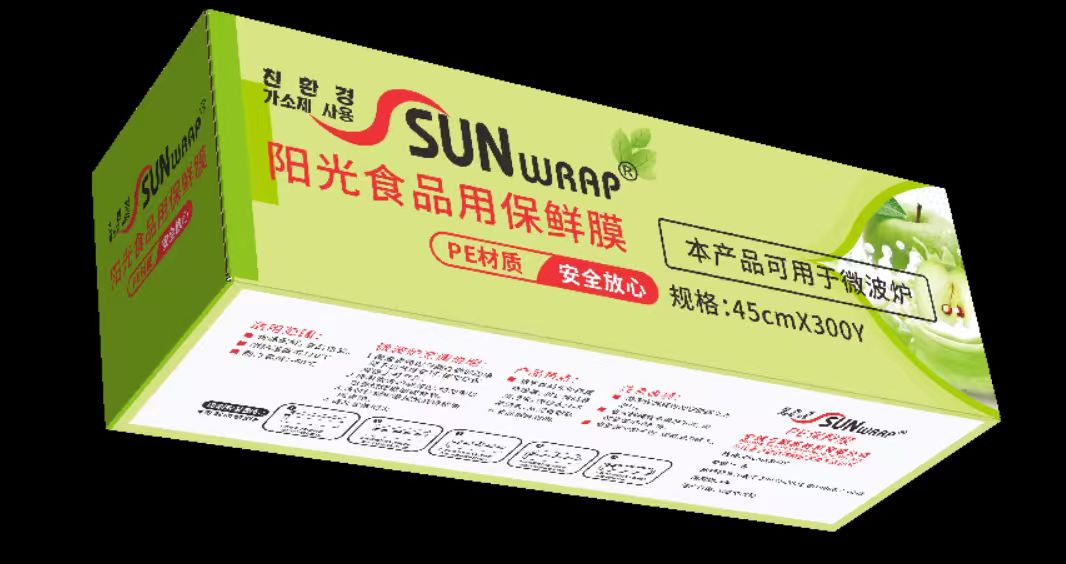 The PE version of the same box is labelled microwave-safe. The polymer choice changes what the box can honestly claim.
For Retailers and Distributors: Specifying a Store-Brand Wrap
If you are a grocery chain, cash-and-carry or foodservice distributor launching your own wrap, the brand comparison above becomes a spec sheet. The specifications we are asked for most often:
| Target positioning | Polymer | Thickness | Typical widths | Roll length | Box |
|---|---|---|---|---|---|
| ”Stretch-Tite-class” premium home wrap | PVC, phthalate-free | 10–12 µm | 30 cm / 12 in | 60–100 m (≈ 200–330 sq ft) | Retail box, slide cutter |
| Value store brand | PE (LDPE/LLDPE) | 8–10 µm | 30 cm | 30–60 m | Retail box, serrated cutter |
| Club / bulk home | PVC | 10–11 µm | 30 cm | 300–750 m | Heavy box, slide cutter |
| Foodservice | PVC | 10–12 µm | 30 / 45 cm (12 / 18 in) | 600 m (2,000 ft) | Cutter box (see cutter box guide) |
| Freezer grade | PVC or PE | 14–17 µm | 30–38 cm | 100–200 m | Retail box |
Things to put in writing with any factory:
- Resin and plasticizer. Name the plasticizer (DEHA, ATBC or ESBO) and confirm it is phthalate-free.
- Thickness tolerance. For example, 11 µm ±1 µm.
- Compliance basis. FDA 21 CFR 178.3740 or EU 10/2011.
- Cling force minimum.
- Printed square footage, checked against the actual roll length. Short-length rolls are the most common quality complaint in private label. See our cling film roll sizes chart for standard lengths.
For the full OEM process (artwork, MOQ, lead times), read our private label cling film guide or browse custom OEM cling film.
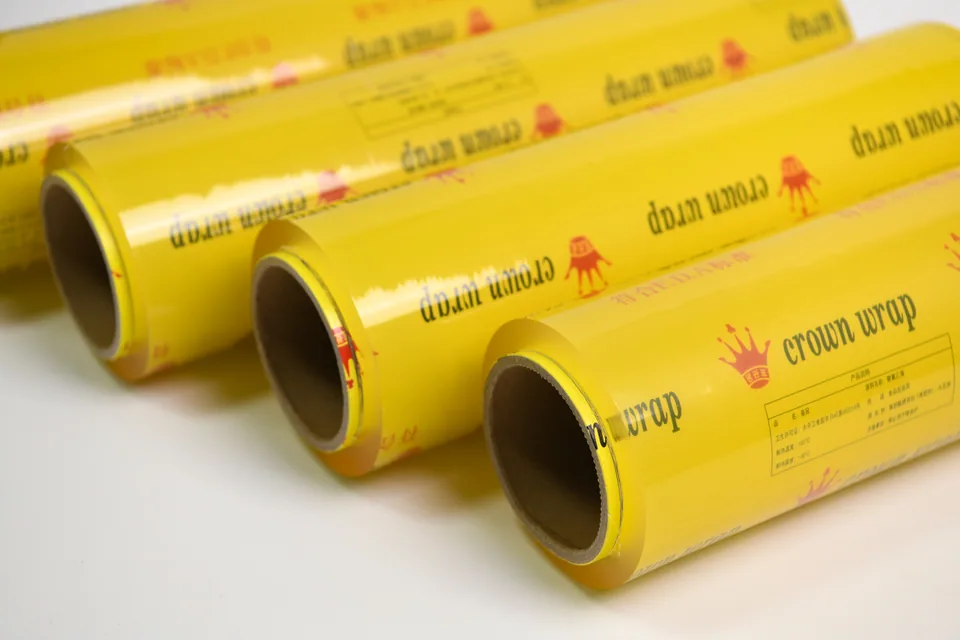 Thickness, cling and roll-length checks happen on the line, before a box ever reaches a shelf.
The Verdict
- Best overall cling: Stretch-Tite Premium and Kirkland Signature Stretch-Tite (PVC, ~11 µm).
- Best for freezer and heavy use: Freeze-Tite (PVC, ~17 µm).
- Best value per square foot: foodservice PVC roll or Kirkland, at under $0.01/sq ft if you will use it within 2–3 years.
- Best for microwave reheating covers: a PE wrap such as Glad Cling Wrap, kept off the food surface.
- Skip if you use plastic containers: current US Saran (PE). It is thick, but it doesn’t grip polypropylene.
Brands reformulate without announcing it. Saran’s 2004 switch is the proof. Treat polymer and thickness as the real product, and re-check the box when you restock.
Related Guides
- Cling Wrap vs Saran Wrap vs Plastic Wrap: What’s the Difference?
- What Is Saran Wrap? Material & History
- Stickiest Cling Film: PVC vs PE Tack Test
- PVC vs PE Cling Film: Technical Comparison
- Cling Film Price Guide 2026
Building a store-brand or foodservice wrap line? SUNWRAP (Ningbo Sanrong New Materials) produces food-grade PVC and PE cling film from 8 to 17 µm, in retail boxes and jumbo rolls, exported to 30+ countries. Send us your target spec for a quote →
Need a cling film quote while you're reading?
Our export team responds within 12 hours with FOB Ningbo pricing. No obligation.
Frequently Asked Questions
Which plastic wrap brand clings the best?+
PVC-based wraps cling the best. In America's Test Kitchen's 8-product test, the two PVC wraps from Polyvinyl Films (Freeze-Tite and Stretch-Tite Premium) were the top picks, and the Reynolds PVC foodservice film was rated very clingy. Polyethylene (PE) wraps such as current US Saran clung to glass, metal and ceramic but both Saran products failed to stick to a plastic bowl. The reason is the polymer: plasticized PVC is soft and self-tacky across its whole thickness, while PE needs a tackifier additive and has much lower surface energy.
Is Glad Cling Wrap stronger than other brands?+
No. Glad Cling Wrap was the thinnest wrap in America's Test Kitchen's test at 0.3 mil (about 7.6 microns), and it tore during resealing, letting grapes fall out after 6 reseals. Glad Freezer Wrap is thicker at 0.55 mil (about 14 microns) and clung well. If you need strength, compare thickness in microns or mils rather than brand names: under roughly 0.5 mil (12.7 microns), every wrap in that test tore more easily.
Why doesn't Saran Wrap cling like it used to?+
Because it is no longer the same material. Saran Wrap was originally made from PVDC (polyvinylidene chloride), a very clingy, very high oxygen-barrier film. Around 2004, SC Johnson switched the US product to polyethylene, which is cheaper and avoids chlorinated chemistry but clings far less, especially to plastic containers. The Saran Wrap still sold in Japan by Asahi Kasei remains PVDC, which is why it costs several times more per square foot.
What is the cheapest plastic wrap per square foot?+
Warehouse-club and foodservice rolls are the cheapest per square foot, typically about $0.005 to $0.01, because the film cost is spread over 1,000 to 3,000 square feet and one box. Store brands such as Walmart Great Value come in around $0.015 per square foot, mainstream PVC and PE consumer rolls around $0.02, and premium PE or specialty products such as Press'n Seal around $0.04 to $0.05. Always divide price by the square footage printed on the box, because box sizes vary from 100 to 3,000 square feet.
How long does a roll of plastic wrap last?+
A 200 sq ft roll that is 12 inches wide holds 200 feet of film. At an average sheet length of 14 inches, that is about 170 sheets. A household using 4 sheets a week will finish it in roughly 10 months; at 10 sheets a week, about 4 months. Unopened PVC wrap keeps its cling for 2 to 3 years at room temperature, so buying a bigger roll only saves money if you use it within that window.
Is Glad Press'n Seal the same as plastic wrap?+
No. Press'n Seal is a polyethylene film with a pressure-activated adhesive coating on one side. It seals by adhesion when you press it, not by cling. It works on surfaces normal wrap slides off, but it costs about twice as much per square foot as standard wrap and can leave residue. It is a different product category, so it should not be compared with cling wrap on price alone.
How can I tell if a plastic wrap is PVC or PE?+
Many US boxes do not print the polymer. Three practical clues: (1) the plastic-bowl test, where PVC clings firmly to a polypropylene container and most PE wraps slide off; (2) stretch, where PVC stretches smoothly and recovers like a thin balloon while PE necks down and stays deformed; (3) the label, where PVC wraps often say 'phthalate-free' or name an adipate or citrate plasticizer, while PE wraps often say 'PVC-free'. For bulk purchases, ask the supplier for the resin type on the specification sheet.
Can I get a private-label wrap that performs like Stretch-Tite?+
Yes. Stretch-Tite-class performance comes from a food-grade PVC film around 11 to 12 microns thick with a phthalate-free plasticizer. SUNWRAP produces PVC cling film from 8 to 15 microns in widths from 20 cm to 45 cm for retail and foodservice boxes, with private-label cutter boxes. Contact us with your target width, length and market (FDA or EU) and we will quote the matching specification.
Sourcing cling film and have questions this article didn't answer?
Related articles
Saran Wrap vs Cling Wrap: What's the Difference?
Saran wrap meaning explained: what it is, why PVC clings harder than PE, the 2004 LDPE switch, plus cling, thickness and FDA facts.
PVC Cling Film Thickness: 8μm vs 10μm vs 15μm
What do 8, 10, 12, and 15 micron mean for PVC cling film? Thickness affects tear resistance, cling force, clarity, oxygen barrier, and cost. This guide explains which gauge to specify for retail, foodservice, butcher counter, and industrial applications.
Stickiest Cling Film Revealed: PVC vs PE Tack Test
PVC cling film grips 40% harder than PE — factory tack-force data by temperature. Which grade sticks best for meat, produce & deli prep? OEM spec guide: thickness, adhesion & compliance table. Samples available.