
Technical Guides
Stickiest Cling Film Revealed: PVC vs PE Tack Test
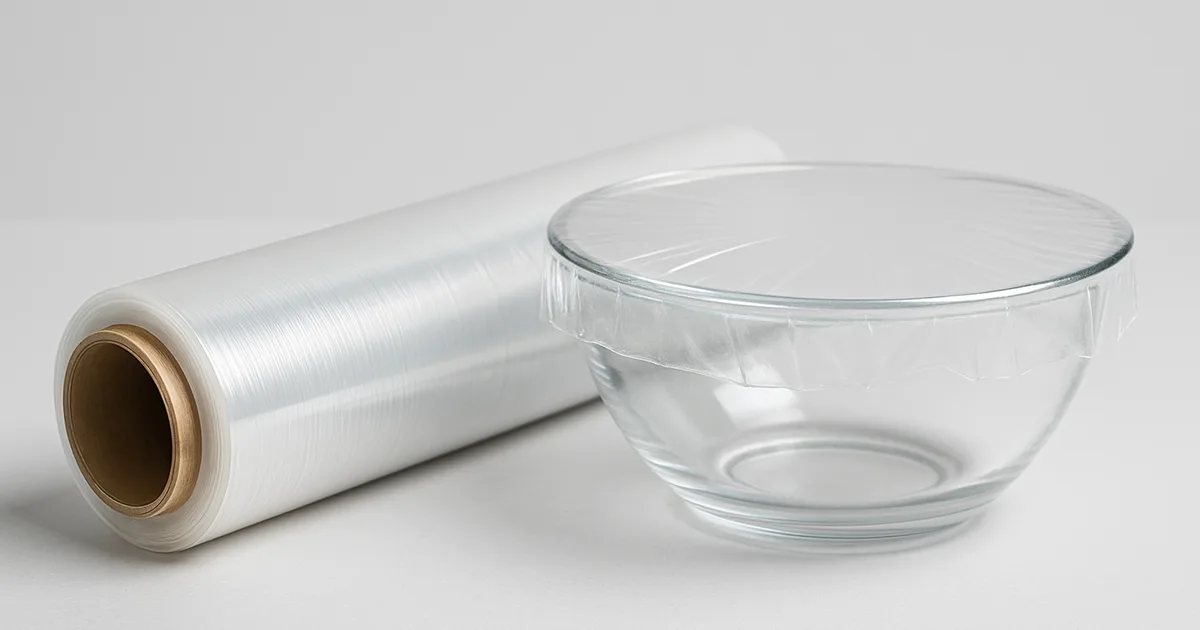
Quick answer: Cling is not a mood, it is a measurable specification. Plasticised PVC food film is the stickiest food-contact cling film on the market, typically 25-35 N/m of peel cling at 12-14 microns under ASTM D5458, versus 8-15 N/m for a PIB-tackified PE film and 2-6 N/m for a PE film with no tackifier at all. When a film “stops sticking,” the cause is almost always one of three things: the material was switched, the cling additive was cut to hit a price, or the film is being used on a wet, oily or frozen surface. All three are diagnosable, and the first two are your supplier’s responsibility.
We are a PVC and PE cling film manufacturer in Ningbo. Buyers write to us most weeks with a version of the same sentence: “the last container we bought does not stick.” This guide is the answer we send them — what cling actually is, how it is engineered on an extrusion line, why cheap film loses it, and how to put cling into a purchase order so it becomes a contractual obligation rather than a hope.
Why “Sticky” Is a Specification, Not an Opinion
Most cling film quotations list thickness, width, length and price. Very few list cling. That omission is the single biggest reason buyers end up with film they cannot sell.
The industry reference method is ASTM D5458, Standard Test Method for Peel Cling of Stretch Wrap Film. Two strips of film one inch wide are laid on an inclined plane — the lower strip release-side up, the upper strip cling-side down — brushed together under controlled pressure, then separated on a tensile tester at a crosshead speed of 5 inches per minute. The force required is reported in grams-force per inch of width.
European and Asian specifications usually express the same property in newtons per metre. The conversion is straightforward:
1 N/m = 2.59 gf/in · 1 gf/in = 0.386 N/m
Two practical warnings about cling numbers on a spec sheet:
- Film-to-film cling and film-to-substrate cling are different numbers. ASTM D5458 measures film against itself. A bowl rim is glass or polypropylene, and a meat tray is foamed PS. Ask which one the supplier measured.
- Cling is temperature-dependent. A figure taken at 23C laboratory conditions can drop 30-40% at 4C refrigerated display temperature — which is exactly where supermarket film has to work.
Anything quoted as “very sticky,” “super cling” or “high tack” without a method, a substrate and a temperature is marketing, not a specification.
The Two Cling Mechanisms: Plasticiser Tack vs Tackifier Bloom
Cling film does not stick for one reason. Depending on the resin, it sticks for one of two completely different reasons — and knowing which one you are buying tells you exactly how it will fail.
PVC: plasticiser creates the tack
Rigid PVC is a hard, brittle polymer. It becomes cling film only after 5-30% by weight of plasticiser is compounded into it — historically phthalates, today overwhelmingly adipates and citrates such as DEHA (di-2-ethylhexyl adipate) and ATBC (acetyl tributyl citrate). Published analyses of commercial food cling film have measured formulations around 5.3% DEHA plus 3.0% ATBC together with a polymeric polyadipate.
Those small molecules do two jobs at once. They make the polymer chains slide past each other, which is what gives the film its softness and 200-250% stretch. And they sit at the surface as a permanently soft, slightly mobile layer, which is what gives PVC its genuinely adhesive tack. In PVC, cling and softness are the same property. You cannot cut one without cutting the other, which is why under-plasticised film feels crinkly and noisy in the hand — a tell you can detect in five seconds without any instrument.
PE: a tackifier has to migrate to the surface
Polyethylene has almost no inherent tack. LLDPE and LDPE films are made to cling by compounding in a tackifier — nearly always polyisobutylene (PIB) — which then has to migrate to the film surface and bloom there before the film works.
This is the mechanism that surprises buyers most, so it is worth stating precisely:
- PIB masterbatch loading typically runs 1-6% depending on whether the line is blown or cast.
- Full cling develops only after the additive blooms, which takes 24 to 72 hours after extrusion.
- Higher molecular weight PIB gives stronger cling with less pickoff. Grades above about Mn 2,500 markedly reduce additive transfer onto the wrapped product.
- Critically, slip agents, antiblock additives and base resin density above 0.923 g/cm3 all block PIB migration. A PE film compounded with a slip package for easier winding can be formulated correctly on paper and still arrive with no cling at all.
That last point explains a failure mode we see several times a year: a buyer’s PE film tested well at the factory and dead on arrival at destination, because the formulation was quietly changed to run faster on the line.
And a small amount of static
Both film types get a modest assist from electrostatic charge. Unwinding a roll strips electrons from the surface, and because film is a good insulator that charge persists long enough to induce an opposite charge in a glass bowl. Static is real, but it is a bonus of a few N/m at most — it is never the reason a good film grips, and it disappears entirely on damp or conductive surfaces.
Cling Force Benchmarks by Film Type
These are the working ranges we produce and test against. Use them to sanity-check any figure a supplier gives you.
| Film type | Thickness | Peel cling (N/m) | Peel cling (gf/in) | Food contact | Best grip on |
|---|---|---|---|---|---|
| PVC household / retail | 8-11 micron | 15-25 | 39-65 | Yes | Glass, ceramic, smooth plastic |
| PVC food service / deli | 12-14 micron | 25-35 | 65-91 | Yes | Trays, irregular shapes, catering pans |
| PVC meat film | 15-17 micron | 30-42 | 78-109 | Yes | Foam trays, bone-in cuts |
| PVDC (classic “Saran”) | 10-13 micron | 12-20 | 31-52 | Yes | Glass, high-barrier applications |
| PE cling, PIB-tackified | 10-12 micron | 8-15 | 21-39 | Yes | Glass, film-to-film |
| PE cling, no tackifier | 10-12 micron | 2-6 | 5-16 | Yes | Effectively nothing |
| Industrial pallet stretch wrap | 17-25 micron | 40-150 | 104-388 | No | Film-to-film only |
Three readings of this table matter commercially:
- PVC is the answer to “the stickiest food cling film.” There is no PE formulation that reaches plasticised PVC’s tack while staying food-compliant. If your market accepts PVC, PVC cling film is the specification to write.
- PE can be good, but only if it is tackified. PE cling film is the right product for PVC-free and microwave-focused markets, and 8-15 N/m is genuinely workable — but it is a formulation you must specify and verify, not assume.
- Industrial stretch wrap is not a shortcut. It measures higher because it is designed for film-to-film locking on a pallet, and it carries slip and UV additives that are not approved for direct food contact. If someone offers you “extra sticky food wrap” at pallet-wrap prices, that is what you are being offered. We cover the distinction in detail in our stretch film vs cling film guide.
Why Saran Wrap Stopped Sticking
This is worth its own section because it is the origin of most of the “cling film used to be better” complaints, and the history is genuinely instructive.
The original Saran Wrap was PVDC (polyvinylidene chloride) — a superb material with an exceptional oxygen and moisture barrier and real tack. In 2004, SC Johnson reformulated Saran Wrap away from PVDC to polyethylene, on chlorine and environmental grounds. Other household brands made similar moves. Polyethylene is recyclable and chlorine-free, and it was the responsible choice on those criteria — but as the table above shows, an LDPE film without a properly dosed tackifier has roughly one-fifth the cling of what it replaced. Our best plastic wrap brands comparison shows which retail brands are PVC and which are PE today.
So consumers who feel that plastic wrap got worse are not imagining it. The product changed materials. Meanwhile professional foodservice films, which are bought on performance rather than shelf appeal, largely stayed on PVC and PVDC — which is why the wrap in a restaurant kitchen still behaves the way household wrap used to. If you are trying to understand the naming tangle behind all of this, our guide to cling wrap vs Saran wrap vs plastic wrap untangles the terminology market by market.
Seven Reasons Your Cling Film Doesn’t Stick
When a buyer sends us a complaint sample, we work through this list in order. It is arranged from most to least common in our experience, and the fault column is the part worth reading twice.
| # | Symptom | Root cause | Whose fault | Fix |
|---|---|---|---|---|
| 1 | Film peels off the rim within hours | Plasticiser cut below ~20% in PVC, or PIB below ~2% in PE | Supplier | Specify additive content in the PO; test incoming lots |
| 2 | Film crinkles, sounds noisy, feels stiff | Under-plasticised PVC | Supplier | Reject the lot — this is detectable by hand |
| 3 | PE film has no cling out of the box | Slip/antiblock package or resin density >0.923 blocking PIB bloom | Supplier | Require a PIB-compatible resin and no slip additive |
| 4 | New PE rolls weak, better after a few days | Film shipped before the 24-72h bloom period | Supplier (process) | Require post-extrusion ageing before packing |
| 5 | Cling collapses in the chiller | Cling measured at 23C, used at 4C | Shared | Specify cling at your working temperature |
| 6 | Sticks to glass, not to the tray | Substrate mismatch — foamed PS and PP take cling differently | Buyer spec | Test against your actual tray, not a lab bowl |
| 7 | Old stock has gone dead | Plasticiser or tackifier depletion over 12+ months, or heat in storage | Buyer storage | Store below 30C, rotate FIFO, order to 6-9 month cover |
Notice that four of the seven are the supplier’s responsibility, and three of those four are formulation decisions taken to hit a target price. That is the real economics of cling, and it is the subject of the next section.
The Real Reason Cheap Film Doesn’t Stick
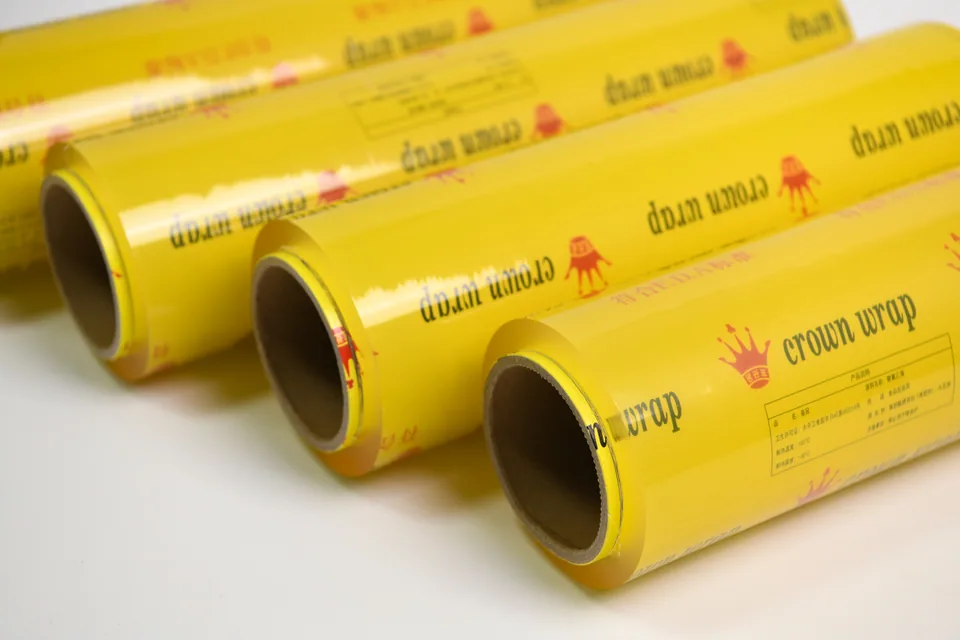
Cling is expensive because the additives that create it cost multiples of the base resin. At 2026 Chinese raw material prices:
| Input | Price (RMB/tonne) | Role |
|---|---|---|
| PVC suspension resin | ~6,000 | Base polymer |
| Food-grade plasticiser (DEHA / ATBC) | 15,000-25,000 | Creates PVC cling |
| LDPE / LLDPE film grade | 7,500-9,000 | Base polymer |
| PIB tackifier | 20,000-40,000 | Creates PE cling |
The arithmetic is unforgiving. Dropping PVC plasticiser from 26% to 18% saves roughly RMB 1,100-1,600 per tonne — about USD 150-220, or 10-15% of factory cost. Dropping PE tackifier masterbatch from 4% to 1.5% saves RMB 400-800 per tonne. Neither change is visible in a photograph, neither shows up on a thickness gauge, and both are recoverable in a quotation that undercuts an honest one by exactly the amount a buyer notices.
This is why we tell buyers that a quotation meaningfully below RMB 8,000/tonne ex-works for food-grade PVC film almost always means the material side has been compromised — through recycled resin, off-grade plasticiser, under-spec thickness, or a cling package that has been quietly halved. Our full breakdown of factory economics is in the cling film price guide.
The honest framing for your own sourcing: cling is the first thing a supplier cuts, because it is the last thing a buyer measures. Reverse that order and the problem largely disappears.
How We Engineer High-Cling Film on the Line
From the manufacturing side, cling is controlled at four points, and a factory that cannot describe all four is not controlling it.
1. Formulation. For high-cling food-service PVC we run plasticiser at the upper end of the food-compliant window with a DEHA/ATBC blend plus polymeric polyadipate for migration control. For PE we specify PIB above Mn 2,500 for cling retention, on a base resin below 0.923 g/cm3, with the slip package deliberately omitted from the cling side.
2. Die and chill roll. Surface smoothness is half of contact area, and contact area is half of cling. A film cast against a worn or contaminated chill roll picks up microscopic texture that measurably reduces peel cling even when the formulation is perfect.
3. Post-extrusion ageing. PE cling film is held 24-72 hours before slitting and packing so the PIB blooms fully. Shipping PE film straight off the line is the single most common process cause of “it does not stick” complaints, and it is entirely avoidable.
4. Winding tension and storage. Over-tight winding compresses the surface layer; storage above 30C accelerates additive depletion. Both are recorded per lot in our QC file.
We hold thickness to ±0.3 micron across 8-30 micron under ISO 4593, and run cling verification per production lot rather than per shipment. The complete process is described in our cling film manufacturing guide.
How to Test Cling Before You Commit to a Container
Do this on the sample roll, before the PI is signed. It takes a day and a half and costs nothing.
Test 1 — the 24-hour bowl test. Seal one wet glass bowl and one stainless steel tray. Refrigerate at 4C. Check at 24 hours. Good food-service PVC shows no lift at the rim; a weak film peels back at one edge overnight. Run it wet, because a dry lab bowl flatters every film.
Test 2 — film-to-film peel. Press two 25mm strips together by hand and pull them apart. PVC food film resists clearly and audibly. PE with an adequate PIB dose resists noticeably. Untackified PE separates as if the strips were never touching.
Test 3 — the cold test. Repeat Test 1 after 30 minutes in a freezer. This is where under-plasticised PVC fails visibly, and it is the condition your supermarket customer will actually use the film in.
Test 4 — the 30-day ageing test. Leave a length of film out at room temperature for 30 days, then repeat Tests 1 and 2. Films built on a marginal additive dose lose tack fast; a correctly formulated film barely changes. Skipping this test is how buyers get a great first container and a bad second one.
Then buy one number. Send a sample for an independent ASTM D5458 measurement before signing. A single third-party cling report costs a fraction of one container and gives you the figure to write into the contract.
Ask for the paperwork alongside the samples: a certificate of conformity, a lot-specific migration test report, and the plasticiser or tackifier identity in writing. Our food-grade certification guide lists what a complete document set looks like for FDA, EU and Halal markets.
Writing Cling Into Your Purchase Order
This is the part that actually protects you. Four clauses, none of them exotic:
- Cling force: “Peel cling per ASTM D5458, film-to-film, minimum 25 N/m measured at 4C ± 1C.” Name the method, the substrate condition and the temperature.
- Additive content: “PVC plasticiser content minimum 24% w/w, DEHA/ATBC system, phthalate-free” — or for PE, “PIB tackifier masterbatch minimum 3.0%, Mn > 2,500, no slip agent on cling face.”
- Ageing: “PE film to be aged minimum 48 hours post-extrusion before slitting and packing.”
- Lot testing: “Cling and thickness report per production lot, retained sample held 12 months, buyer entitled to independent verification.”
Commercial terms for reference. Our MOQ is 5 metric tons per specification, or one 20ft container for mixed SKUs. Food-grade PVC and PE cling film is produced from 8 to 30 microns at ±0.3 micron, in widths from 200mm to 600mm, in retail rolls, food-service rolls and jumbo rolls for rewinders. Typical lead time is 15-20 days for standard specifications and 25-30 days for custom OEM and printed packaging. We ship FOB Ningbo-Zhoushan, and we have been exporting cling film for over 20 years to more than 50 countries.
The Tradeoff Nobody Mentions
One honest caveat before you specify the stickiest film available. Cling trades against three other properties, and the right answer depends on what your customer does with the roll:
| If you maximise cling | You give up | Matters when |
|---|---|---|
| Higher plasticiser (PVC) | Heat resistance — PVC softens around 80C | Microwave use, hot fatty foods |
| Higher plasticiser (PVC) | Migration headroom against SML limits | Long shelf-life, high-fat products |
| Higher tackifier (PE) | Machine speed — film blocks on the roll | Automatic tray wrappers, high-throughput lines |
| Thickness above 18 micron | Conformability to a rim | Hand-wrapping irregular shapes |
For direct contact with hot or fatty foods, specify a lower-plasticiser PVC or a PE film and accept less cling — plasticiser migration rises with both temperature and fat content, and EU Regulation 10/2011 sets specific migration limits of 18 mg/kg for DEHA and 60 mg/kg for ATBC against a 10 mg/dm2 overall limit. For a supermarket produce or deli operation running at 4C, take the maximum cling on offer. There is no single stickiest film that is right for every application, and any supplier who tells you otherwise is not thinking about your customer.
Deciding between the two base materials is the larger question behind all of this, and we work through it specification by specification in PVC vs PE cling film. The matching thickness decision is covered in our cling film thickness chart.
Get a Cling Test Sample
If you are sourcing high-cling food film and want to compare against your current supplier, we will send a free sample set: PVC at 10, 12 and 15 microns and PIB-tackified PE at 11 microns, with the cling force and plasticiser content of each stated on the pack so you can verify our numbers rather than trust them.
Run the four tests above on your own trays, in your own chiller, against the film you buy today. If ours does not hold better, tell us and we will say so.
Request a free cling test sample set · View PVC cling film specifications · View PE cling film specifications
Need a cling film quote while you're reading?
Our export team responds within 12 hours with FOB Ningbo pricing. No obligation.
Frequently Asked Questions
What is the stickiest cling film you can buy?+
Plasticised PVC food film is the stickiest cling film available for food contact. A well-formulated 12-14 micron PVC food-service film measures 25-35 N/m of peel cling under ASTM D5458 — roughly two to three times the cling of a PIB-tackified PE film of the same thickness (8-15 N/m), and five to ten times an untackified PE film (2-6 N/m). Industrial pallet stretch wrap can measure higher still, but it is not approved for direct food contact and should never be substituted for food film.
Why doesn't my cling film stick anymore?+
There are three common causes. First, material substitution: many household brands moved from PVDC or PVC to plain LDPE, which has almost no inherent tack. Second, formulation cost-cutting: a supplier who drops PVC plasticiser from 26% to 18%, or PE tackifier masterbatch from 4% to 1.5%, saves money and loses most of the cling. Third, condition problems: cling collapses on wet, oily, frozen or dusty surfaces, and PE film that has not been allowed to age 24-72 hours after extrusion has not yet developed its surface tack.
How is cling force actually measured?+
The reference method is ASTM D5458, Peel Cling of Stretch Wrap Film. Two film strips one inch wide are pressed together on an inclined plane and separated on a tensile tester at a 5 in/min crosshead speed. The result is reported as grams-force per inch of width; European specifications usually convert to newtons per metre, where 1 N/m equals about 2.59 gf/in. Insist that any cling figure in a quotation names the test method, the film-to-film or film-to-glass condition, and the temperature.
Does thicker cling film stick better?+
No — up to a point thickness helps, and beyond it thickness hurts. Cling force rises from 8 to about 15 microns because there is more plasticised surface in contact, then falls above roughly 18 microns because the film becomes too stiff to conform to a rim and recover against it. A 25 micron industrial film holds a pallet through tension, not surface tack. For maximum grip on bowls, trays and irregular shapes, 12-15 micron PVC is the peak of the curve.
Is high-cling PVC film safe for food contact?+
Yes, when the plasticiser system is compliant and tested. Food-grade PVC cling film uses adipate and citrate plasticisers such as DEHA and ATBC, which carry specific migration limits of 18 mg/kg and 60 mg/kg respectively under EU Regulation 10/2011, alongside the 10 mg/dm2 overall migration limit. Plasticisers in polymeric food-contact materials are regulated in the US under 21 CFR 178.3740. Ask for a lot-specific migration test report, and avoid direct contact between PVC film and hot, fatty foods, since migration rises with both temperature and fat content.
How do I test a supplier's cling before ordering a container?+
Run four tests on the sample roll before committing. One, the 24-hour bowl test: seal a wet glass bowl and a stainless tray, refrigerate at 4C, and check for lift at the rim the next morning. Two, the film-to-film test: press two 25mm strips together and peel them apart — good PVC food film resists noticeably. Three, the cold test: repeat the bowl test after 30 minutes at freezer temperature. Four, the ageing test: repeat everything on film left out for 30 days, since some cheap films lose tack as plasticiser or tackifier is depleted. Then send one sample for an independent ASTM D5458 measurement before you sign.
Sourcing cling film and have questions this article didn't answer?
Related articles
How Cling Film Is Made: PVC & PE Manufacturing Process Explained
How is cling film made? Complete guide to the cling film manufacturing process — from PVC resin compounding and calendering to PE blown film extrusion, slitting, quality control and packaging. Includes factory floor insights from a 20-year manufacturer.
Saran Wrap vs Cling Wrap vs Plastic Wrap — They're NOT the Same
Saran Wrap, cling wrap, and plastic wrap look identical but use different plastics (PVC vs PE vs PVDC). One is microwave-safe, one isn't. Factory comparison with thickness data.
PVC Cling Film Thickness Chart & Selection
How thick is saran wrap? 11-12 microns (0.47 mil). Full cling film thickness chart: 8-30 micron ratings for household, deli, meat wrapping & industrial use. Micron-to-mil conversion + factory specs.