
Sourcing
Sourcing Chinese Cling Film: A US Procurement Team Guide (2026)
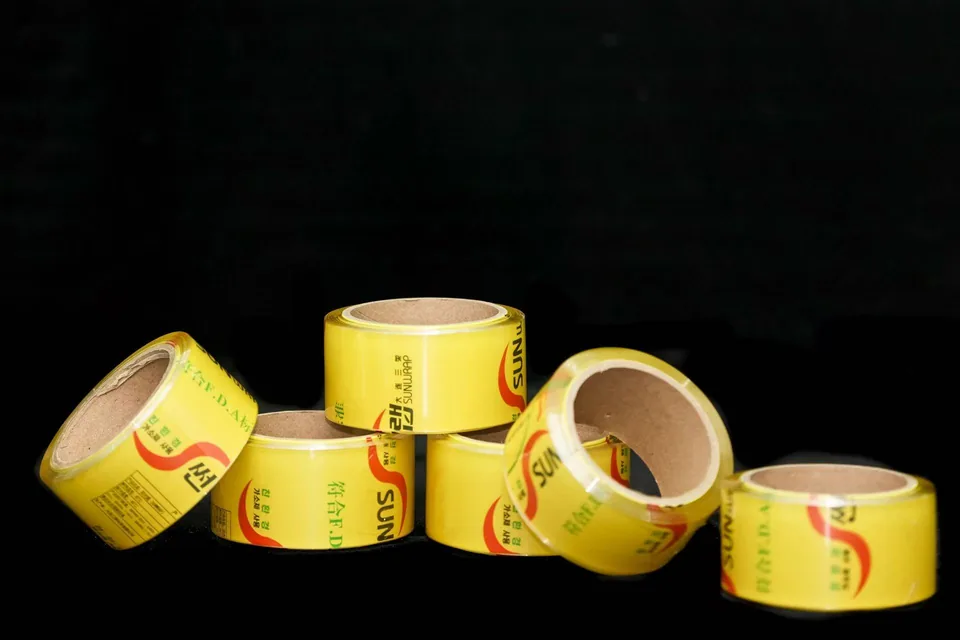
Sourcing Chinese Cling Film — A US Procurement Team Guide (2026)
Chinese cling film accounts for the majority of food-grade PVC and PE wrap consumed by US supermarket private-label programs, HORECA distributors, food-processor packaging lines and restaurant-supply wholesalers. If your procurement team is evaluating whether to source from China — or which Chinese factory to use — this guide walks the practical path: supplier verification, compliance documentation, FOB-to-landed-cost math, and the trade-offs versus domestic US suppliers.
This is written for US procurement, sourcing and supply-chain managers placing their first or second container-load order. If you’ve already shipped a few containers from China and want a deeper landscape of factory tiers, our Top 10 PVC Cling Film Manufacturers in China (2026 Guide) goes wider.
Why US procurement teams source cling film from China in the first place
Three factors drive the persistent advantage of Chinese-origin food-grade film:
- Resin and conversion density. PVC and PE resin, plasticisers, paper-core stock and printed packaging substrates all sit within a 500 km radius of every major Chinese coastal film factory. The supply chain converts a tonne of resin to packaged retail rolls without crossing any provincial border. Compared to a US converter sourcing resin domestically and printing in Mexico, the Chinese factory has 2–3 fewer hand-offs in the value chain.
- Port logistics. Ningbo-Zhoushan — the world’s #1 container port by cargo volume — has direct container service to Long Beach, Los Angeles, Oakland, Seattle, Tacoma and (via Panama) the USEC ports. Cling film is a high-volume / medium-weight cargo, so port proximity translates directly into landed cost. Factories near less-connected ports (e.g., some Vietnam coastal cities) cannot match the routing flexibility.
- Scale-driven price stability. Chinese factories run single lines at volumes a European or Korean boutique producer cannot match. Batch-to-batch consistency, inventory depth, and tooling amortisation mean a US retailer placing an annual contract can plan price without quarterly renegotiation. SUNWRAP, for example, has been running the same PVC formulation continuously since 2004.
The headline cost gap — 25–40% below comparable US-domestic supplier pricing for thin-gauge supermarket overwrap (see our cling film price guide 2026 for a line-by-line breakdown) — is what gets procurement to evaluate. The reasons it stays that wide are structural: scale, raw-material proximity, and a Chinese consumer market that subsidises the export tail.
The five-step verification a US procurement team should run before its first PO
Most disappointment with Chinese cling film comes from procurement teams that did not verify the factory before ordering. Avoid that with this checklist:
1. Confirm it is a factory, not a trader
Ask for a video walk-through during your first call. A real factory will show you the extruder, the slitting line, the QC station, and the warehouse. A trader will give you a slick PowerPoint with stock-photo factory shots.
Also request a copy of the Chinese business licence (营业执照). The “business scope” (经营范围) section must explicitly list manufacturing of plastic film products — not just trading or import / export.
2. Verify food-contact compliance documentation
US food-contact plastic film is governed by FDA 21 CFR 177.1975 (PVC cling film) and 21 CFR 177.1520 (PE cling film). What to request:
- Declaration of Compliance (DoC) referencing 21 CFR 177.1975 by section number, signed by the factory
- Third-party migration test reports issued by SGS, CMA, Intertek or Bureau Veritas — heavy metals (Pb, Cd, Hg, Cr), overall migration, specific migration of plasticisers
- Reports issued in your company’s name as the requesting party. Generic PDFs cloned from a supplier template are a red flag.
If your distribution touches California, also confirm Prop 65 compliance (heavy-metal disclosure thresholds tighter than federal FDA).
3. Sample, then sample again
Request free samples of standard catalog specifications. Test in-house for:
- Cling performance on glass, ceramic, plastic tray, and metal — should be high on all four
- Thickness consistency across the roll width — variance under ±0.5 μm
- Optical clarity under deli-counter LED — no haze, no plasticiser mist
- Tear / puncture resistance at 10 / 12 / 14 μm — meaningful difference between gauges
- Anti-fog performance when stored chilled in a sealed sample bag for 48 hours
Then commission a custom-printed pilot run for your retail SKU. Custom samples carry a small tooling fee that’s refunded on the first bulk order. The ~USD 500–1,500 spent on tooling-amortised samples saves a USD 50,000+ private-label launch from a quality surprise.
4. Audit at scale before scaling further
For commitments above USD 100K / quarter, a third-party factory audit by SGS, Bureau Veritas or Asia Inspection runs ~USD 500–1,000 and covers QMS documentation, raw-material traceability, retention samples, and worker-safety / labour compliance. For US retailers with social-compliance programs (Walmart Standards for Suppliers, Target Standards of Vendor Engagement), this audit is usually mandatory anyway.
5. Lock the documentation pack into the contract
Negotiate the supplier into shipping these documents with every PO, not just the first:
- Per-lot Certificate of Analysis (COA)
- FDA compliance declaration
- SGS migration test report (current, not pulled from archive)
- Commercial invoice + packing list + bill of lading aligned to your Incoterm
- Certificate of Origin (CCPIT Form A for GSP eligibility)
Having these contractually committed prevents the “next shipment will arrive without paperwork” scenario that tends to occur on PO #4 once the relationship has casualised.
Landed-cost math for a US importer
Below is a realistic landed-cost stack for a 20GP container of 12 μm × 380 mm × 500 m supermarket overwrap rolls, 6 rolls/carton, FCA Ningbo to LA / Long Beach. Numbers are 2026 indicative — confirm with your customs broker and freight forwarder for live quotes.
| Line item | USD per 20GP |
|---|---|
| FOB Ningbo (~10 tonnes finished goods) | 19,000 – 24,000 |
| Origin charges (THC, doc, port) | 350 – 500 |
| Ocean freight Ningbo → LA / Long Beach | 2,500 – 4,500 |
| Marine insurance (~0.3% of CIF value) | 80 – 120 |
| US destination charges (THC, doc, container fee) | 500 – 800 |
| Customs duty (HS 3920.43 @ 6.5% MFN on customs value) | 1,400 – 1,800 |
| MPF + HMF | 80 – 120 |
| Customs broker fee | 150 – 300 |
| Drayage to LA-area DC | 600 – 900 |
| Total landed cost — 20GP | 24,660 – 33,040 |
| Per-tonne landed at DC | 2,466 – 3,304 |
A comparable US-domestic supplier on the same spec quotes typically USD 3,500–4,500 per tonne FOB their plant — without the freight, duty and broker stack. The gap between Chinese-landed and US-domestic-FOB is the structural advantage that’s kept the import flow at scale for two decades.
Choosing between Chinese factory tiers
Not all Chinese cling film factories are the same. Three tiers, each with a different procurement profile:
Tier 1 — Branded, export-dedicated factories
Examples: SUNWRAP (Ningbo Sanrong), Miaojie, Nanya Plastic Film. 20+ years of operations, full QMS / paperwork stack, multiple export channels (direct, Alibaba Trade Assurance, third-party trading houses), private-label ready, and consistent batch-to-batch quality. Pricing ~5–10% above the bottom of the Chinese market — see our top 10 cling film manufacturers ranking for detailed profiles. Right for: US supermarket private-label programs, HORECA distributors, anyone where the cost of a quality slip exceeds the price premium.
Tier 2 — Mid-tier OEM converters
Hundreds of factories in Zhejiang, Jiangsu, Guangdong and Shandong. Often resin-to-roll continuity is intact, but QMS / paperwork is patchier. Usable for non-food applications and one-off retail promotions. Right for: industrial film buyers running their own incoming QC, or test-market private-label runs where the brand isn’t yet committed.
Tier 3 — Trader / converter operators
Listed on Alibaba in their thousands. Buy jumbo from a real factory, slit and rewind, attach a brand. The product can be fine, but you’re one extra hop from the source — batch traceability suffers, and pricing is often only marginally below Tier 1 on a true-cost basis once you account for the QC overhead. Right for: small one-off orders where you don’t need to be the same supplier 12 months from now.
For a US retailer launching a new private-label cling film SKU, Tier 1 is almost always the right starting point. The 5–10% cost difference is invisible in the retail margin; the consistency difference is visible on every truckload.
Why US procurement teams pick SUNWRAP
SUNWRAP is the export brand of Ningbo Sanrong New Materials Co., Ltd., a Korean-invested Chinese cling film manufacturer in continuous PVC production since April 2004. Total investment RMB 400 million. The factory relocated from Dalian to Ningbo Qianwan New Area in 2025 and added a dedicated PE cling film line alongside the core PVC programme.
For US importers, the relevant features:
- Full FDA compliance documentation pack on every shipment — DoC + SGS migration reports issued in your name
- Anti-fog / anti-mist treatment standard on PVC product — distinct advantage on chilled-display retail SKUs
- 40 km from Ningbo-Zhoushan Port — the world’s #1 container port by cargo volume; direct service to Long Beach, LA, Oakland, Seattle, Tacoma
- Korean-invested quality systems — same formulation runs in Korean and Japanese supermarkets, useful credibility when you present the product to your US end customers
- Private-label ready — English / bilingual / your-brand printed cartons, custom paper-core inner diameter, custom roll widths from 250 mm to 500 mm
- MOQ flexibility for first-time US buyers — 3–5 tonnes LCL for trial, scaling to 20GP / 40HQ for standing orders
Browse the full product range — PVC cling film, PE cling film, food-grade cling film, jumbo rolls, industrial / catering, custom OEM / private label — or jump to the broader Chinese cling film overview for context on the China sourcing landscape.
Practical sequence for a US procurement team
- Define the spec tightly. Thickness (8 / 10 / 12 / 14 / 15 / 16 μm), width, length per roll, paper-core ID, packaging (1 / 2 / 6 rolls per carton), labelling. Vague briefs get vague quotes; tight specs get tight quotes.
- Get a comparison set. Request samples + quotes from 2–3 Tier 1 Chinese factories simultaneously. SUNWRAP is one option — see Top 10 PVC Cling Film Manufacturers in China for the broader landscape.
- Validate samples in your test environment. Wrap your actual product, run automatic-wrapper compatibility tests, refrigerate-and-monitor 72 hours.
- Place a trial container under 30% T/T deposit + 70% against B/L copy. Or L/C at sight if your finance team prefers that for first-time international procurement.
- Audit at scale. Once two trial containers ship clean, commission a third-party factory audit before annualising the contract.
- Negotiate the standing order. Annual quantity locked, quarterly delivery cadence, contractually committed documentation pack, FOB Ningbo or CIF USWC port — your choice.
Related reading
- Top 10 PVC Cling Film Manufacturers in China (2026 Guide)
- How to Choose a Food-Grade PVC Cling Film Supplier
- HS Code 3920 — Cling Film Import Guide
- Cling Film Price Guide 2026
- PVC Cling Film vs PE Cling Film — Which Should You Import?
- Chinese Cling Film — Manufacturer & Sourcing Hub
US procurement teams ready to evaluate SUNWRAP for a private-label or HORECA distribution programme can request a live FOB Ningbo quote — typical reply within 12 hours (China time, GMT+8). Or email me the product catalog and I’ll send the full PDF to your inbox.
Need a cling film quote while you're reading?
Our export team responds within 12 hours with FOB Ningbo pricing. No obligation.
Frequently Asked Questions
Is Chinese cling film FDA-compliant for US food-contact use?+
Branded Chinese factories produce cling film that meets FDA 21 CFR 177.1975 (the federal regulation governing PVC food-contact film). The compliance is at the formulation level — what you should request is a current FDA-compliant declaration of compliance plus third-party SGS or CMA migration test reports issued in your company's name. SUNWRAP supplies both with every export consignment. Smaller / unbranded Chinese factories may offer cling film without proper FDA compliance documentation; verifying this is the single most important step in supplier selection.
What is the typical landed cost difference between Chinese cling film and a US domestic supplier?+
For a typical 20GP of food-grade PVC cling film: Chinese FOB Ningbo ~USD 1,800–2,400 per tonne (depends on thickness and packaging spec) + ocean freight USD 2,500–4,500 per 20GP to USWC ports + 6.5% MFN duty under HS 3920.43 + customs clearance + last-mile. Total landed cost typically lands 25–40% below comparable US-domestic supplier pricing. The gap is largest for thin-gauge supermarket overwrap (8–12 μm) and narrows for premium specialty grades.
Which US ports work best for Chinese cling film containers?+
Most Chinese cling film bound for the US arrives at Long Beach / Los Angeles (USWC, 14–18 days from Ningbo), Oakland (15–19 days), Seattle / Tacoma (12–16 days), or via the Panama Canal to Houston (28–32 days), Savannah (32–36 days) and New York / Newark (30–35 days) on USEC. For West Coast retailers, USWC + intermodal rail to a Chicago / Dallas / Atlanta DC is the standard routing. Cling film is a low-density cargo (volume fills before weight), so 40HQ containers are typical for cost optimization on longer hauls.
What's the MOQ for a US importer ordering Chinese cling film for the first time?+
Standard export MOQ is one 20GP container (roughly 2.5 tonnes of retail-packed finished goods or 18–22 tonnes of jumbo). Many Chinese factories — including SUNWRAP — will accept first-order trial shipments of 3–5 tonnes (LCL sea freight) for new US importers, particularly under Alibaba Trade Assurance. Below ~500 kg, courier (DHL / FedEx) becomes more economical than LCL. Trial orders are recommended before any private-label retail SKU launch.
How do US importers verify a Chinese cling film factory is real and not a trader?+
Five-step verification: (1) Request a live video walk-through of the production line during your first WeChat / WhatsApp / Zoom call. (2) Ask for a copy of the Chinese business licence with the manufacturing business scope explicitly listed. (3) Request that test reports (SGS / CMA) are issued in YOUR company's name as the requesting party — not generic templates. (4) Verify the factory's tax registration number ('统一社会信用代码') matches the entity on the Pro Forma. (5) For larger commitments, commission a third-party factory audit (SGS, Bureau Veritas, or Asia Inspection do these for ~USD 500–1,000).
Are there US tariffs or anti-dumping duties on Chinese cling film?+
As of 2026, food-grade PVC cling film under HS 3920.43 attracts the standard MFN duty of 6.5% on the customs value at US import. Section 301 tariffs that targeted some Chinese plastics goods may apply additional layers depending on the precise 8-digit HTS classification — your US customs broker is the authoritative source for the live duty schedule on your specific spec. There is no anti-dumping investigation currently active against Chinese cling film as a category. Expect duty + MPF + HMF + brokerage to add ~9–11% on top of CIF for typical orders.
Sourcing cling film and have questions this article didn't answer?
Related articles
Cling Film Price 2026: How Much Does PVC & PE Cling Wrap Cost?
Cling film price guide 2026 — resin costs, factory margins, FOB vs CIF ranges by SKU, and a line-by-line read of a Chinese supplier's quotation, for PVC and PE.
How to Choose a Food Grade Cling Film Supplier
A 7-step checklist for vetting a food-grade PVC cling film supplier — what to ask, green flags vs red flags, and the paperwork a serious factory sends in 48 hours.
Cling Film HS Code 3920: Import Guide for PVC and PE Film (2026)
HS code 3920 for cling film, explained for importers — PVC vs PE subheadings, the document pack, CO/Form E procedure, duty by region, and common customs errors.