
Sourcing
Food Wrap Wholesale — Direct from China Factory
Food Wrap Wholesale from China — For Restaurants, Supermarkets & Distributors
Food wrap is one of those products every restaurant kitchen, supermarket deli counter and catering operation burns through constantly — but few buyers think about where it comes from or how much they are overpaying. If you are a food-service distributor, supermarket chain buyer, or HORECA supplier, sourcing food wrap directly from a Chinese factory can cut your costs by 40–60% compared to branded alternatives.
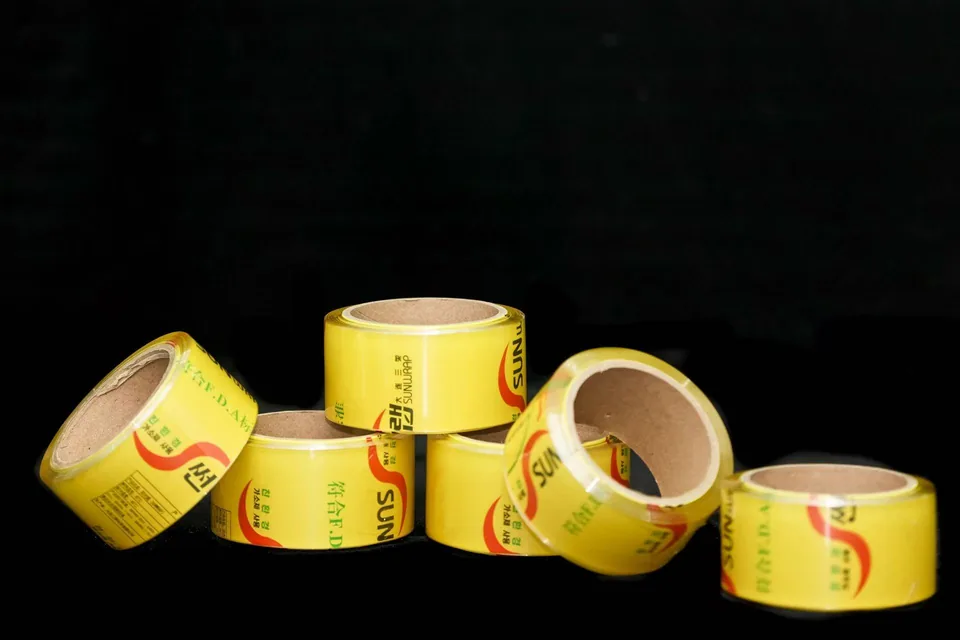
Food wrap applications by channel
Supermarket fresh-food departments
The highest-specification application. Supermarket meat counters, deli stations and produce sections need food wrap that delivers three things simultaneously: strong cling (holds tight on foam trays without popping at corners), optical clarity (customers buy with their eyes), and consistent performance on automatic tray-wrapping machines.
PVC food wrap at 10–12 microns is the global standard for this application. The natural self-cling of PVC cannot be replicated with PE at the same thickness — this is why every major supermarket chain worldwide still uses PVC for their fresh-food departments, despite environmental pressure.
Roll sizes for supermarket wrapping machines: typically 45cm × 1,500m or 45cm × 2,000m. Machine compatibility matters — check your equipment model before ordering.
Restaurant and hotel kitchens
Restaurant kitchens use food wrap for: wrapping prep containers, covering bowls and plates, sealing mise en place, and storing leftover ingredients. Speed and convenience matter more than optical clarity here.
Standard roll: 30cm × 300m in a cutter box. A 50-100 cover restaurant typically uses 2–3 rolls per month. Hotel central kitchens and banquet operations may use 10–15 rolls monthly.
PVC is preferred for cold-food applications (refrigerator storage). For any application involving reheating, PE food wrap should be used instead — see our microwave safety guide for details.
Catering and central kitchens
High-volume operations that prepare hundreds or thousands of meals daily. These buyers need the largest rolls available (45cm × 1,500m or longer), the lowest per-meter cost, and reliable supply — usually ordering full containers 2–4 times per year.
For catering companies, private-label food wrap (with your company name on the box) costs only $0.05–0.10 more per roll than generic and adds professionalism to your operation.
Retail and wholesale distribution
If you distribute food-service supplies to restaurants, hotels, supermarkets and convenience stores, food wrap is a high-frequency repeat purchase item with excellent margins when sourced factory-direct.
Typical distributor economics: buy at $1.00/roll FOB China, landed cost ~$1.50/roll after shipping and duties, sell at $3.00–4.00/roll to food-service accounts. That is 50–60% gross margin on a product with guaranteed repeat demand.
How food wrap is made in a Chinese factory
Understanding the manufacturing process helps you evaluate suppliers:
Resin compounding. PVC or PE resin pellets are mixed with plasticizers (for PVC), stabilizers and processing aids. A factory that compounds its own resin controls formulation consistency. A factory that buys pre-compounded material is dependent on its resin supplier — and more likely to have batch-to-batch variation.
Film extrusion. The compound is heated and extruded through a circular die, then blown into a bubble and cooled. The blow ratio determines the final thickness and width. Precision at this stage determines thickness uniformity — the critical quality parameter.
Slitting and rewinding. The wide master roll (typically 1.2–1.5m) is slit to final width and rewound onto cores. Consumer rolls are then packed into cutter boxes. Jumbo rolls are wrapped in stretch film and palletized.
Quality control. Reputable factories test every batch for: thickness (micrometer measurement at multiple points), cling force (standardized peel test), tensile strength, clarity (haze meter), and food-contact migration (periodic third-party lab testing).
When you visit a factory or review their documentation, ask about each of these steps. A factory that explains their process in detail is one that has a process worth explaining.
Pricing: food wrap by size and type
| Product | Roll size | FOB Ningbo | Notes |
|---|---|---|---|
| PVC food wrap | 30cm × 300m | $0.80–1.10 | Restaurant standard |
| PVC food wrap | 45cm × 300m | $1.00–1.30 | Supermarket hand-wrap |
| PVC food wrap | 45cm × 1,500m | $3.50–4.50 | Supermarket machine |
| PE food wrap | 30cm × 300m | $1.00–1.40 | Microwave-safe |
| PE food wrap | 45cm × 500m | $2.00–2.80 | Hotel / HORECA |
Container capacity (20GP): approximately 10,000 consumer rolls or 2,500 jumbo rolls.
SUNWRAP: your food wrap factory in China
SUNWRAP (Ningbo Sanrong New Materials Co., Ltd.) produces food-grade PVC and PE food wrap from resin to finished roll, all on one site. Korean-invested since 2004, FDA food-contact compliant, SGS-certified.
For food-service distributors, supermarket chains, and HORECA suppliers: we provide competitive factory-direct pricing, flexible container mixes, private-label printing, and fast shipping from Ningbo port (3–22 days to most destinations worldwide).
Contact us for a quote → — we respond within 12 hours with FOB pricing, product specifications and sample arrangements.
For detailed guidance on evaluating Chinese suppliers, see our supplier selection guide. For shipping and import procedures, see our import guide.
Looking for a reliable cling film supplier? SUNWRAP is a Korean-invested manufacturer in Ningbo, China — FDA-compliant, SGS-tested, 20+ years of production. Request a quote →
Need a cling film quote while you're reading?
Our export team responds within 12 hours with FOB Ningbo pricing. No obligation.
Frequently Asked Questions
What is food wrap made of?+
Commercial food wrap is made from either PVC (polyvinyl chloride) or PE (polyethylene) resin. PVC food wrap is the standard for supermarket meat counters and deli departments — it clings naturally and is crystal clear. PE food wrap is the standard for home kitchen use and any application involving microwave reheating. Both are FDA food-contact compliant when manufactured to standard.
What size food wrap do restaurants use?+
Most restaurant kitchens use 12-inch (30cm) × 1,000-foot (300m) rolls in a cutter box. High-volume operations (hotel banquets, central kitchens, catering companies) prefer 18-inch (45cm) × 1,500-foot (500m) rolls. Supermarket wrapping stations use jumbo rolls: 18-inch × 5,000-foot (1,500m) for automatic tray wrapping machines.
Can I mix different sizes in one container?+
Yes — SUNWRAP accepts mixed-size containers with no surcharge. A typical mix might be 60% of 30cm × 300m, 30% of 45cm × 300m, and 10% of 45cm × 1,500m. This allows distributors to serve both restaurant and supermarket customers from a single shipment.
Is food wrap the same as cling film?+
Yes. Food wrap, cling film, cling wrap, plastic wrap and saran wrap are all names for the same product. 'Food wrap' and 'food service cling wrap' are the most common terms in commercial food-service purchasing. Chinese manufacturers typically catalog it as 'cling film'.
How do I import food wrap from China?+
Contact the factory with your product specifications (PVC or PE, roll sizes, quantity). Request samples via DHL (3–5 days). Confirm pricing FOB Ningbo and payment terms (typically T/T 30/70 or L/C). Production takes 15–20 days. Shipping from Ningbo to most destinations: 3–22 days by sea. For a step-by-step guide, see our import walkthrough.
Sourcing cling film and have questions this article didn't answer?
Related articles
HoReCa Cling Film: Restaurant & Catering
Complete guide for HORECA buyers sourcing cling film: 300m catering rolls, food service wrap specifications, dispenser compatibility, bulk pricing for restaurants/hotels/catering, and industrial-grade cling for commercial kitchens.
Saran Wrap Wholesale China — $0.80/Roll, FDA-Grade, OEM Label
Saran wrap factory-direct from Ningbo: PVC formula that out-clings US Saran Wrap (which switched to weaker PE in 2004). From $0.80/roll FOB, FDA-compliant, OEM label printing, MOQ 500 rolls. 12-hour quote.
Supermarket Cling Film: Sourcing Guide
Complete guide for supermarket chains, wholesalers, and retail buyers sourcing cling film: private label strategy, multi-SKU planning, retail packaging design, pricing tiers, barcode registration, and how to build a supermarket's own cling film brand from a Ningbo factory.