
Sourcing
PVC Cling Film Supplier: Wholesale Sourcing Guide — Factory vs Trader (2026)

How to Find a Reliable PVC Cling Film Supplier: The Complete B2B Sourcing Guide
Finding the right PVC cling film supplier is one of those decisions that looks simple on the surface — cling film is cling film, right? — but becomes consequential fast. A supplier whose quality drifts between batches will cost you in machine downtime, customer complaints, and regulatory exposure. A supplier whose logistics are unreliable will leave you explaining stock-outs to your biggest retail account. This guide walks through how to evaluate a cling film supplier systematically, from the criteria that matter most to the procurement workflow that minimises risk.
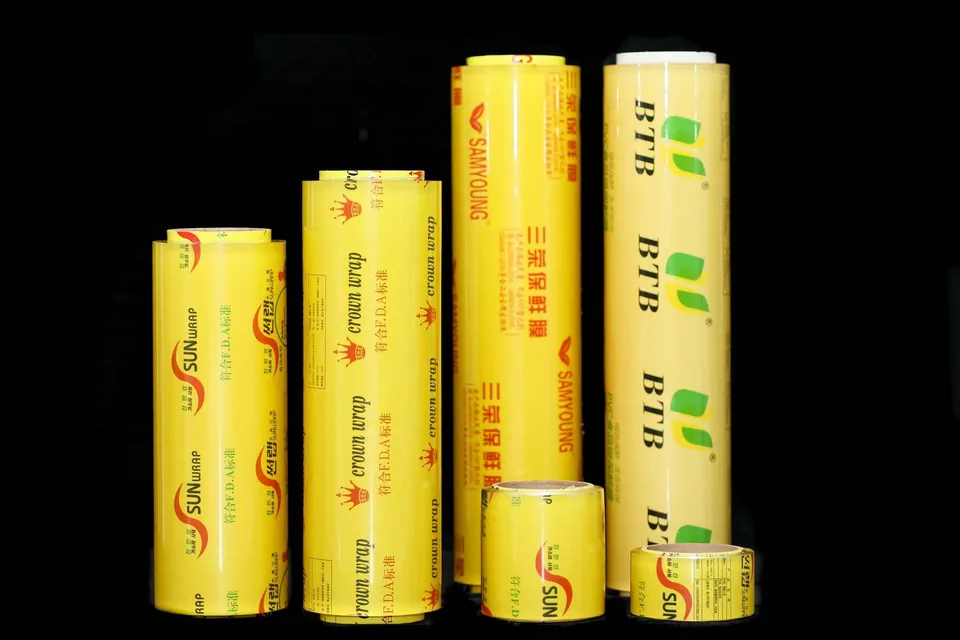
Why your choice of cling film supplier matters more than the price per roll
Cling film is a high-volume, low-margin product. Buyers naturally focus on unit cost — and unit cost matters — but the total cost of a bad cling film supplier decision extends well beyond the invoice.
Quality failures are expensive downstream. A batch of 10-micron PVC cling film that arrives at 11.5 microns will jam automatic tray-wrappers on supermarket packaging lines. The immediate cost is line downtime; the follow-on cost is your customer switching suppliers. We see this pattern repeatedly in the Middle East and African markets we ship to.
Regulatory exposure is real. Food-grade cling film that fails a migration test at the border means an entire container held in customs, possibly destroyed. The test costs a few hundred dollars; the container is worth USD 8,000–15,000; the customer relationship is worth far more.
Consistency beats price over 12 months. A cling film supplier who quotes USD 0.02/metre less but delivers late on two out of five orders will cost you more in expedited freight, lost sales, and management time than the “expensive” supplier who ships on schedule every time.
The rest of this guide is structured around how to find and vet a cling film supplier who delivers on all three dimensions — quality, compliance, and reliability — not just price.
8 criteria for evaluating a cling film supplier
1. Production capacity
A cling film supplier’s capacity tells you whether they can actually serve your volume. Key numbers to ask for:
- Number of extrusion lines (casting or blown) and their widths
- Monthly output in tonnes — a mid-sized Chinese factory runs 300–800 tonnes/month; large ones exceed 1,000
- Current capacity utilisation — a factory running at 95% cannot absorb your urgent repeat orders
A factory with two casting lines producing 500 tonnes/month is a different proposition from a workshop with one line doing 50. Both exist in China; both will quote your RFQ.
2. Certifications and food-safety compliance
For food-grade cling film, this is non-negotiable. The baseline package:
- FDA 21 CFR 177.1950 (PVC food-contact compliance)
- SGS or equivalent migration test report (heavy metals, plasticiser migration) — dated within 12 months
- EU Regulation (EU) No 10/2011 Declaration of Compliance (if shipping to Europe)
- ISO 9001 (quality management) and ISO 22000 (food-safety management)
For a deeper dive into the certification vetting process, see our 7-step supplier checklist.
3. Minimum order quantity (MOQ)
Standard export MOQ from Chinese cling film suppliers is one 20GP container — roughly 18–22 tonnes of jumbo rolls or 8,000–12,000 cartons of finished consumer packs. What matters is flexibility:
- Will the supplier accept a trial order of 3–5 tonnes for a first shipment?
- Are mixed containers possible (e.g. 30cm and 45cm widths in the same load)?
- What is the price step between a half-container and a full container?
Suppliers who refuse any flexibility on MOQ are either too large to care about your business or too small to afford the changeover cost. Neither is ideal for a growing importer.
4. Lead time and delivery reliability
Production lead time for standard PVC cling film is typically 15–25 days after deposit. Custom-printed orders add 7–10 days. But stated lead time means nothing without delivery reliability data.
Ask the supplier: Of your last 20 shipments, how many shipped within 3 days of the promised date? A serious factory tracks this. An unreliable one will not understand the question.
5. Food-grade compliance depth
Beyond the headline certifications, probe deeper:
- Does the supplier hold retained samples per export lot for traceability?
- Is the production environment a cleanroom or enclosed facility, or is film extruded in an open workshop?
- Can they provide a Material Safety Data Sheet (MSDS) specific to the exact formulation you are buying?
- Do they perform in-line thickness measurement, or is QC purely offline sampling?
These details separate a factory that takes food safety seriously from one that bought a certificate and filed it away.
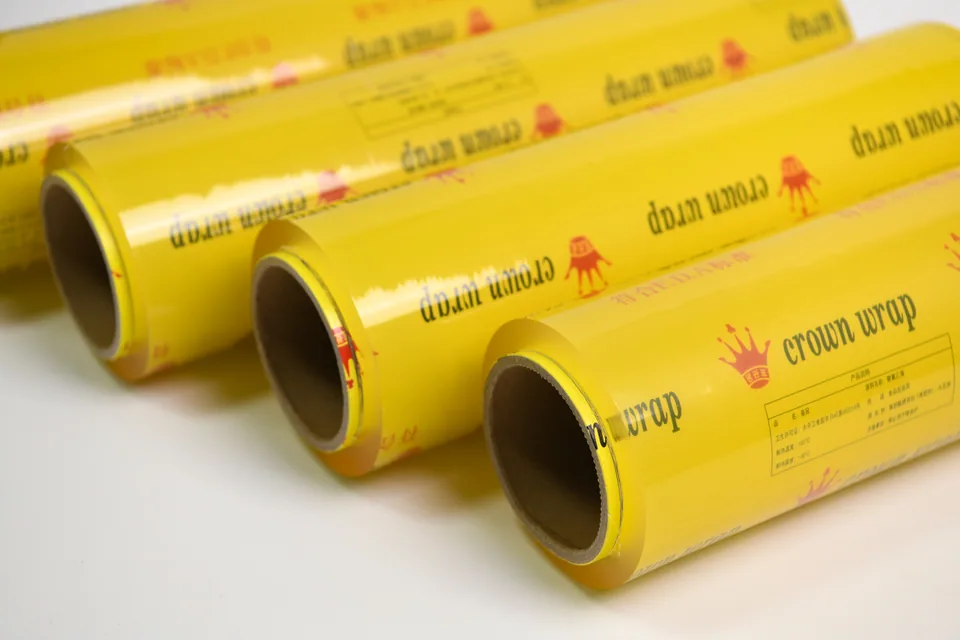
6. Customisation capability
Most B2B cling film buyers need some degree of customisation:
- Custom widths and lengths (e.g. 30cm, 35cm, 45cm retail rolls; 500mm jumbo rolls)
- Private-label printing on the film or the dispenser box
- Thickness options (8, 10, 12, 15, 17 micron are the standard PVC grades)
- Colour tinting (blue tint for food-processing detection, for example)
- Packaging formats (slide cutter, serrated blade, shrink-wrap bundles, pallet configuration)
A cling film supplier with in-house printing and packaging lines can handle all of this without subcontracting, which means tighter quality control and shorter lead times.
7. Export experience
Export experience is not about having an English-speaking salesperson. It is about:
- Number of destination countries served regularly (20+ is strong)
- Container volume per month (10+ FCL/month indicates established logistics)
- Port proximity — a factory 40 km from Ningbo-Zhoushan Port (like SUNWRAP) versus one 600 km inland in Henan
- Familiarity with destination-country regulations — a supplier shipping to Nigeria should know NAFDAC requirements; one shipping to the UAE should know ESMA standards
- Documentation accuracy — correct HS codes (3920.43 for plasticised PVC film), proper commercial invoices, certificates of origin
For a full breakdown of HS codes and import requirements, see our HS code 3920 cling film import guide.
8. After-sales support
The test of a cling film supplier is not how they behave when they want your order — it is how they behave when something goes wrong. Evaluate:
- Claims response time — do they acknowledge quality claims within 48 hours?
- Root-cause analysis — do they investigate and share findings, or just offer a discount on the next order?
- Replacement policy — will they replace defective goods or credit the next shipment?
- Technical support — can they advise on film selection for specific wrapping equipment?
Regional comparison: China vs Southeast Asia vs Middle East suppliers
| Factor | China | Southeast Asia (Vietnam, Thailand) | Middle East (Saudi, UAE, Egypt) |
|---|---|---|---|
| Production scale | Largest global capacity; 300–1,000+ tonnes/month per factory | Growing but smaller; 50–200 tonnes/month typical | Limited domestic production; mostly import and repack |
| Price competitiveness | Most competitive on raw material cost and labour | 5–15% higher than China on equivalent quality | 15–30% higher; offset by shorter transit to regional buyers |
| Certification depth | FDA, SGS, ISO widely available | Improving but less consistent | Variable; SASO/ESMA compliance often stronger than FDA |
| Customisation | Full capability: printing, private label, custom specs | Growing but tooling and plate options more limited | Mostly limited to repacking and relabelling |
| Export infrastructure | Mature ports, established freight routes, experienced logistics | Adequate but less container frequency on some routes | Strong regional distribution; limited intercontinental export |
| Lead time to Middle East | 18–25 days ocean transit from Ningbo | 15–22 days from Ho Chi Minh / Bangkok | 3–7 days regional, or domestic |
| Lead time to Africa | 20–45 days depending on port | 25–50 days | 10–25 days to East/North Africa |
For most importers buying at container scale, China remains the default source for cling film due to the combination of price, capacity, certification infrastructure, and export experience. Southeast Asian suppliers are a viable alternative for buyers in ASEAN markets who want shorter transit times. Middle Eastern suppliers primarily serve their domestic and regional markets.
The B2B procurement workflow: from RFQ to delivery
A systematic procurement process reduces risk at every stage. Here is the workflow we recommend:
Step 1: Request for Quotation (RFQ)
Send your spec sheet to 3–5 shortlisted cling film suppliers. Include:
- Product specification (material, thickness, width, length, packaging format)
- Estimated annual volume
- Destination port and preferred Incoterms (FOB or CIF)
- Required certifications
- Any custom printing or branding requirements
Expect responses within 48–72 hours. A supplier who takes two weeks to quote is signalling either disorganisation or disinterest.
Step 2: Sample evaluation
Request production samples — not showroom samples — from the top 2–3 suppliers. Test for:
- Thickness consistency (micrometer readings at 10+ points across the roll width)
- Cling performance on glass, ceramic, plastic, and metal surfaces
- Transparency and clarity
- Anti-fog performance (48 hours sealed at 4 degrees C)
- Odour (no chemical smell on unwinding)
For PVC film specifically, our PVC vs PE cling film comparison covers what to test and why.
Step 3: Factory verification
Before committing to a container order, verify the factory. Options range from a live video tour (minimum) to a third-party factory audit (Intertek, SGS, or Bureau Veritas). Key checkpoints:
- Business licence matches the quoted company
- Extrusion lines exist and are running
- Cleanroom or enclosed production environment for food-grade film
- QC equipment visible (thickness gauge, tensile tester, migration testing capability or outsourced arrangement)
- Warehouse and loading area can handle container loading
Step 4: Order and deposit
Place the purchase order with agreed specifications, delivery date, and payment terms. Standard terms: 30% T/T deposit, 70% against copy of Bill of Lading. For first orders, Alibaba Trade Assurance provides additional buyer protection. L/C at sight is standard for orders above USD 30,000.
Step 5: In-production QC
A serious cling film supplier will send production-progress photos and thickness-measurement data during the run. If they do not offer this, request it. Third-party pre-shipment inspection (PSI) by SGS or a similar agency costs USD 200–400 and is worth every dollar on a first order.
Step 6: Shipping and documentation
Confirm all export documents before the container ships:
- Commercial invoice and packing list
- Bill of Lading
- Certificate of Origin
- Phytosanitary certificate (if required by destination)
- SGS test report and FDA declaration
- HS code verification (3920.43 for plasticised PVC cling film)
For a full cost breakdown of what to expect at each stage, see our 2026 cling film price guide.
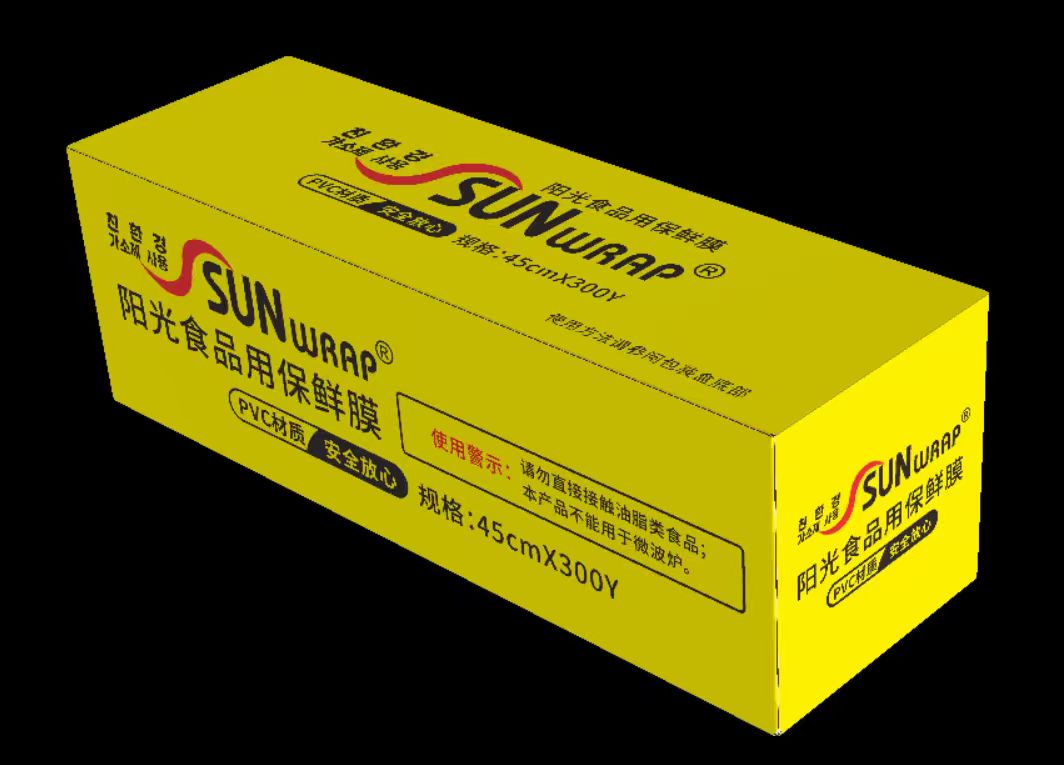
Common pitfalls when sourcing a cling film supplier
Pitfall 1: Choosing on price alone. The cheapest cling film supplier quote often omits costs that surface later — substandard packaging that causes transit damage, slow documentation that delays customs clearance, or inconsistent quality that triggers buyer complaints. Compare total landed cost, not FOB price.
Pitfall 2: Skipping the sample step. Samples cost time but save containers. We have seen buyers order 20 tonnes based on a spec sheet, only to find the film is too stiff for their wrapping machine. Always test on your actual equipment or your customer’s equipment.
Pitfall 3: Ignoring the factory-vs-trader distinction. Trading companies can be perfectly competent intermediaries, but you need to know who actually makes the film. If the trader changes source factories between your orders, your quality consistency disappears. Our supplier checklist article explains how to verify factory status.
Pitfall 4: Assuming all “food grade” claims are equal. “Food grade” is a regulatory standard, not a marketing phrase. A cling film supplier who claims food-grade compliance but cannot produce a current SGS migration test report specific to their formulation is making an unsupported claim. Verify, every time.
Pitfall 5: Not planning for the second order. The first container is a test; the relationship is built on orders two through twenty. Negotiate pricing structures that reward volume growth. Agree on annual volume targets with price steps. Lock in lead-time commitments for repeat orders. The best cling film supplier relationships are partnerships, not transactions.
Conclusion: Choosing Your PVC Cling Film Supplier
Finding a reliable PVC cling film supplier is a process, not a single decision. The eight evaluation criteria — capacity, certifications, MOQ, lead time, food-grade compliance, customisation, export experience, and after-sales — give you a structured framework to compare cling film supplier candidates on substance rather than sales pitches. The B2B procurement workflow — RFQ, sample, verify, order, QC, ship — reduces risk at each stage.
The best PVC cling film suppliers make this process easy because their operations are built for it. They send documentation without being chased, they hit lead times without excuses, and they treat quality consistency as a baseline, not a premium feature.
For the broader landscape of credible manufacturers, see our top 10 PVC cling film manufacturers in China. For landed-cost benchmarks to cross-check any quotation you receive, read the 2026 cling film price guide.
SUNWRAP is a Korean-invested cling film manufacturer in Ningbo, China — 20+ years of production, FDA-compliant, SGS-tested, operating in a food-grade cleanroom 40 km from Ningbo-Zhoushan Port. We export to 30+ countries across the Middle East, Africa, Southeast Asia, and beyond. If you are looking for a cling film supplier who checks every box on this list, contact our export team — we will send the full documentation pack within one working day.
Frequently asked questions
What should I look for in a cling film supplier? Focus on eight areas: production capacity, food-safety certifications (FDA, SGS, EU 10/2011), MOQ flexibility, lead-time reliability, food-grade compliance depth, customisation capability (printing, widths, thicknesses), export experience (destination countries, container volume), and after-sales support (claims handling, root-cause analysis). A supplier strong across all eight is worth more than the cheapest quote.
How do I verify a cling film supplier’s food safety certifications? Request the original PDF of the test report and check four things: the issuing laboratory (SGS, Intertek, Bureau Veritas or CNAS-accredited), the report number (verifiable with the lab), the issue date (within 12 months), and the tested product description (must match your specific formulation, not a generic entry). For FDA, ask for the 21 CFR 177.1950 declaration; for EU, the Declaration of Compliance against Regulation (EU) No 10/2011.
What is the typical MOQ for wholesale cling film orders? Standard MOQ from Chinese suppliers is one 20GP container — approximately 18–22 tonnes of jumbo rolls or 8,000–12,000 cartons of retail packs. Trial orders of 3–5 tonnes are negotiable for first-time buyers, especially through Trade Assurance. Sub-container orders may carry a 5–15% price premium.
How long does it take to ship cling film from China? Ocean transit varies by destination: Southeast Asia 7–12 days, Middle East 18–25 days, East Africa 20–28 days, West Africa 35–45 days, Europe 25–35 days. Add 15–25 days for production and 3–5 days for destination customs clearance. Total order-to-warehouse time is typically 5–10 weeks.
Can I get custom printed cling film from a Chinese supplier? Yes. Most established suppliers offer up to 4-colour flexographic printing on the film and full-colour offset printing on dispenser boxes and cartons. You will need to supply artwork in AI or PDF format (CMYK). Custom printing adds 7–10 days to lead time and usually requires a full 20GP container MOQ. Plate charges for first-run printing typically range from USD 200–500.
Looking for a wholesale cling film supplier you can rely on? SUNWRAP is a Korean-invested manufacturer in Ningbo, China — FDA-compliant, SGS-tested, 20+ years of export experience. Request a quote →
Need a cling film quote while you're reading?
Our export team responds within 12 hours with FOB Ningbo pricing. No obligation.
Frequently Asked Questions
How do I find a reliable PVC cling film supplier?+
Start by filtering for actual PVC cling film manufacturers — not traders. A genuine PVC cling film supplier will have their own cast extrusion lines (ask for photos and line count), produce 300+ tonnes/month, hold current FDA 21 CFR 177.1950 and EU 10/2011 compliance reports, and offer thickness customisation from 8-30 microns. Request a factory audit video or use Alibaba's Factory Inspection badge. China produces over 60% of global PVC cling film — major supplier clusters are in Guangdong (Shantou, Dongguan) and Zhejiang (Ningbo, Taizhou). Pricing typically runs $800-1,200/tonne FOB for food-grade PVC film.
What should I look for in a cling film supplier?+
Focus on eight areas: production capacity (monthly tonnage and number of extrusion lines), food-safety certifications (FDA, SGS, EU 10/2011), minimum order quantity flexibility, lead time reliability, food-grade compliance documentation, customisation capability (printing, thickness, width), export experience (number of destination countries, container volume per month), and after-sales support (claims handling, retained-sample policy). A supplier that scores well across all eight is far more valuable than one that offers the lowest per-roll price but fails on two or three.
How do I verify a cling film supplier's food safety certifications?+
Request the original PDF of the test report — not a screenshot — and check four things: the issuing laboratory (SGS, Intertek, Bureau Veritas or a CNAS-accredited Chinese lab), the report number (which you can verify directly with the lab), the issue date (must be within 12 months), and the tested product description (must match the specific formulation you are buying, not a generic 'PVC film' entry). For FDA compliance, ask for the 21 CFR 177.1950 declaration; for EU markets, ask for the Declaration of Compliance against Regulation (EU) No 10/2011.
What is the typical MOQ for wholesale cling film orders?+
Most Chinese cling film suppliers set the standard MOQ at one 20-foot container, which holds approximately 18-22 tonnes of jumbo rolls or 8,000-12,000 cartons of finished retail packs. Trial orders of 3-5 tonnes are often negotiable for first-time buyers, especially through Alibaba Trade Assurance. Some suppliers accept even smaller quantities (500-1,000 cartons) for new market testing, but expect a 5-15% price premium on sub-container orders.
How long does it take to ship cling film from China?+
Ocean transit times from Chinese ports vary by destination: Southeast Asia 7-12 days, Middle East 18-25 days, East Africa 20-28 days, West Africa 35-45 days, Europe 25-35 days, South America 30-40 days. Add 15-25 days for production after deposit receipt, plus 3-5 days for customs clearance at destination. Total time from order confirmation to warehouse delivery is typically 5-10 weeks depending on the route.
Can I get custom printed cling film from a Chinese supplier?+
Yes. Most established Chinese cling film suppliers offer custom printing on both the film surface and the outer packaging (dispenser box, carton, and pallet wrap). Standard options include up to 4-colour flexographic printing on the film and full-colour offset printing on boxes. You will need to supply artwork files (AI or PDF format, CMYK colour mode). Custom printing adds 7-10 days to the production lead time and typically requires a slightly higher MOQ (often one full 20GP container). Plate charges for first-run printing usually range from USD 200-500 depending on the number of colours.
Sourcing cling film and have questions this article didn't answer?
Related articles
Cling Film Price 2026: How Much Does PVC & PE Cling Wrap Cost?
Cling film price guide 2026 — resin costs, factory margins, FOB vs CIF ranges by SKU, and a line-by-line read of a Chinese supplier's quotation, for PVC and PE.
How to Choose a Food Grade Cling Film Supplier
A 7-step checklist for vetting a food-grade PVC cling film supplier — what to ask, green flags vs red flags, and the paperwork a serious factory sends in 48 hours.
Top 10 Cling Film Manufacturers China 2026
China's 10 largest cling film manufacturers ranked by production capacity, export volume and food-safety certifications (FDA/EU/BRC). Includes factory profiles (PVC & PE), tier map, pricing ranges and the 5 criteria wholesale buyers use to shortlist cling film suppliers.