
Sourcing
Cling Film Manufacturers: Find Real Factories 2026
Cling Film Manufacturers & Suppliers: How to Source PVC Food Wrap from China (2026)
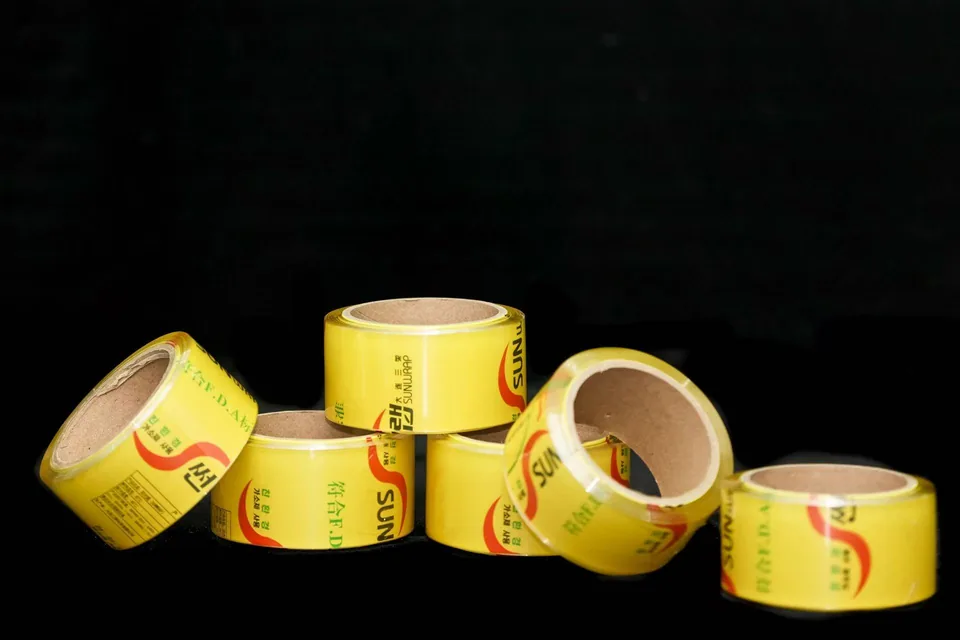
If you are searching for cling film suppliers or cling film manufacturers, you have probably already discovered the problem: thousands of Alibaba listings claim to be “cling film manufacturers,” but the large majority are trading companies, rewinding workshops, or small converters — not the resin-to-roll factories that supermarket chains, HORECA distributors, and food processors actually need.
This guide cuts through the noise. As a cling film manufacturer based in Ningbo, China with 8 extrusion lines and FDA-compliant production for export markets across 40+ countries, SUNWRAP shares the sourcing methodology, pricing benchmarks, and quality checkpoints that B2B buyers need to evaluate any cling film supplier — including us.
Not sure what type of cling film you need? Cling film, saran wrap, and plastic wrap are the same product under different names — but the material inside (PVC vs PE) matters. Read that guide first if you are new to sourcing food wrap.
The Cling Films Market in 2026: Size, Growth & Import Trends
The global cling films market reached approximately $6.2 billion in 2025 and is projected to grow at 4.1% CAGR through 2030 (Grand View Research). China accounts for an estimated 45-50% of global cling film production capacity, making it the dominant manufacturing base for both PVC and PE food wrap.
Key market trends driving sourcing decisions in 2026:
- PVC resin prices stabilized at $850-950/tonne (CFR Asia) after the volatility of 2024-2025, making 2026 pricing more predictable for importers
- FDA enforcement increased — 23 cling film import detention actions in FY2025, up from 14 in FY2024, primarily for DEHP plasticizer migration violations (OASIS import alert 99-42)
- EU Single-Use Plastics Directive pressure is pushing European importers toward DEHA-plasticized PVC or bio-based PE alternatives
- Middle East and Africa demand surging — UAE, Saudi Arabia, Nigeria, and Kenya showed 12-18% year-on-year import growth for food wrap
For B2B buyers, the implication is clear: the cheapest supplier is not necessarily the safest choice. Compliance failures can result in container-level seizure at the port, FDA warning letters, and customer chargeback costs that dwarf the 5-10% price savings from choosing an untested factory.
How to Identify Real Cling Film Manufacturers vs Traders
This is the single most important skill for any buyer sourcing from China. Here is how to tell the difference:
| Indicator | Real Manufacturer | Trading Company |
|---|---|---|
| Factory video | Shows extrusion lines, resin silos, QC lab | Shows a warehouse or someone else’s factory |
| Production capacity | States tonnes/month (e.g., “800 tonnes/month”) | States “unlimited” or redirects the question |
| Business license | Scope includes “plastic film production” (Chinese: 塑料薄膜生产) | Scope shows “import/export trade” (进出口贸易) |
| 1688.com presence | Listed as “factory” (工厂) with production photos | Listed as “trade firm” (贸易公司) or absent |
| Test reports | Batch-specific, issued within 12 months | Generic, older than 2 years, or from a different factory |
| Pricing breakdown | Can explain cost by resin, plasticizer, energy, labor | Quotes a single “best price” without breakdown |
| MOQ flexibility | Rigid (factory schedules runs by extrusion line) | Very flexible (they source from whoever is cheapest) |
Verification tools:
- Qichacha (企查查) — search by company name to verify business scope, registered capital, and social insurance headcount (a factory with 80+ insured employees is almost certainly real)
- 1688.com — China’s domestic B2B platform; search the factory name and look for “实力商家” (verified manufacturer) or “源头工厂” (source factory) badges
- Google Maps / Baidu Maps — satellite view should show a factory building, not an office complex
Production Capacity & Equipment: What to Look For
When evaluating cling film manufacturers, production capacity is determined by the number and type of extrusion lines:
| Equipment Type | Output per Line | Typical Factory Scale | Quality Indicator |
|---|---|---|---|
| Single-layer blown film | 150-250 kg/hr | Small (1-3 lines) | Basic grade, domestic market |
| Multi-layer cast film | 300-500 kg/hr | Medium (3-6 lines) | Export grade, better thickness control |
| 5-layer co-extrusion | 400-800 kg/hr | Large (5-8+ lines) | Premium grade, multi-material capability |
| Auto-packaging line | N/A (downstream) | Add-on to any factory | Can produce finished consumer packs |
SUNWRAP operates 8 extrusion lines with combined monthly capacity of 3,000+ tonnes, including cast PVC lines with +/-2% thickness tolerance and automatic online thickness gauging. This matters because thickness consistency directly affects cling performance, dispenser compatibility, and end-user satisfaction.
What to ask any manufacturer:
- How many extrusion lines do you operate?
- What is your monthly capacity in tonnes?
- What is your thickness tolerance? (Industry standard: +/-5%; premium: +/-2%)
- Do you have online thickness monitoring (beta gauge)?
- What resin suppliers do you use? (Top PVC resin brands: Formosa, Shin-Etsu, LG Chem, Hanwha)
Pricing Structure: What B2B Buyers Actually Pay
Pricing from Chinese cling film suppliers varies significantly based on material, specification, and order volume. Here are the benchmarks for 2026:
| Product | Specification | FOB China Price | Notes |
|---|---|---|---|
| PVC cling film jumbo roll | 10-12 micron, 300-1500mm width | $1,200-$1,800/tonne | Food grade, DEHA plasticizer |
| PVC cling film consumer pack | 30cm x 300m, color box | $0.35-$0.55/pc | With cutter box, standard brand |
| PVC cling film consumer pack | 45cm x 300m, color box | $0.50-$0.80/pc | HORECA size, with dispenser |
| PE cling film jumbo roll | 8-12 micron, 300-1500mm | $1,600-$2,200/tonne | Food grade, no plasticizer concern |
| PE cling film consumer pack | 30cm x 50m, shrink wrap | $0.15-$0.25/pc | Supermarket retail grade |
Price drivers (from most to least impact):
- PVC resin grade — virgin resin vs recycled (food-grade must be 100% virgin)
- Plasticizer type — DEHA ($1,800-2,200/tonne) vs ATBC ($2,500-3,000/tonne, bio-based) vs DEHP (banned in most export markets)
- Thickness — 10 micron uses 10-15% less resin than 12 micron
- Order volume — 20GP vs 40HQ pricing typically differs by 3-8%
- Packaging complexity — plain shrink wrap vs printed color box with cutter
- Payment terms — 30% deposit / 70% before shipping is standard; L/C at sight adds 1-2%
Red flag: If a supplier quotes more than 25% below the ranges above for food-grade PVC cling film, either the film uses recycled resin (not food-safe), contains DEHP plasticizer (banned for food contact in EU/US), or the thickness is significantly below spec. Request a pre-shipment SGS inspection and independent migration testing.
Certifications & Compliance: The Non-Negotiable Checklist
For food-contact cling film, compliance is not optional — it is a legal requirement in every major import market. Here is what you need:
| Market | Required Standard | What It Tests | Who Issues |
|---|---|---|---|
| USA | FDA 21 CFR 177.1520 / 178.3740 | Overall migration, specific migration (DEHA, DEHP, heavy metals) | SGS, Intertek, Bureau Veritas |
| EU | EU Reg. No 10/2011 | Overall migration (10 mg/dm2), specific migration limits | SGS, TUV, Bureau Veritas |
| Japan | JHPA Standards | Evaporation residue, heavy metals, permanganate consumption | JFRL, SGS Japan |
| GCC (UAE, Saudi) | GSO 839 / SASO | Similar to FDA, with Arabic labeling requirements | SASO, ESMA accredited labs |
| China domestic | GB 9685 + GB 4806 | Additives positive list, migration limits | CMA-accredited labs |
SUNWRAP compliance status:
- FDA 21 CFR test reports issued by SGS (renewed annually, latest: March 2026)
- EU 10/2011 Declaration of Compliance on file
- DEHA-plasticized PVC (no DEHP in any product line since 2019)
- ISO 9001:2015 and ISO 14001:2015 certified
- BRC Global Standard for Packaging and Packaging Materials
What to request from any supplier before placing an order:
- Current (within 12 months) migration test report from an accredited third-party lab
- Material Safety Data Sheet (MSDS) for the specific film grade
- Certificate of Analysis (COA) for a recent production batch
- Copy of business license showing “food contact” production scope
- Photos/video of QC lab with testing equipment
Quality Testing: What We Check (and What You Should Too)
At SUNWRAP, every production batch goes through 7 quality checkpoints before shipment:
- Incoming resin inspection — melt flow index, moisture content, visual pellet check
- In-line thickness monitoring — beta gauge with +/-2% tolerance, alarm at +/-3%
- Cling force test — ASTM D5458 method, target 1.5-3.0 N/25mm for food wrap
- Clarity / haze measurement — ASTM D1003, target haze below 3% for premium grade
- Migration testing — FDA overall migration at 40 deg C / 10 days (food simulant: olive oil)
- Tensile strength — ASTM D882, MD/TD ratio within 1:0.8-1.2 for balanced performance
- Dispenser compatibility — consumer packs tested on standard slide-cutter dispensers
For B2B buyers doing incoming QC, the three most important tests are thickness (using a micrometer at 10 random points across the roll width), cling force (the film should stick to itself and to glass/ceramic surfaces), and migration (send a sample to a local lab before accepting the first container).
How to Evaluate a Cling Film Supplier: 5-Step Process
Here is the evaluation process we recommend to every buyer — whether they source from SUNWRAP or a competitor:
Step 1: Request Samples (2-3 suppliers)
Ask for both jumbo roll and finished pack samples. A genuine manufacturer can ship samples within 3-5 business days. If samples take more than 2 weeks, the supplier is probably sourcing from another factory.
Step 2: Verify the Factory
Use Qichacha, 1688, and Google Maps. If the factory is real, request a video call walk-through of the production floor. Watch for: running extrusion lines, labeled resin silos, a QC lab with testing instruments, and finished goods warehouse with your sample product visually matching the stock.
Step 3: Test the Samples
Run cling force, thickness, and clarity tests internally. Send one sample to an accredited lab for FDA/EU migration testing ($300-600 per sample, 7-10 business day turnaround). This $600 investment protects you from a $50,000+ detention at US Customs.
Step 4: Place a Trial Order (3-5 tonnes)
Use Alibaba Trade Assurance or T/T with 30% deposit. Arrange a pre-shipment inspection (SGS, AI, TUV) — cost is approximately $250-400 per inspection. Check thickness, weight, packaging, and labeling against your specifications.
Step 5: Scale to Full Containers
Once the trial order passes your incoming QC, negotiate annual volume pricing and lock in specifications in a supply agreement. Standard payment terms for repeat buyers: 30% deposit, 70% against B/L copy.
Why B2B Buyers Choose SUNWRAP
SUNWRAP (Ningbo SUNWRAP Packaging Co., Ltd) is a Korean-invested cling film manufacturer based in Ningbo, Zhejiang. Here is what differentiates us:
- 8 extrusion lines with 3,000+ tonnes/month capacity
- FDA + EU compliant — current test reports from SGS, renewed annually
- DEHA plasticizer only — no DEHP in any product since 2019
- +/-2% thickness tolerance — online beta gauge monitoring on every line
- FOB Ningbo — 15 minutes from Ningbo-Zhoushan Port (world’s busiest cargo port)
- Trial orders from 3 tonnes — no need to commit to a full container upfront
- 12-hour quote response — FOB or CIF, with full cost breakdown
- 40+ export countries — Middle East, Southeast Asia, Africa, Latin America, Europe
We also offer PE cling film, OEM/private label manufacturing, and jumbo roll supply for converters.
Related Sourcing Guides
- Top 10 PVC Cling Film Manufacturers in China (2026) — Factory profiles and capacity data
- How to Choose a Food-Grade PVC Cling Film Supplier — Evaluation criteria deep-dive
- PVC Cling Film vs PE Cling Film — Material comparison for different applications
- Cling Film Price Guide 2026 — Detailed pricing by grade, thickness, and volume
- Food-Grade Cling Film Certification Guide — FDA, EU, Japan, GCC requirements
Need a cling film quote while you're reading?
Our export team responds within 12 hours with FOB Ningbo pricing. No obligation.
Frequently Asked Questions
How do I find reliable cling film manufacturers in China?+
Start with industry directories (not Alibaba search results, which are 70%+ traders). Cross-reference with 1688.com factory pages, verify business licenses on Qichacha/Tianyancha, request factory audit reports (BSCI, Sedex), and ask for sample rolls with batch codes. A real cling film manufacturer will have extrusion lines (typically 3-8 lines), a resin silo, and quality control lab on-site. If a 'factory' cannot show you a video walk-through of their production floor within 48 hours, they are almost certainly a trading company.
What certifications should a cling film supplier have for food contact?+
For the US market: FDA 21 CFR 177.1520 (polyolefins) or 21 CFR 178.3740 (plasticizers in PVC). For EU: EU Regulation No 10/2011 (plastic food contact materials) plus a Declaration of Compliance. For both markets: third-party migration testing reports from SGS, Intertek, or Bureau Veritas covering overall migration, specific migration of DEHA/DEHP, and heavy metals (Pb, Cd, Hg, Cr). ISO 9001 and ISO 14001 are baseline quality/environmental management certifications. Any supplier unable to produce current test reports on request should be disqualified.
What is the typical MOQ from Chinese cling film manufacturers?+
Standard export MOQ is one 20GP container, which holds approximately 18-22 tonnes of jumbo rolls or 8,000-12,000 cartons of finished consumer packs. Trial orders of 3-5 tonnes are negotiable with most established factories for first-time buyers, especially under Alibaba Trade Assurance or with a 50% deposit via T/T. SUNWRAP offers trial orders starting at 3 tonnes for new customers, with full 20GP pricing locked in on the second order.
How much does PVC cling film cost from China manufacturers?+
FOB China pricing for food-grade PVC cling film ranges from $1,200-$1,800 per tonne for jumbo rolls (depending on thickness, width, and PVC resin grade) and $0.30-$0.80 per carton for finished consumer packs (30cm x 300m standard roll). Pricing varies by 15-25% between manufacturers based on resin quality, plasticizer type (DEHA vs ATBC), and coating consistency. The cheapest price is not always the best value -- migration test failures on import can cost 5-10x the price difference in recalls and FDA enforcement actions.
What is the difference between cling film manufacturers and cling film suppliers?+
A cling film manufacturer owns the extrusion equipment and produces film from raw PVC or PE resin -- they control formulation, thickness tolerance, and quality. A cling film supplier may be a manufacturer, a trading company that buys from factories and resells, or a converter that buys jumbo rolls and slits/rewraps them into consumer sizes. For B2B buyers purchasing containers, buying from the manufacturer eliminates the 10-20% trader margin, provides traceability to batch-specific test reports, and enables customization (thickness, width, printing, box design).
Where are China's cling film manufacturing clusters located?+
The major clusters are: (1) Zhejiang (Ningbo, Cixi, Hangzhou) -- dominates food-grade PVC cling film for export, with port proximity to Ningbo-Zhoushan (world's busiest cargo port). SUNWRAP is based here. (2) Guangdong (Foshan, Dongguan) -- strong in PE cling film and consumer packaging. (3) Shandong (Linyi, Weifang) -- large-scale PE stretch film and lower-cost PVC. (4) Jiangsu (Suzhou, Wuxi) -- precision film and specialty grades. Zhejiang and Jiangsu factories generally command a 5-10% price premium but offer more consistent quality and faster documentation.
How long does it take to ship cling film from China to the US/EU?+
Production lead time is typically 15-25 days after order confirmation and deposit receipt. Shipping times: Ningbo to Los Angeles is 12-16 days, Ningbo to Rotterdam is 28-32 days, Ningbo to Dubai is 18-22 days, Ningbo to Lagos is 35-40 days. Total door-to-door from order to warehouse is typically 45-60 days for US buyers and 55-70 days for EU buyers. SUNWRAP provides tracking updates at three stages: production complete, container loaded, and vessel departure.
Sourcing cling film and have questions this article didn't answer?
Related articles
Cling Film Price 2026: How Much Does PVC & PE Cling Wrap Cost?
Cling film price guide 2026 — resin costs, factory margins, FOB vs CIF ranges by SKU, and a line-by-line read of a Chinese supplier's quotation, for PVC and PE.
Saran Wrap vs Cling Wrap vs Plastic Wrap — They're NOT the Same
Saran Wrap, cling wrap, and plastic wrap look identical but use different plastics (PVC vs PE vs PVDC). One is microwave-safe, one isn't. Factory comparison with thickness data.
How to Choose a Food Grade Cling Film Supplier
A 7-step checklist for vetting a food-grade PVC cling film supplier — what to ask, green flags vs red flags, and the paperwork a serious factory sends in 48 hours.