
Sourcing
Cling Film in Spanish, Chinese & 12 Markets: Buyer Glossary
Quick answer: Clingfilm in Spanish is film transparente or film alimentario in Spain (colloquially papel film). In Mexico it is plástico adherente or película adherente, in Colombia vinipel, and in Chile alusa. In Chinese, cling wrap is 保鲜膜 (bǎoxiānmó). For buyers, the dictionary answer is only the start. The same product has a different name in every market, and several of those names collide with stretch film, which is a completely different product. Chinese factories also quote thickness in 丝 (1 丝 = 0.01 mm = 10 µm). Get the words wrong on a purchase order, a box or a customs invoice and you can receive the wrong film, have a label rejected, or clear customs under the wrong code.
We manufacture PVC and PE food film at Ningbo Sanrong New Materials in the Ningbo Qianwan New Area and export to more than 50 countries. That means printing boxes in many languages and reading purchase orders written in many more. This glossary goes past a translation list: for each market it gives the local shelf name, the words to put on the label, the Chinese factory term for your PO, and the translations that cause real problems.
What Is Cling Film Called in Spanish? It Depends on the Country
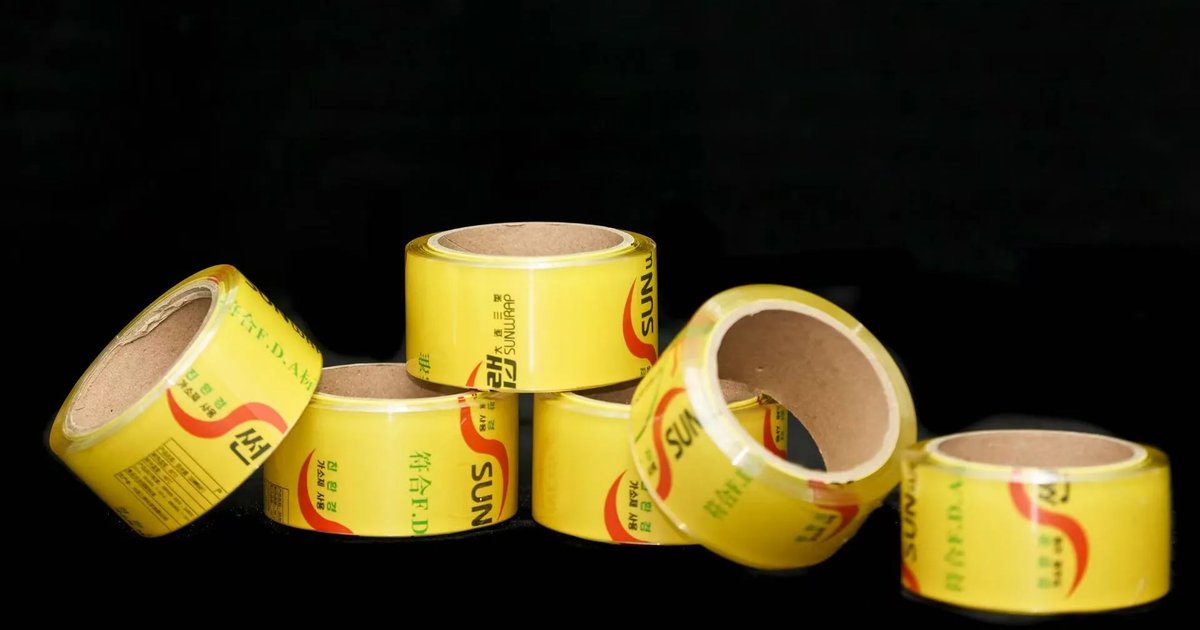
Spanish dictionaries give one or two translations. Spanish-speaking shoppers use at least six, and several are brand names that became generic words. That matters for two reasons. It tells you what your customers will type into a search box, and it tells you what not to print as the legal product name (a genericised brand on your box can invite a trademark complaint).
| Country | What shoppers say | Safer wording for the label | Watch out for |
|---|---|---|---|
| Spain | film transparente, film alimentario, papel film | Film transparente para alimentos | ”Film estirable” can mean pallet wrap in B2B catalogues |
| Mexico | plástico adherente, película adherente, “Kleen Pack” (brand) | Película adherente para alimentos | Película estirable usually returns pallet stretch film |
| Colombia | vinipel | Película plástica adherente para alimentos | Vinipel started as a brand name; don’t print it as the product name |
| Chile | alusa, alusa film | Film plástico adherente para alimentos | Alusa is also a brand name |
| Argentina | papel film | Film adherente para alimentos | ”Papel” misleads if the label is translated back to English |
| Generic Latin America | envoltura plástica, film adherente | Película adherente de PVC / de PE | Always add the material: PVC or PE |
Two practical notes from the factory side. First, Spanish-speaking catering buyers often skip the word entirely and order by size: “rollo de 30 cm × 300 m”. Put the width and length in large type on the front panel. Second, “papel” (paper) is a common colloquial prefix in Spain and Argentina. Keep it off technical documents, because a back-translation reading “paper film” confuses both customs officers and quality inspectors.
If you import into Latin America, our Spanish product page for papel film de cocina shows the formats we ship, and our market pages for Colombia, Argentina and Peru cover ports, transit times and typical roll sizes. For the English-language naming differences (Saran wrap, plastic wrap, Glad Wrap), see our Saran wrap vs cling wrap vs plastic wrap guide.
Cling Film in 12 Languages: The Export Market Map
This table covers the markets where we most often see artwork requests. The “stretch-film trap” column flags languages where the everyday word for cling film overlaps with the word for pallet wrap. Those are the markets where a spec sheet has to be most explicit.
| Language / market | Everyday term | Formal / B2B term | Stretch-film trap? |
|---|---|---|---|
| Chinese (Mainland) | 保鲜膜 bǎoxiānmó | PVC保鲜膜 / PE保鲜膜 | No, but 缠绕膜 = pallet film |
| Chinese (Taiwan, Hong Kong) | 保鮮膜 | 食品用保鮮膜 | No |
| Portuguese (Brazil) | papel filme | filme PVC para alimentos | Low |
| Portuguese (Portugal) | película aderente | película aderente para alimentos | Low |
| French (France) | film alimentaire, film étirable | film alimentaire étirable | Yes: film étirable is also pallet wrap |
| French (Québec) | pellicule plastique, pellicule de plastique | pellicule plastique alimentaire | Low |
| Arabic (Gulf, Levant, Iraq) | نايلون تغليف (naylon taghlif) | نايلون تغليف الطعام | Medium; “nylon” here means any plastic |
| Russian | пищевая плёнка | пищевая плёнка ПВХ / ПЭ | Yes: стретч-плёнка is used for both |
| Turkish | streç film | gıda streç filmi | Yes: same word as pallet wrap |
| Vietnamese | màng bọc thực phẩm | màng bọc thực phẩm PVC / PE | Low |
| Indonesian | plastik wrap | plastik pembungkus makanan | Yes: “stretch film” used for both |
| German | Frischhaltefolie | Frischhaltefolie für Lebensmittel | No |
| Japanese | ラップ (rappu) | 食品用ラップフィルム | No |
| Korean | 랩 (laep), 위생랩 | 식품용 랩 | No |
The Arabic row deserves a warning. Retail listings in the UAE, Jordan and Iraq routinely call cling film نايلون (“nylon”), but the film is PVC or PE, not polyamide. It is easy for that word to slip into an English-language spec sheet as “nylon cling film”. Nylon (PA) is a different polymer with a different HS code and different food-contact rules. On any technical or customs document, state the real material. Our Saudi Arabia and UAE market pages list the formats that sell in Gulf supermarkets and catering.
Cling Wrap in Chinese: The Factory Vocabulary Your PO Needs
If you buy direct from China, the word 保鲜膜 alone will get you a quotation. It won’t get you the right quotation. These are the terms that appear on Chinese quotations, production orders and packing lists, with the translation errors we see most often:
| Chinese term | Pinyin | Correct English | Common mistranslation |
|---|---|---|---|
| 保鲜膜 | bǎoxiānmó | Food cling film | ”Fresh-keeping film” (reads as Chinglish on a box) |
| 缠绕膜 / 拉伸膜 | chánràomó / lāshēnmó | Pallet stretch film | ”Cling film” (wrong product) |
| 收缩膜 | shōusuōmó | Heat-shrink film | ”Stretch film” |
| 丝 | sī | 0.01 mm = 10 µm | ”Silk”, or confused with microns |
| 大卷 / 母卷 | dàjuǎn / mǔjuǎn | Jumbo roll / master roll | ”Big roll” without dimensions |
| 分切 | fēnqiē | Slitting and rewinding | ”Cutting” |
| 纸管 / 管芯内径 | zhǐguǎn / guǎnxīn nèijìng | Paper core / core inner diameter | ”Paper tube” with no ID stated |
| 滑刀盒 | huádāohé | Slider-cutter box | ”Sliding knife box” |
| 锯齿刀 | jùchǐdāo | Serrated cutter blade | ”Saw” |
| 增塑剂 | zēngsùjì | Plasticiser | ”Softener” |
| 迁移试验 | qiānyí shìyàn | Migration test (food contact) | “Transfer test” |
| 净重 / 毛重 | jìngzhòng / máozhòng | Net weight / gross weight | Swapped on packing lists |
| 贴牌 | tiēpái | Private label / OEM | ”Sticker brand” |
The 丝 trap in numbers. Household cling film is typically 0.8-1.2 丝, which is 8-12 µm. Catering film runs about 1.0-1.5 丝 (10-15 µm). A classic error is a buyer’s “10 micron” becoming “10丝” in a trader’s message to the factory. That is 100 µm, ten times too thick, and the quotation comes back at roughly ten times the expected price per metre. The reverse error is worse: a quote for “10 thickness” that turns out to be 1.0 丝 when the buyer wanted 15 µm. Our cling film thickness chart converts µm, mil, US gauge and 丝 in one table.
One PO line that leaves no room for translation. Instead of “cling film 30cm”, write this:
PVC food-contact cling film (PVC保鲜膜), 300 mm × 300 m × 10 µm, net film weight 1,125 g ±3% per roll, 76 mm paper core ID, serrated-cutter printed box, 6 rolls per master carton, label language: Spanish.
That line gives the factory the material, dimensions, thickness in µm, a weight check (300 mm × 300 m × 10 µm × 1.25 g/cm³ ≈ 1,125 g), the core, the box and the label language. Nothing is left to translation.
Need a label or PO checked before you send it? Send us your artwork or spec and we will flag any terminology or unit problems within 12 hours.
Label Language Rules by Destination Market
Choosing the right word is half of the job. The other half is putting mandatory information in the language the destination requires. These are the core rules we work to when preparing export artwork. They are a starting checklist, not legal advice. Product-specific rules can sit on top of them, so your importer should sign off the final label.
| Market | Core rule | Language requirement | What we add to the artwork |
|---|---|---|---|
| Mexico | NOM-050-SCFI-2004 (commercial information) | Spanish; other languages allowed alongside | Importer name and fiscal address, country of origin, net content |
| Brazil | Consumer Defence Code, Law 8.078/1990, Art. 31 | Portuguese | Composition, quantity, origin, safety warnings |
| Saudi Arabia | SASO technical regulations | Arabic, or Arabic + English | Arabic product name, origin, use and warning text (RTL layout) |
| Other GCC states | National rules differ | Usually Arabic + English | Confirmed case by case with the importer |
| Canada | Consumer Packaging and Labelling Act | English and French for mandatory information | Bilingual product identity and net quantity |
| Québec (added) | Charter of the French Language, as amended by Bill 96 | French, with no other language more prominent | French generic description even inside a trademark (since June 1, 2025) |
| European Union | Reg. (EC) 1935/2004 Art. 15 + Reg. (EU) 10/2011 | Language easily understood by buyers; each Member State may mandate its own | ”For food contact” wording or glass-and-fork symbol, EU operator, batch code |
| Eurasian Economic Union | TR CU 005/2011 (packaging safety) | Russian and/or national language; confirm scope with the importer | EAC mark where conformity assessment applies |
| Vietnam | Decree 43/2017/ND-CP, amended by Decree 111/2021/ND-CP | Vietnamese mandatory information | Vietnamese supplementary label before domestic sale |
| United States | 19 CFR Part 134 (origin marking) | English | ”Made in China” on the unit box, not only the master carton |
Three details that save reprints:
- The EU symbol is an alternative, not a translation shortcut. Article 15 of Regulation 1935/2004 lets you use the glass-and-fork symbol instead of the words “for food contact”. Use instructions and warnings (for example, “do not use in contact with fatty food in the microwave”) still need to be in the buyer’s language. For the compliance documents behind the label, including the EU 10/2011 declaration of compliance, see our food-grade certification guide.
- Arabic artwork needs more than a translation. Right-to-left text changes the reading order of the whole front panel. Numbers stay left-to-right inside Arabic text, and Arabic script needs a larger point size than Latin text to read at the same size. Set Arabic proofs natively rather than mirroring an English layout.
- Canada is two layers. Federal law requires bilingual mandatory information everywhere in Canada. Quebec adds its own rules on top, and since June 1, 2025 a generic product description inside a trademark (such as “Cling Wrap”) must also appear in French.
HS Codes and Customs Wording in Spanish and Other Languages
Customs brokers in Latin America work from Spanish tariff text, and a mismatch between the invoice description and the tariff line is a common reason for queries. The six-digit Harmonized System code is the same everywhere. National codes add digits after it.
| Film | HS subheading | English tariff text (short) | Spanish tariff text (short) |
|---|---|---|---|
| PE cling film | 3920.10 | Of polymers of ethylene | De polímeros de etileno |
| PVC cling film, plasticised | 3920.43 | Containing by weight not less than 6% of plasticisers | Con un contenido de plastificantes superior o igual al 6 % en peso |
| PVC film, low plasticiser | 3920.49 | Other | Las demás |
Food-grade PVC cling film gets its cling and stretch from plasticiser. A normal cling formulation is well above the 6% threshold, which is why it falls under 3920.43. Don’t assume every PVC film does, though. A rigid or semi-rigid PVC sheet sold as “film” can land in 3920.49. On a Spanish-language commercial invoice we describe the product as, for example, “Película adherente de PVC plastificado para contacto con alimentos, en rollos de 30 cm × 300 m”. That wording matches both the tariff text and the physical goods. For landed-cost and duty questions, our cling film HS code guide goes deeper. Always confirm the full national code with your broker.
Private Label in Another Language: How We Handle Multilingual Artwork
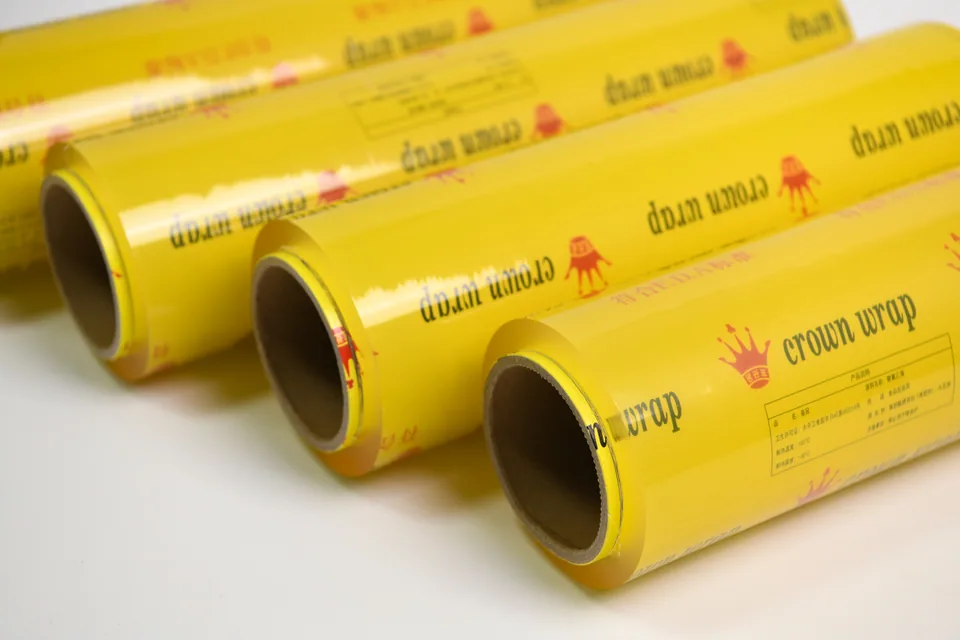
Private-label boxes often carry a language nobody on the production floor reads, so artwork has to go through a fixed process that doesn’t rely on anyone’s language skills:
- The buyer supplies or approves the translated text. We never machine-translate legal label text. We send a text-only table (English | target language | field) for sign-off before layout starts.
- We set the artwork and send a PDF proof with the fonts embedded. For Arabic, Thai, Vietnamese and other scripts with diacritics, we check that no character is dropped or substituted by a fallback font. This is the most common silent error in multilingual printing.
- Numbers and units are locked. Width, length, thickness in µm and net weight are taken from the production order, not retyped by the designer. That way the box can’t say 30 cm while the roll is 29.
- A printed sample box is photographed next to a roll from the pilot run, then shipped with samples if the buyer wants to check it physically.
Artwork sign-off typically takes 5-7 days. Printed-box orders usually start around 10,000 boxes per design because of plate and die-cut tooling. Plain boxes with an applied local-language label work for smaller trial orders. Our private label cling film guide covers the whole OEM process, and the custom OEM cling film page lists the box and core options.
Which Film to Specify, Whatever You Call It
The name changes across borders. The decision behind it doesn’t:
- PVC cling film: highest cling and clarity at the lowest cost per metre. The default for supermarket counters, delis and catering in Latin America, the Middle East and Africa.
- PE cling film: plasticiser-free and preferred for premium retail labels that make “microwave safe” or “PVC-free” claims.
- Jumbo rolls: for converters who slit and rewind (分切) locally and print their own local-language boxes.
If you are unsure whether a local term such as streç film or film étirable on a customer’s order means food film or pallet film, our stretch film vs cling film guide shows how to tell the two apart by thickness, material and cling.
Related Guides
- Saran Wrap vs Cling Wrap vs Plastic Wrap: What’s the Difference?
- Cling Film & Saran Wrap Thickness Chart: Micron, Mil & Gauge
- Private Label Cling Film: OEM & Custom Branding Guide
- Cling Film HS Code 3920: Import Guide
- Sourcing Chinese Cling Film
Request a Quote for Private Label Cling Film in Your Language
Tell us your destination market, roll sizes, material (PVC or PE) and the label language you need. We will reply within 12 hours with an FOB Ningbo quote, the recommended label wording for that market, and an artwork timeline. Send your current box or PO too, and we will check the terminology and units for free before you order.
Need a cling film quote while you're reading?
Our export team responds within 12 hours with FOB Ningbo pricing. No obligation.
Frequently Asked Questions
What is clingfilm called in Spanish?+
There is no single Spanish word. In Spain, cling film is usually called film transparente or film alimentario, and colloquially papel film. In Mexico, supermarket packs say plástico adherente or película adherente. Colombians say vinipel, Chileans say alusa, and Argentines say papel film. For a label that works across Spanish-speaking markets, a descriptive name such as "película adherente para alimentos" plus the material (PVC or PE) is the safest choice, but let your importer approve the final wording for their country.
What is cling wrap called in Chinese?+
Cling wrap is 保鲜膜 (bǎoxiānmó) in Simplified Chinese and 保鮮膜 in Traditional Chinese, literally "freshness-keeping film". Do not confuse it with 缠绕膜 or 拉伸膜, which Chinese factories use for pallet stretch film, or 收缩膜, which is heat-shrink film. When you write to a Chinese supplier, use 保鲜膜 together with the material, for example PVC保鲜膜 or PE保鲜膜, and give the thickness in microns.
What does 丝 mean in a Chinese cling film quotation?+
丝 (sī) is a factory thickness unit equal to 0.01 mm, or 10 microns. Household and catering cling film is usually quoted at about 0.8 to 1.2 丝, which is 8 to 12 µm. The risk is a unit mix-up: a buyer asks for "10 micron" and a trader writes "10丝", which is 100 µm, ten times thicker. Always state thickness in µm on the purchase order, the proforma invoice and the certificate of analysis.
Is cling film the same as stretch film in other languages?+
Not always, and this is where most translation problems start. In Turkey, household cling film is sold as streç film. In Indonesia it is often called plastik wrap or stretch film. In Mexico, película estirable usually means pallet stretch wrap. In Chinese, 缠绕膜 is always pallet film. On a PO, specify food-contact cling film, the material (PVC or PE), the thickness in µm and the roll size, so the factory cannot quote the wrong product.
What language must cling film labels be in for export?+
It depends on the destination. Mexico requires Spanish commercial information under NOM-050-SCFI-2004. Brazil requires Portuguese under Article 31 of the Consumer Defence Code. Saudi Arabia's SASO rules call for Arabic or Arabic plus English. Canada requires English and French for mandatory information, and Quebec adds the Charter of the French Language rules. Vietnam requires Vietnamese mandatory information under Decree 43/2017 as amended by Decree 111/2021. In the EU, each Member State can require its own official language(s). Confirm the final label with your importer before you approve printing.
What HS code do I put on a Spanish-language invoice for cling film?+
PE cling film is generally classified under subheading 3920.10 (de polímeros de etileno). Plasticised PVC cling film falls under 3920.43, whose Spanish tariff text reads "con un contenido de plastificantes superior o igual al 6 % en peso". PVC film with less than 6% plasticiser goes under 3920.49. National tariffs add digits beyond these six, and duty rates differ by country, so your customs broker should confirm the full national code.
Can SUNWRAP print cling film boxes in Spanish, Arabic or other languages?+
Yes. We print retail boxes and roll labels in the buyer's language, and check right-to-left layouts such as Arabic on the proof. You supply or approve the translated text, and we prepare the artwork proof and match fonts and legal text sizes. Printed-box orders usually start at around 10,000 boxes per design because of printing plate and die-cut tooling. Plain boxes with an applied label need much smaller runs. Artwork sign-off typically takes 5-7 days before production.
Sourcing cling film and have questions this article didn't answer?
Related articles
Saran Wrap vs Cling Wrap vs Plastic Wrap — Same Thing?
Are saran wrap, cling wrap, and plastic wrap the same? Not exactly — materials (PVC vs PE) and cling strength differ. Full comparison chart inside.
Private Label Cling Film: Complete OEM & Custom Branding Guide 2026
Complete guide to private label cling film manufacturing: custom printing, color box design, barcode registration, multi-language labeling, artwork requirements, plate costs, lead times, and how to build your own cling film brand from a Chinese factory.