
Product Knowledge
PVC Cling Film vs PE Cling Wrap Compared
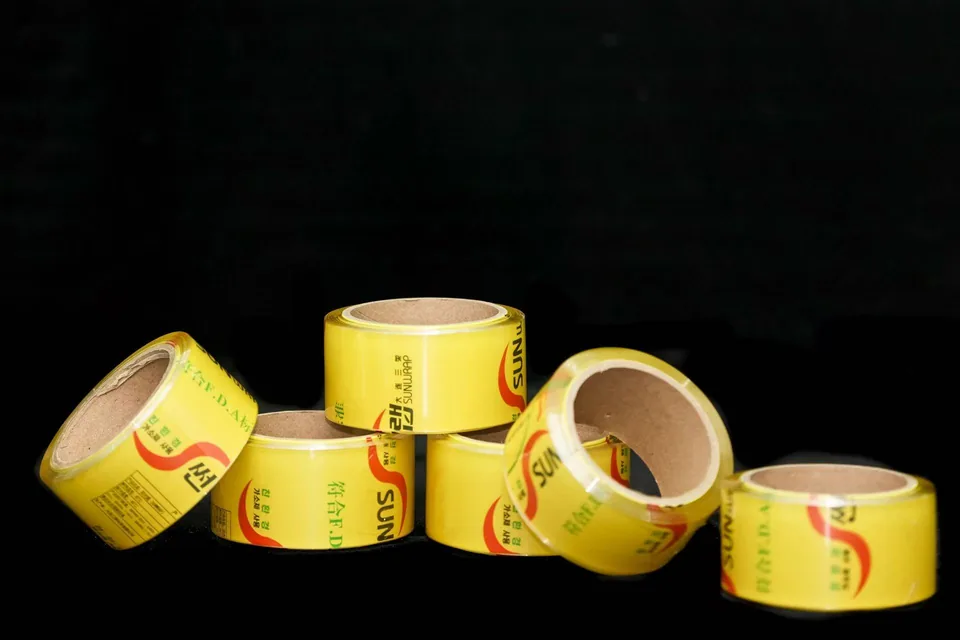
PVC Cling Film vs PE Cling Wrap: Complete Comparison Guide for B2B Buyers
If you are a distributor, supermarket chain buyer, or HORECA procurement manager comparing PVC cling film against PE cling wrap, the decision is not just about which material is “better.” It is about which material is right for your end-use, your market’s regulations, your wrapping machines, and your margin structure. This guide is written for the B2B buyer who needs to place a container order and wants a clear framework — not a chemistry lecture.
We cover the five dimensions that actually drive the purchasing decision: cost per metre in real use, shelf-life performance, regulatory fit by region, machine compatibility, and procurement strategy. If you are looking for the deeper polymer science, our technical comparison guide covers cling strength measurements, OTR data and plasticiser chemistry in detail.
Not sure about the terminology? Cling film, cling wrap, saran wrap and plastic wrap are all names for the same product — the difference is regional. See our Saran Wrap vs Cling Wrap vs Plastic Wrap naming guide for the full breakdown including US vs UK vs Australian terms.
Why “PVC vs PE” is a procurement decision, not a materials science question
Most online comparisons of PVC cling film and PE cling wrap read like polymer textbooks. They are accurate, but they do not answer the question a buyer is actually asking: which one should I put in my next container order?
The answer depends on four things you already know about your business:
- Where your product is sold (regulatory environment)
- What it wraps (fresh meat, produce, ready meals, non-food)
- How it is applied (automatic tray wrapper, semi-auto dispenser, hand roll)
- What your customer will pay (margin tolerance)
Everything below maps to these four variables.
Cost comparison: the numbers that matter
Raw material cost
PVC resin trades at approximately RMB 6,000 per tonne in 2026. LDPE and LLDPE — the polyethylene grades used in PE cling wrap — trade at RMB 7,500 to 9,000 per tonne. That 25-50% resin premium flows through to the finished roll.
Factory-gate price per roll
At FOB Ningbo in 2026, typical food-grade pricing:
| Format | PVC (USD) | PE (USD) | Difference |
|---|---|---|---|
| 30 cm x 300 m HORECA roll | $6.50-8.00 | $8.00-10.50 | PE +20-30% |
| 45 cm x 300 m catering roll | $9.00-11.50 | $11.50-14.50 | PE +25-28% |
| Jumbo roll (per tonne, FOB) | $1,400-1,800 | $1,700-2,200 | PE +18-25% |
For a full pricing breakdown by thickness and format, see our 2026 cling film price guide.
True cost per use
Price per roll tells only half the story. PVC’s stronger cling means less re-wrapping and less film per tray:
- PVC: 0.8-1.0 m of film per standard meat tray (250 mm x 175 mm)
- PE: 1.0-1.3 m per the same tray (operators pull more film to compensate for weaker adhesion)
At scale — a supermarket wrapping 2,000 trays per day — this 20-30% consumption difference compounds into significant annual savings. A mid-sized HORECA distributor importing 4 containers per year saves approximately USD 3,000-5,000 annually on film consumption alone by using PVC instead of PE, before accounting for the lower unit price.
Shelf-life performance: which film keeps food fresher?
For fresh-food buyers — supermarkets, meat processors, seafood distributors — shelf-life extension is not a feature; it is revenue. Every extra day of visual freshness reduces shrink and markdown.
Oxygen barrier
PVC cling film has a meaningfully better oxygen barrier than PE:
| Property | PVC Cling Film | PE Cling Wrap |
|---|---|---|
| Oxygen Transmission Rate (OTR) | 4,000-6,000 cc/m2/day | 7,000-8,000 cc/m2/day |
| Moisture Vapour Transmission Rate | Low | Moderate |
| Practical shelf-life extension (fresh meat) | +1-2 days vs unwrapped | Baseline |
That OTR difference is why butchers and fresh-food counters worldwide still prefer PVC for tray-top overwrap — the meat holds its red bloom longer, produce stays hydrated, and the customer sees a fresher-looking product.
Temperature performance
PE wins at both extremes:
- Freezer: PE remains flexible to -40 degrees C; PVC becomes brittle below -10 degrees C and can crack during frozen transport.
- Microwave: PE is rated for short-duration reheating up to 100 degrees C; PVC should never be microwaved (plasticiser migration risk into hot, fatty food).
For a buyer whose product chain includes freezer storage or microwave-ready meals, PE is the only safe choice regardless of cost.
Transparency and product presentation
PVC has higher optical clarity and gloss. Under retail lighting, fresh meat wrapped in PVC looks brighter and more appealing than meat wrapped in PE. For a supermarket chain where purchase conversion at the fresh counter is measured, this is a competitive advantage worth paying attention to.
Regulatory compliance by region
This is the single most important decision variable for many importers. Getting it wrong can result in an entire container detained at customs.
Markets where PVC is fully accepted
| Region | Regulatory framework | PVC status |
|---|---|---|
| Southeast Asia (Philippines, Indonesia, Vietnam, Thailand, Malaysia) | Local food-contact standards, often FDA-aligned | Fully accepted, dominant material |
| Middle East (UAE, Saudi Arabia, Qatar, Kuwait) | GSO / ESMA standards | Accepted, standard for HORECA |
| Egypt | EOS standards | Accepted, strong import demand |
| Nigeria, South Africa, Kenya | NAFDAC / SABS / KEBS | Accepted |
| India | FSSAI | Accepted for food contact |
| Latin America (Mexico, Brazil, Colombia, Peru, Chile) | ANVISA / COFEPRIS / local | Accepted |
| United States | FDA 21 CFR 177.1950 | Accepted |
| China (domestic) | GB 4806 series | Accepted, 60-70% market share |
Markets shifting toward PE
| Region | Status | Implication |
|---|---|---|
| European Union | ECHA restriction on PVC plasticisers progressing under REACH; many retailers voluntarily switched to PE | Import PE unless buyer explicitly specifies PVC |
| United Kingdom | Following EU trend post-Brexit | PE preferred for major retail |
| Parts of Oceania (Australia, New Zealand) | Some retailer-driven PE preference | Check buyer spec |
For a detailed market-by-market breakdown, see our PVC vs PE import recommendation.
Machine compatibility: a detail buyers often discover too late
If your customers use automatic or semi-automatic tray-wrapping machines, the film material is not interchangeable without recalibration.
Key differences in machine behaviour
| Parameter | PVC | PE |
|---|---|---|
| Stretch ratio | 150-200% | 200-350% |
| Heat-seal temperature | 120-160 degrees C | 130-170 degrees C |
| Cling mechanism | Plasticiser-based (immediate adhesion) | Electrostatic + tackifier (slower grip) |
| Typical machine speed | 25-35 trays/minute | 18-28 trays/minute |
| Film tension setting | Medium | Higher (compensates for lower cling) |
What this means in practice: A supermarket that switches its Ulma or Ishida tray wrapper from PVC to PE will experience 15-25% lower throughput until the machine is recalibrated, plus higher film waste during the adjustment period. The film supplier should provide a technical data sheet with recommended machine settings — if they cannot, that is a red flag about their manufacturing consistency.
Hand-wrap compatibility
For manual dispensing in kitchens and food-service operations, both materials work from standard cutter-box dispensers. PVC is easier to work with because it sticks on first contact; PE often requires the operator to press and smooth the film against the tray edge, which slows service speed.
Procurement strategy: how to structure your orders
Single-material strategy
If your distribution is concentrated in one regulatory zone and one end-use:
- All PVC: Default for Southeast Asia, Middle East, Africa, Latin America, US HORECA/retail
- All PE: Default for EU, UK, frozen-food specialists, microwave-ready meal producers
Dual-material strategy
Most growing importers eventually need both. The recommended approach:
- Primary volume (70-80%): PVC for HORECA, supermarket fresh-counter, food-processing lines
- Secondary volume (20-30%): PE for microwave-labelled consumer packs, EU-bound SKUs, frozen applications
- Single supplier: Choose a manufacturer that produces both materials — this avoids doubling your supplier management, documentation sets, and shipping logistics. A factory running both PVC and PE lines can mix both materials in a single container.
Container loading
A standard 20-foot container holds approximately:
- Jumbo rolls: 18-22 tonnes (PVC or PE)
- HORECA finished rolls (30 cm x 300 m): 8,000-12,000 cartons
- Mixed load: feasible with proper palletisation planning
For detailed container-loading specifications, see our container loading guide.
The five-step decision framework
For the buyer who wants a quick answer:
Step 1 — Check regulation. Is PVC restricted in your destination market? If yes, choose PE. If no, proceed to Step 2.
Step 2 — Check end use. Will the end consumer microwave the product or store it in a deep freezer? If yes, choose PE for those SKUs. If no, proceed to Step 3.
Step 3 — Check machine compatibility. Are your customers’ wrapping machines calibrated for PVC or PE? Switching materials has a real cost. Match the existing setup unless there is a compelling reason to change.
Step 4 — Check economics. PVC is 20-30% cheaper per roll and uses 15-20% less film per tray. Unless Steps 1-3 override, PVC is the better value.
Step 5 — Check supplier capability. Can your supplier produce both materials to food-grade standard? If you anticipate needing both PVC and PE as your business grows, choose a dual-capability supplier from the start.
Common mistakes B2B buyers make
Mistake 1: Choosing based on unit price alone
The cheapest PE roll is still more expensive in total cost than a mid-priced PVC roll, once you factor in consumption rate and machine throughput. Always calculate cost per tray wrapped, not cost per roll.
Mistake 2: Ignoring machine recalibration costs
Switching a supermarket chain’s 50 tray wrappers from PVC to PE is not a film-swap — it is a project. Budget for technician visits, downtime, and a 2-4 week adjustment period with higher waste rates.
Mistake 3: Assuming “PE is safer”
Both PVC and PE are food-safe when manufactured to specification. Modern food-grade PVC uses non-phthalate plasticisers (DOTP, ATBC, ESBO) that are safety-evaluated by FDA and EFSA. The “PVC is unsafe” narrative applies to old-generation phthalate plasticisers that compliant manufacturers phased out years ago. Always verify by requesting the plasticiser test report — our food safety certification guide explains what to look for.
Mistake 4: Ordering PE for a PVC market
If your customers are supermarkets in the Philippines, restaurants in Dubai, or food processors in Nigeria, they expect PVC. Shipping PE because “it sounds better” will result in complaints about weak cling, poor presentation, and higher consumption — and you will lose the account to a competitor who supplies what the market actually wants.
Conclusion: match the material to the market
The PVC-vs-PE decision is not about which polymer is objectively superior. It is about matching the right material to the right application, the right regulatory environment, and the right price point.
For the majority of B2B importers sourcing from China for non-EU markets, PVC cling film remains the workhorse — better cling, better clarity, better cost, proven food safety. PE cling wrap is the right choice for EU-bound shipments, microwave-safe consumer packs, and frozen-food applications.
SUNWRAP produces both food-grade PVC cling film and PE cling film at our Ningbo Cixi facility — 20+ years of production under Korean investment, FDA-compliant, SGS-tested, 40 km from Ningbo-Zhoushan Port. If you need help deciding which material fits your market, contact our export team with your target market, end-use, and approximate volume, and we will send you a tailored recommendation with pricing.
Frequently asked questions
What is the difference between cling film and cling wrap? The terms are interchangeable. “Cling film” is standard in the UK, Middle East, Africa and B2B trade; “cling wrap” is common in the US, Australia and consumer retail. Always specify PVC or PE when placing an order.
Is PVC cling film more cost-effective than PE for restaurants? Yes. PVC costs 10-25% less per roll and uses 15-20% less film per tray, making it the default for HORECA in Asia, the Middle East and Africa.
Can I use the same dispensing machine for PVC and PE? Semi-automatic dispensers generally work with both. Automatic tray wrappers require recalibration — tension, temperature and speed settings differ.
Which film extends food shelf life better? PVC has a better oxygen barrier and extends the visual freshness of red meat by 1-2 days. PE is better for freezer storage because it stays flexible at -40 degrees C.
How do I decide between PVC and PE? Check regulation first, then end use, then economics. If your market accepts PVC and your product is not microwaved, PVC is almost always the better value.
Sourcing cling film for your market? SUNWRAP produces food-grade PVC and PE cling film at our Ningbo factory — FDA-compliant, SGS-tested, 20+ years. Request a quote ->
Need a cling film quote while you're reading?
Our export team responds within 12 hours with FOB Ningbo pricing. No obligation.
Frequently Asked Questions
What is the difference between cling film and cling wrap?+
In industry usage the terms are interchangeable — both refer to thin, stretchable plastic film used to seal food containers and wrap fresh products. 'Cling film' is the standard term in the UK, Middle East, Africa and most B2B trade. 'Cling wrap' is more common in the US, Australia and consumer retail. When sourcing from Chinese manufacturers, specify the material (PVC or PE) and the intended application rather than relying on the brand-name distinction.
Is PVC cling film more cost-effective than PE cling wrap for restaurants?+
Yes, in most cases. PVC cling film costs 10-25% less per roll at the factory gate, and its superior cling strength means kitchen staff use 15-20% less film per tray compared to PE. The combined saving — lower unit cost plus lower consumption — makes PVC the default choice for HORECA buyers in Asia, the Middle East and Africa. PE becomes more cost-effective only when the buyer's market requires plasticiser-free certification or microwave compatibility.
Can I use the same dispensing machine for PVC and PE cling film?+
Not always. PVC and PE have different stretch and cling profiles, so automatic tray-wrapping machines must be recalibrated when switching between materials. The tension settings, heat-bar temperature, and sealing pressure all differ. Semi-automatic hand-wrap dispensers generally work with both, but throughput and wrap quality are optimised for whichever material the dispenser was designed for. Ask your machine supplier for the recommended film specification before ordering.
Which cling film extends food shelf life better?+
PVC cling film provides a better oxygen barrier (OTR of 4,000-6,000 cc/m2/day versus 7,000-8,000 for PE), which slows oxidation and extends the visual freshness of red meat, seafood and produce by 1-2 days compared to PE wrap. For frozen storage, PE is superior because it remains flexible at -40 degrees C without cracking, while PVC becomes brittle below -10 degrees C.
How do I decide between PVC and PE for my specific market?+
Three factors determine the answer: (1) Regulation — if your destination market restricts PVC plasticisers (EU, parts of Oceania), choose PE. (2) End use — if the product will be microwaved by the consumer, choose PE. (3) Economics — if neither of the first two applies, PVC is almost always the better value. Most B2B importers outside the EU carry PVC as their primary SKU and add PE only for microwave-labelled consumer packs.
Sourcing cling film and have questions this article didn't answer?
Related articles
Cling Film Price 2026: How Much Does PVC & PE Cling Wrap Cost?
Cling film price guide 2026 — resin costs, factory margins, FOB vs CIF ranges by SKU, and a line-by-line read of a Chinese supplier's quotation, for PVC and PE.
PVC Cling Film vs PE Cling Film: Which Should You Import in 2026?
PVC vs PE cling film — performance, food safety, regulation and cost, side by side, plus a market-by-market recommendation for 2026 B2B importers sourcing from China.
PVC vs PE Cling Film: Technical Comparison
PVC versus PE cling film technical comparison: cling strength, oxygen barrier, temperature range, food safety compliance, cost per use, and which to choose for your market.